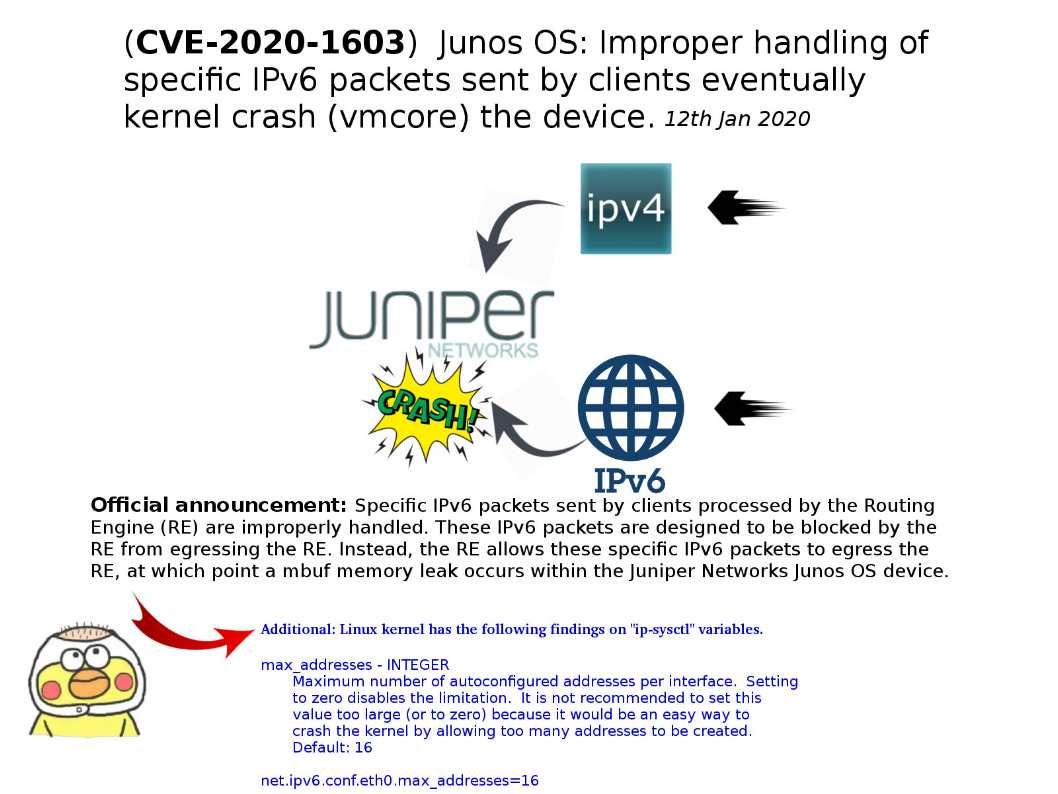
CVE-2020-1603 vulnerability filed by Juniper, as a matter of fact, it includes all the routing product who make use of linux base OS – 12th Jan 2020

Preface: kdump is a feature of the Linux kernel that creates crash dumps in the event of a kernel crash. When triggered, kdump exports a memory image (also known as vmcore) that can be analyzed for the purposes of debugging and determining the cause of a crash.

Vulnerability details: Improper handling of specific IPv6 packets sent by clients mbuf and let memory leak occurs. This memory leak eventually leads to a kernel crash (vmcore), or the device hanging and requiring a power cycle to restore service, creating a Denial of Service (DoS) condition.

Official announcement and remedy solution:https://kb.juniper.net/InfoCenter/index?page=content&id=JSA10982&cat=SIRT_1&actp=LIST

Additional possibilities – handling IPv6 packet design weakness

a. The server side sets IPV6_RECVPKTINFO on a listening socket, and the client side just sends a message to the server. Then the kernel panic occurs on the server.

b. net.ipv6.conf.eth0.max_addresses=16 It is not recommended to set this value too large (or to zero) because it would be an easy way to crash the kernel by allowing too many addresses to be created.
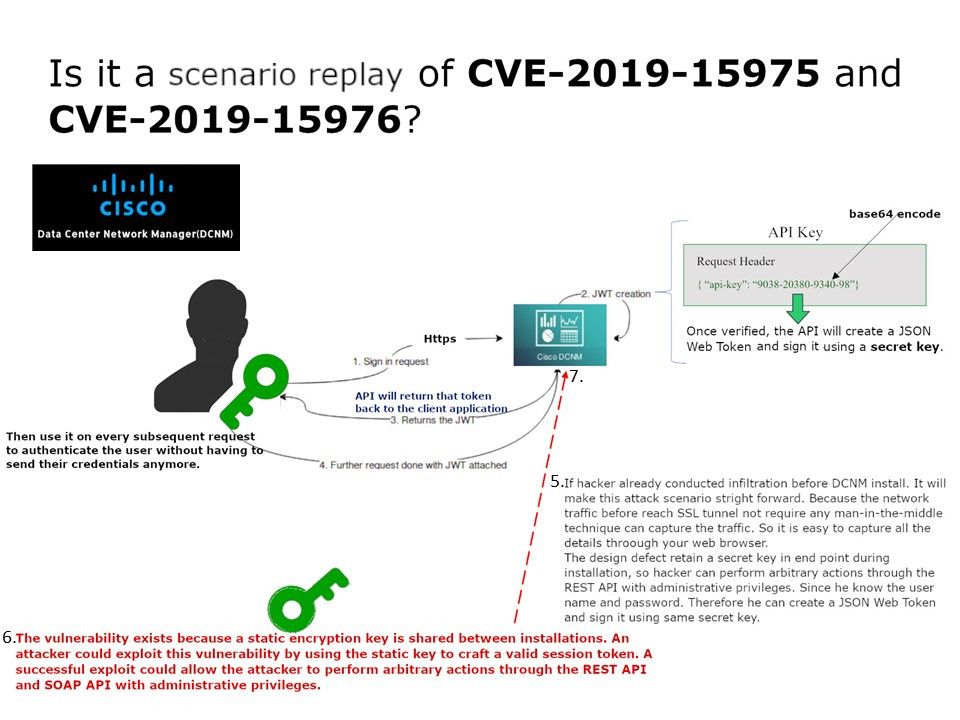
is it a scenario replay of cve-2019-15975 & cve-2019-15976?

Preface: REST APIs are stateless. Stateful APIs do not adhere to the REST architectural style.

Background: SOAP is a protocol, and REST is an architectural style. A REST API can actually utilize the SOAP protocol, just like it can use HTTP. The Cisco Fabric Automation REST APIs for third party applications enables you to programmatically control Cisco Fabric Automation. All the REST API operations can also be performed using the DCNM GUI as DCNM uses these REST APIs to render the GUI.

Remark: From Release 10.0(1), by default, the Cisco DCNM supports HTTPS only.

Security Focus: Cisco Data Center Network Manager Authentication Bypass Vulnerabilities

Vulnerability Details:
CVE-2019-15975 – Cisco Data Center Network Manager REST API Authentication Bypass Vulnerability
CVE-2019-15976 – Cisco Data Center Network Manager SOAP API Authentication Bypass Vulnerability

If hacker already conducted infiltration to specific workstation before DCNM install. It will make this attack scenario straight forward. Because the network traffic before reach SSL tunnel not require any man-in-the-middle technique can capture the traffic. So it is easy to capture all the details through your web browser.
The design defect retain a secret key in end point during installation, so hacker can perform arbitrary actions through the REST API with administrative privileges. Since he know the user name and password. Therefore he can create a JSON Web Token and sign it using same secret key. Should you be interested, please read the details of attached diagram.

Cisco official announcement – https://tools.cisco.com/security/center/content/CiscoSecurityAdvisory/cisco-sa-20200102-dcnm-auth-bypass

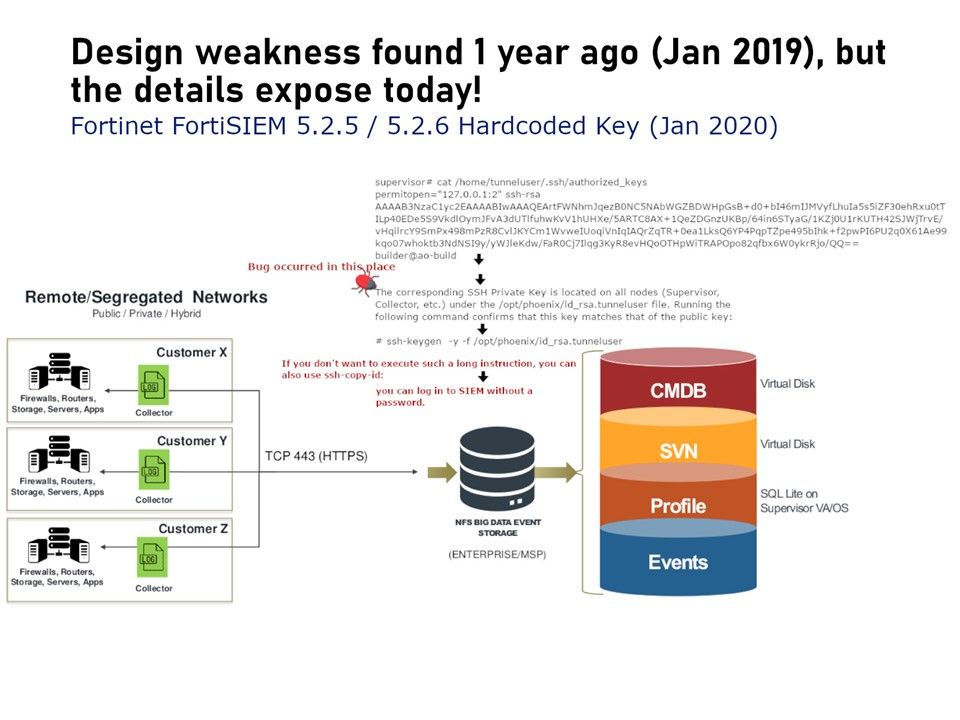
Design weakness found 1 year ago (Jan 2019), but the details expose today! Fortinet FortiSIEM 5.2.5 / 5.2.6 Hardcoded Key (Jan 2020)

Preface: Stupid Solutions to Stupid Problems: Hardcoding Your SSH Key in the system.

Vulnerability background: FortiSIEM 5.2.5 / 5.2.6 could use the hardcoded password to log in to the underlying system via Secure Shell (SSH). This means that anyone with access to any FortiSIEM image (to copy the SSH private key) can authenticate successfully via SSH to the FortiSIEM. Supervisor on port 19999/tcp as tunneluser. They will be limited to the /opt/phoenix/phscripts/bin/tunnelshell script, but if this is bypassed then full shell access can be obtained.

Impact: While the user’s shell is limited to running the /opt/phoenix/phscripts/bin/tunnelshell script, SSH authentication still succeeds. Versions 5.2.5 and 5.2.6 have been verified as vulnerable.

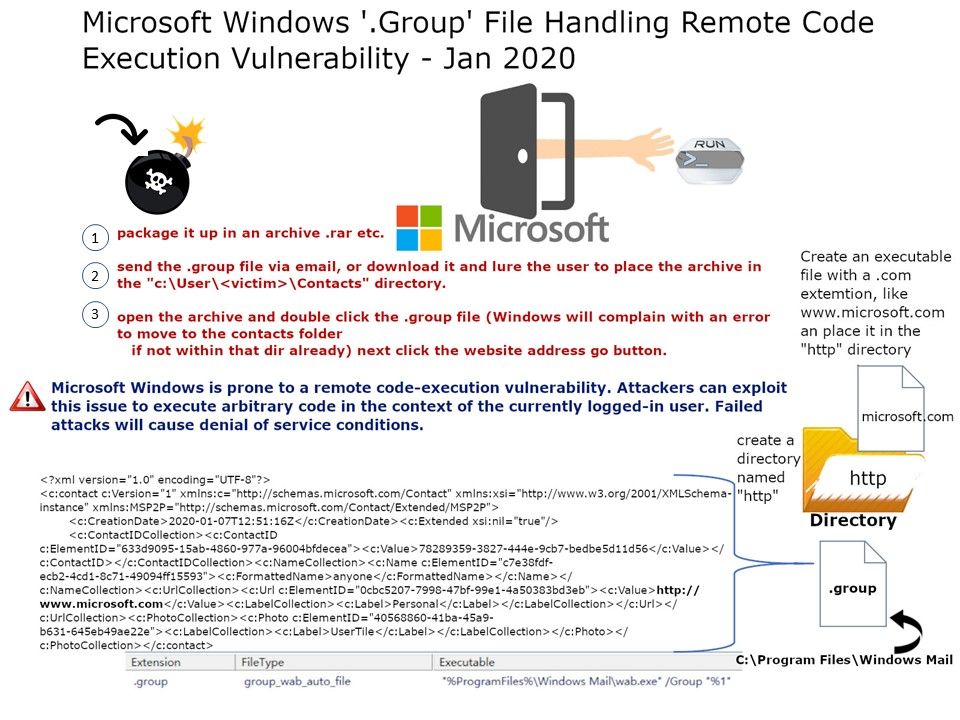
In order to avoid MS ‘.Group’ file handling RCE vulnerability. Think it before click – Jan 2020

Preface: Perhaps you would say the ‘.group’ file handling is the design defect. So hacker exploit social engineer trigger this vulnerability (GROUP FILE URL FIELD CODE EXECUTION). Do you agree?

What is a GROUP file? The file is located inside this location: C:\Program Files\Windows Mail.

Vulnerability details: Microsoft Windows is prone to a remote code-execution vulnerability. Attackers can exploit this issue to execute arbitrary code in the context of the currently logged-in user. Failed attacks will cause denial of service conditions.

Former 0-day record: About eleven months ago, Microsoft ‘.contact’ File vulnerability found. It allow Arbitrary Code Execution. Less than 1 year, there is another vulnerability occurs on ‘.group’ file handling. Perhaps the WAB.exe features could be do a re-engineering.

Reference url: https://www.symantec.com/security-center/vulnerabilities/writeup/111355?om_rssid=sr-advisories

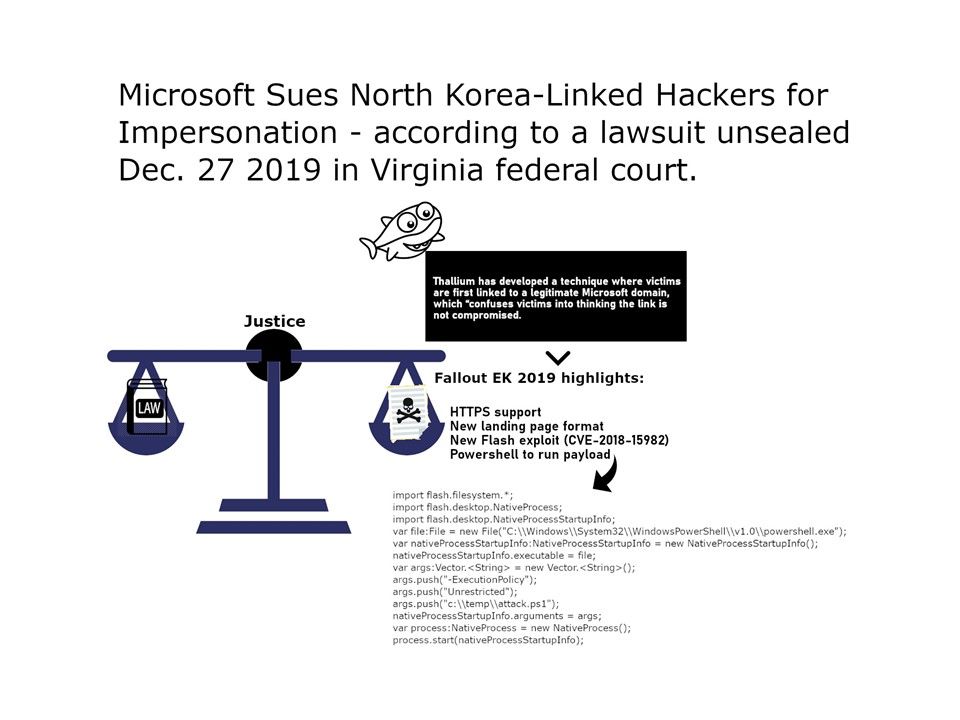
Phishing email compromised the reputation of company, Microsoft take legal action

Preface: Microsoft products cover a wide range. Perhaps quite a lot of people queries design weakness of their products. But they have capabilities to protect it own.

Background: The cyber criminal exploit Microsoft official domain name to made phishing email and goal to increase the possibility to open the email. Meanwhile the malicious infection technique has proprietary evading antivirus technique.
Remark: According to my observation, the evolution of this cyber attack technique found in 2013. Perhaps we remember HWP (Hangul Word Processor). HWP files are similar to MS Word’s DOCX files, except that they can contain Korean written language, making it one of the standard document formats used by the South Korean government. Should you have interested to review the details, plese refer to following URL: http://www.antihackingonline.com/network-protocol-topology-standard/vulnerabilities-in-the-old-ole2-based-hwp-file-format-engages-apt-attacks-to-south-korea/

Cyber security focus: Such matter reminds cybersecurity world of cyber criminal infiltration technique. Expert found that the North Korea cyber attack suspect make a new way. Attack mainly using the API hooking technique to hide the behaviors of the first-stage backdoor which is the second payload in this operation. Since this attack landing page most likely is a MS document. The Fallout Exploit Kit is Back with adobe Vulnerabilities and Payloads (see attached diagram) So, it generate a interference to business and government sector.

Reference: Microsoft Sues North Korea-Linked Hackers for Impersonation (1) – https://news.bloomberglaw.com/ip-law/microsoft-sues-north-korea-linked-hackers-for-targeting-users

IoT zone staying alert! HomeAutomation 3.3.2 design weakness exposed (Authentication Bypass, CSRF / Code Execution & Cross Site Request Forgery) – 1-1-2020

Preface: Sometimes lighting can become a security safeguard. Perhaps the lighting system will help you figure out whether intruder jump to your garden at night.

Synopsis: It is hard to avoid the digital transformation trend integrate to your daily life. As the matter of fact, they are on board already. For instance the remote controlled outdoor outlets with on/off function, Z-Wave outlets that measure energy consumption for connected lamps and appliances.

Remark: ZWave is a wireless communications protocol used primarily for home automation.

Vulnerability details:

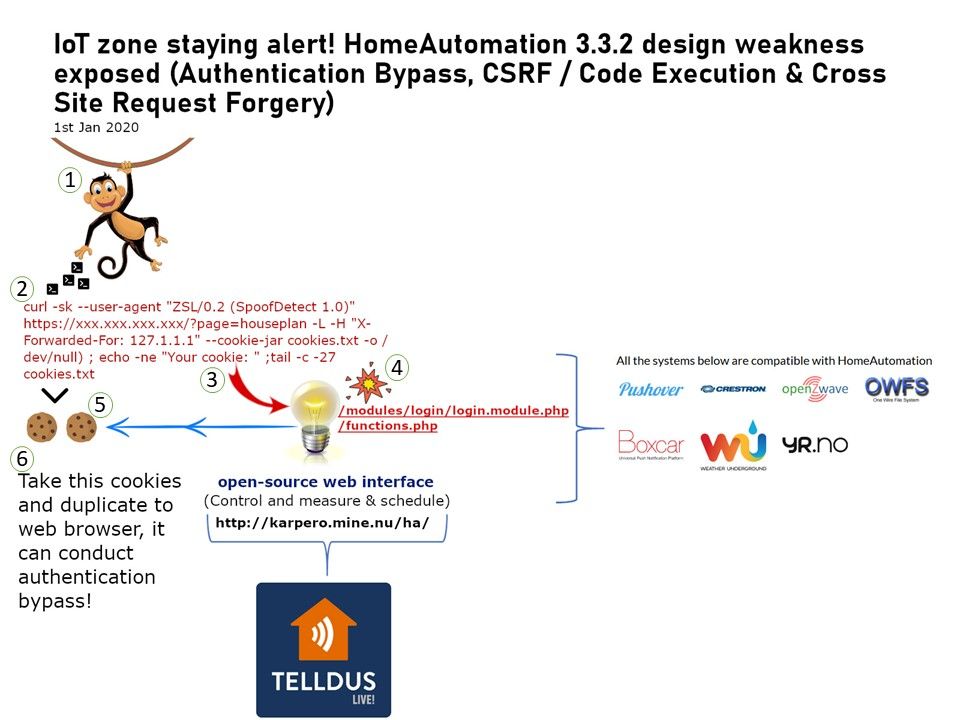
HomeAutomation is an open-source web interface and scheduling solution. Quite a lot of IoT manufacturer are do the product integration to HomeAutomation (see attached diagram). Expert found design weakness occured in HomeAutomation software.
From technical aspect. Use the cURL_init function, implemented with PHP, to open a connection and the links includes reference’s to the other two functions (curl_setopt & curl_exec) to be able to potentially reuse an existing handle (conncetion).
The HomeAutomation suffers from an authentication bypass vulnerability when spoofing client IP address using the X-Forwarded-For header with the local (loopback) IP address value allowing remote control of the smart home solution. For details, please refer to diagram.

Status: No official announcement for the remediation by software vendor and manufacturer in the moment.

Closer look for OpenBSD Dynamic Loader chpass Privilege Escalation 31st Dec 2019

Preface: Referring to the statistic posted by w3techs. The websites using OpenBSD as operating system less than 0.1 percentage. Perhaps OpenBSD footprints are in industry manufacturing. For instance, heard that oil industry is the heavy duty users of OpenBSD.

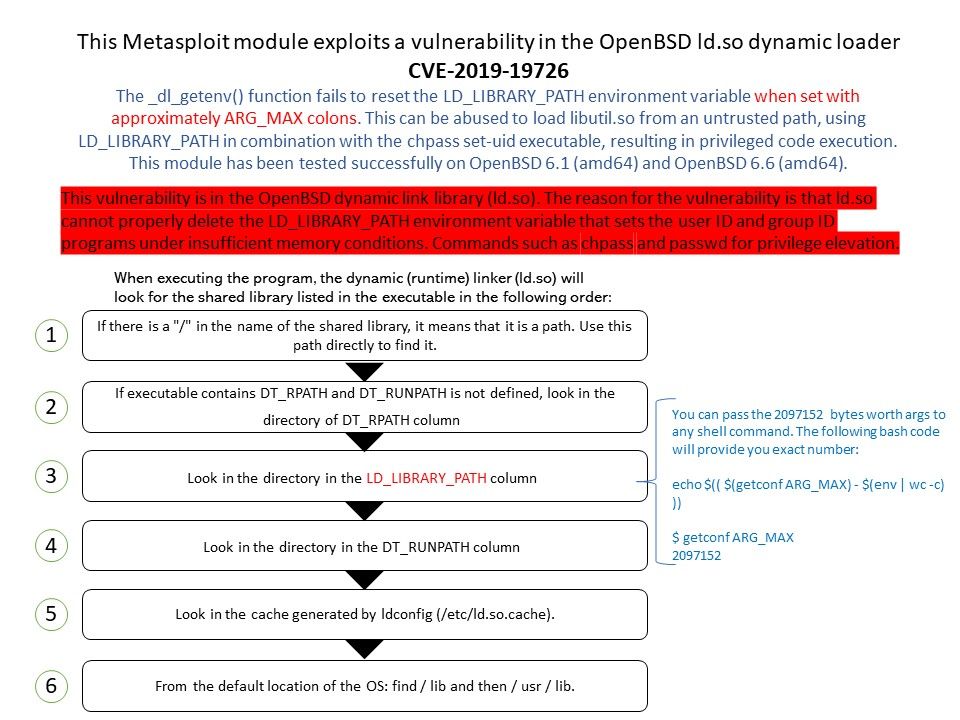
Vulnerability details: The _dl_getenv() function fails to reset the LD_LIBRARY_PATH environment variable when set with approximately ARG_MAX colons. This can be abused to load libutil.so from an untrusted path, using LD_LIBRARY_PATH in combination with the chpass set-uid executable, resulting in privileged code execution.

Impact: This module has been tested successfully on OpenBSD 6.1 (amd64) and OpenBSD 6.6 (amd64).

Causes: This vulnerability is in the OpenBSD dynamic link library (ld.so). The reason for the vulnerability is that ld.so cannot properly delete the LD_LIBRARY_PATH environment variable that sets the user ID and group ID programs under insufficient memory conditions. Commands such as chpass and passwd for privilege elevation.

Remedy: After downloading the source code, switch to the old version before patching the vulnerability.

$git clone https://github.com/openbsd/src.git 
$git checkout d2ce55dbd7845b33dafe44529e6ceb6b1c8ec6d5

about ransomware attack on Maastricht University – 24th Dec 2019

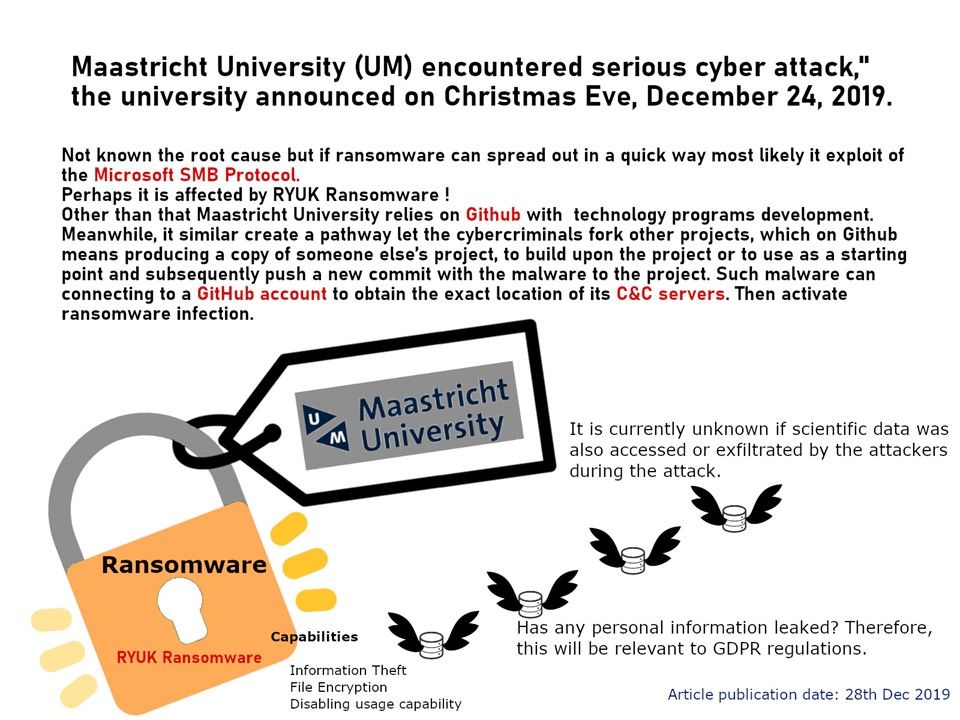
Preface: Maastricht University (UM) encountered serious cyber attack,” the university announced on Christmas Eve, December 24, 2019.

Synopsis: Not known the root cause but if ransomware can spread out in a quick way most likely it exploit of the Microsoft SMB Protocol.
Perhaps it is affected by RYUK Ransomware !
Other than that Maastricht University relies on Github with technology programs development. Meanwhile, it similar create a pathway let the cybercriminals fork other projects, which on Github means producing a copy of someone else’s project, to build upon the project or to use as a starting point and subsequently push a new commit with the malware to the project. Such malware can connecting to a GitHub account to obtain the exact location of its C&C servers. Then activate ransomware infection.

Observation: Has any personal information leaked? Therefore, this will be relevant to GDPR regulations.
It is currently unknown if scientific data was also accessed or exfiltrated by the attackers during the attack.

Headline News: Please refer to https://www.bleepingcomputer.com/news/security/ransomware-hits-maastricht-university-all-systems-taken-down/

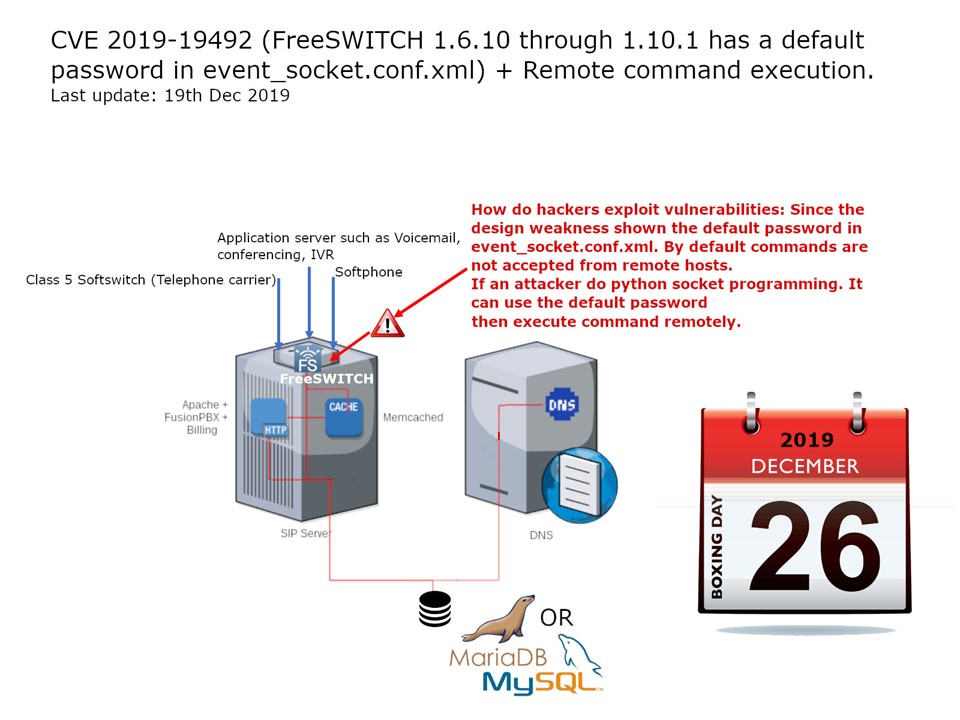
CVE 2019-19492 (FreeSWITCH 1.6.10 through 1.10.1 has a default password in event_socket.conf.xml) Remote command execution – Last update: 26th Dec 2019

Preface: FreeSWITCH is a Software Defined Telecom Stack enabling the digital transformation from proprietary telecom switches to a versatile software implementation that runs on any commodity hardware.

Background: FreeSWITCH listens on port 8021 by default and will accept and run commands sent to it after authenticating. By default commands are not accepted from remote hosts.

Design weakness: FreeSWITCH 1.6.10 through 1.10.1 has a default password in event_socket.conf.xml. How do hackers exploit vulnerabilities: Since the design weakness shown the default password in event_socket.conf.xml. By default commands are not accepted from remote hosts. If an attacker do python socket programming. It can use the default password and excute the command remotely.

Remedy: It is recommended to block all untrusted python socket connections with a firewall on this device until the vendor provides an official patch.

Wish you a Merry Christmas 2019 (cyberX’mas).

I believe that the most annoying cyber security attack is the ransomware. We known that unplug or power off is one of the way to suspend the attack spread out. Yes, agree.

Another way to avoid the infection of ransomware is think it over before open unknown email. Yes, During Xmas time you defense idea will be reduced since you will join the ball and parties. So, please be alert of phishing email during Xmas.

By the way, remember to turn off your workstation before you leave the office today.

Merry Xmas and Happy New Year.

antihackingonline.com