Category Archives: Potential Risk of CVE

Hyperledger Iroha v1.0 beta-2 version to remediate CVE-2018-3756 (May 2018)

The earlier generation of blockchain technology empower encryption power let the world know his capability. As times goes by people found the design weakness of blockchain technology is the performance of synchoization of the peer nodes. Such design weakness cause double spending vulnerability. The next generation of technology so called HYPERLEDGER. It enhance the design weakness of blockchain. As a result cryptocurrency especially Ethereum relies on Hyperledger Fabric in demand. A blockchain project developed by several Japanese firms including by startup Soramitsu and IT giant Hitachu has been accepted into the Hyperledger blockchain initiative. A fix has been released by Hyperledger IROHA project two weeks ago. Hyperledger Iroha v1.0 beta-2 version is avaliable for download. The reason is that a critical vulnerabilities discovered during the security audit.

On 2017, Cambodia central bank taps Hyperledger Iroha for blockchain settlement. Perhaps they update to beta 2 already.

Should you have interest to know the detail, please refer below:

Cambodia central bank taps Hyperledger Iroha for blockchain settlement – https://www.cryptoninjas.net/2017/04/20/cambodia-central-bank-taps-hyperledger-iroha-blockchain-settlement/

Beta 2 (download): https://github.com/hyperledger/iroha/releases/tag/v1.0.0_beta-2

A vulnerability found in becton dickinson DB Manager (CVE-2018-10593 and CVE-2018-10595)

On May 2017, Ransomware attack suspended UK healthcare system services. It shown the security weakness in hospital and clinic IT system infrastructure. BD is a global medical technology company that is advancing the world of health by improving medical discovery, diagnostics and the delivery of care. A vulnerabilitiy found on Becton Dickinson causes a series of products being effected. It includes BD Kiestra TLA, BD Kiestra WCA and BD InoqulA+ specimen processor. The vendor state that this vulnerability cannot be exploited remotely. You must have physical access to the sub-network shared by the BD Kiestra system.According to the vendor solution , their product allow both thick client and thin client (web base) access. And therefore the vendor requires to remind the client who engaged the web base function to staying alert. Should you have interested to find out the details. Please refer below url for reference.

https://www.bd.com/en-us/support/product-security-and-privacy/product-security-bulletin-bd-kiestra-tla-bd-kiestra-wca-bd-inoqula

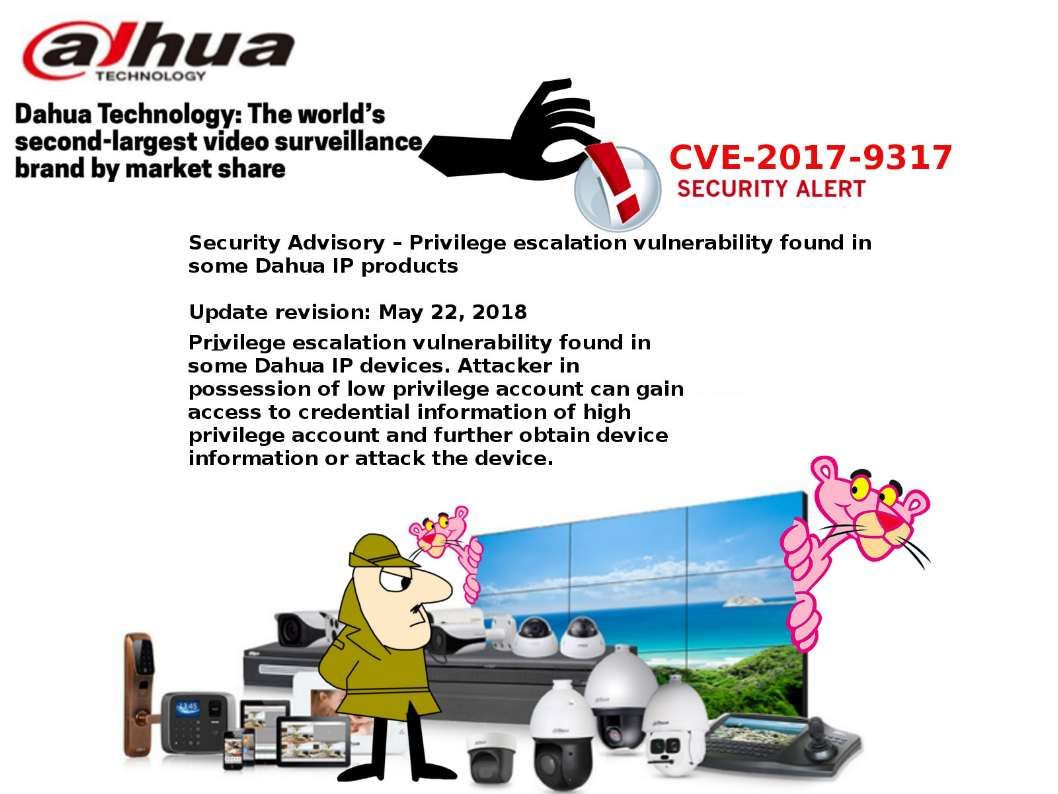
22nd May 2018: Security Advisory – Privilege escalation vulnerability found in some Dahua IP products

Based in Hangzhou, China, Dahua Technology is one of the world’s leading manufacturers of security and video surveillance equipment. According to its unaudited results for 2017, it had a turnover of $2.89bn representing a year-on-year increase of 41%, and a gross profit of $404m, growing by 31%.Based on above details, you can imagine that how the popularity of the Dahua IP devices market coverage.

Regarding to the CVE reference number, it indicate that vulnerability found on 2017. Acording to the official web site announcement, the historical status shown as below:

  • 2018-5-22 UPDATE Affected products and fix software
  • 2018-3-16 INITIAL

We notice that VPN filter malware infect estimate total of 500,000 units of device (router and Network access storage) jeopardizing the world. Whereby, the US court order enforce the justice and thus quarantine the specified C&C servers. It won this battle.

But is there any hiccups of this matter?

Should you have interest of this matter, please refer below url for reference.

Security Advisory : Privilege escalation vulnerability found in some Dahua IP products https://www.dahuasecurity.com/support/cybersecurity/annoucementNotice/337

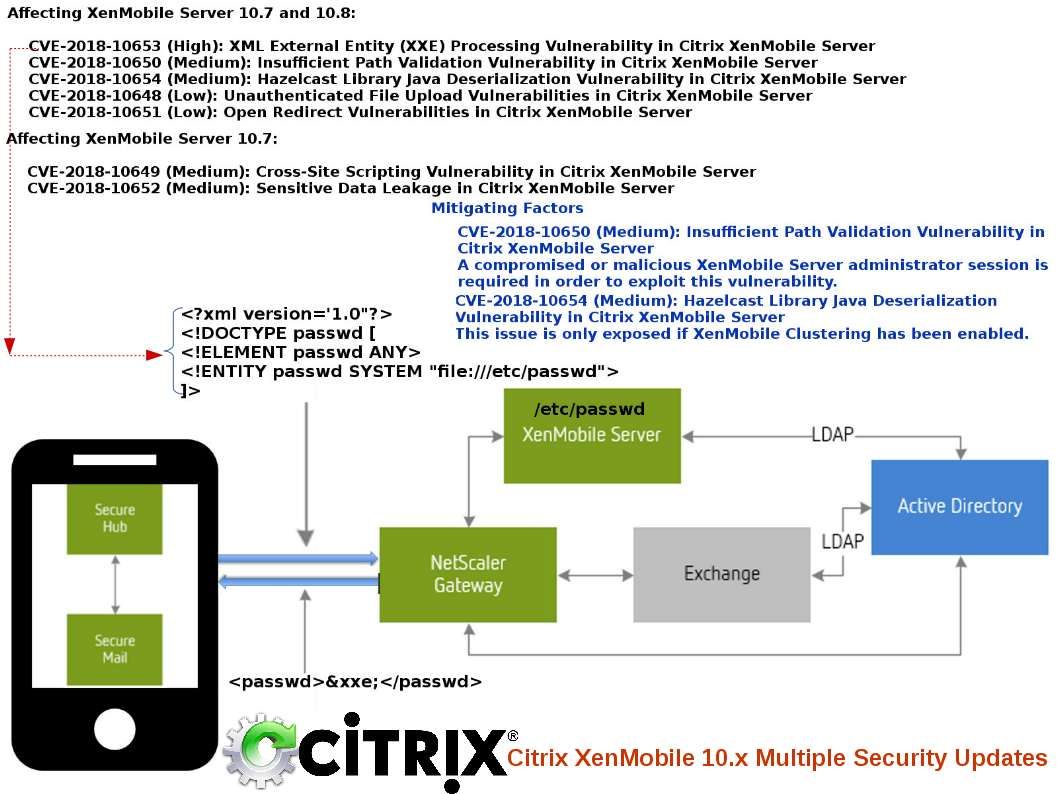
21st May 2018 – Citrix XenMobile 10.x Multiple Security Updates

Applicable Products (XenMobile 10.7 & XenMobile 10.8)

Affecting XenMobile Server 10.7 and 10.8:

  • CVE-2018-10653 (High): XML External Entity (XXE) Processing Vulnerability in Citrix XenMobile Server
  • CVE-2018-10650 (Medium): Insufficient Path Validation Vulnerability in Citrix XenMobile Server
  • CVE-2018-10654 (Medium): Hazelcast Library Java Deserialization Vulnerability in Citrix XenMobile Server
  • CVE-2018-10648 (Low): Unauthenticated File Upload Vulnerabilities in Citrix XenMobile Server
  • CVE-2018-10651 (Low): Open Redirect Vulnerabilities in Citrix XenMobile Server

Affecting XenMobile Server 10.7: ………..

Mitigating Factors: …………………………..

Should you have interest of this topic, refer below url for reference.

https://support.citrix.com/article/CTX234879

Vulnerabilities – Waiting for vendor response – 23rd May 2018

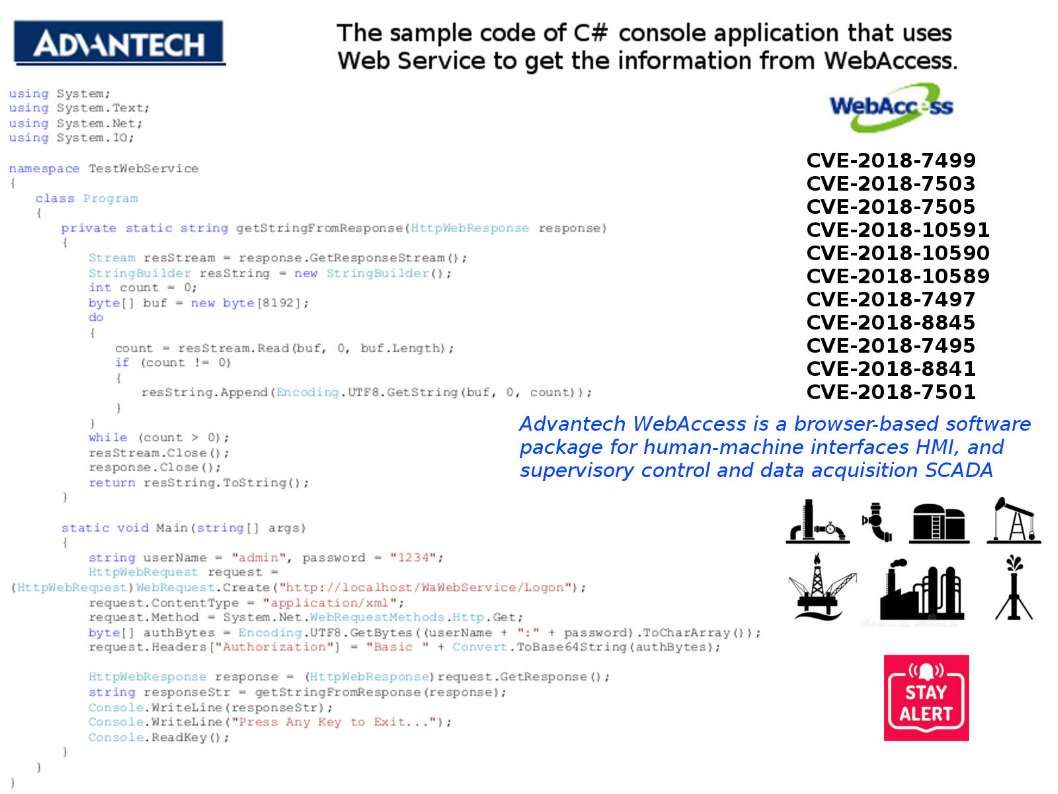
The cyber attacks are wreak havoc today. In order to protect the power facility, water supply, Gas supply and petroleum industry daily operations. The SCADA control system vendor implemented security control in their system infrastructure. However when vulnerabilities encounter on their products. The remediation step of the vendor response sometimes not in effecient. For instance, Advantech one of the key player of SCADA WebAccess. But it lack of motivation to drive the remedation solution on their products. There is no official announcement how to do the remedation on their products so far. Vulnerabilities are shown as below:

CVE-2018-7499 – buffer overflow vulnerabilities which may allow an attacker to execute arbitrary code
CVE-2018-7503 – a path transversal vulnerability which may allow an attacker to disclose sensitive
CVE-2018-7505 – information on the target TFTP application has unrestricted file uploads to the web application without authorization, which may allow an attacker to execute arbitrary code.
CVE-2018-10591 – allow an attacker can create a malicious web site, steal session cookies, and access data of authenticated users.
CVE-2018-10590 – exposure vulnerability through directory listing has been identified, which may allow an attacker to find important files that are not normally visible.
CVE-2018-10589 – WebAccess Scada Node versions prior to 8.3.1, and WebAccess/NMS 2.0.3 and prior, a path transversal vulnerability has been identified, which may allow an attacker to execute arbitrary code.
CVE-2018-7497 – several untrusted pointer dereference vulnerabilities have been identified, which may allow an attacker to execute arbitrary code.
CVE-2018-8845 – a heap-based buffer overflow vulnerability has been identified, which may allow an attacker to execute arbitrary code.
CVE-2018-7495 – an external control of file name or path vulnerability has been identified, which may
CVE-2018-8841- allow an attacker to delete files.
an improper privilege management vulnerability may allow an authenticated user to modify files when read access should only be given to the user.
CVE-2018-7501 – several SQL injection vulnerabilities have been identified, which may allow an attacker to disclose sensitive information from the host.

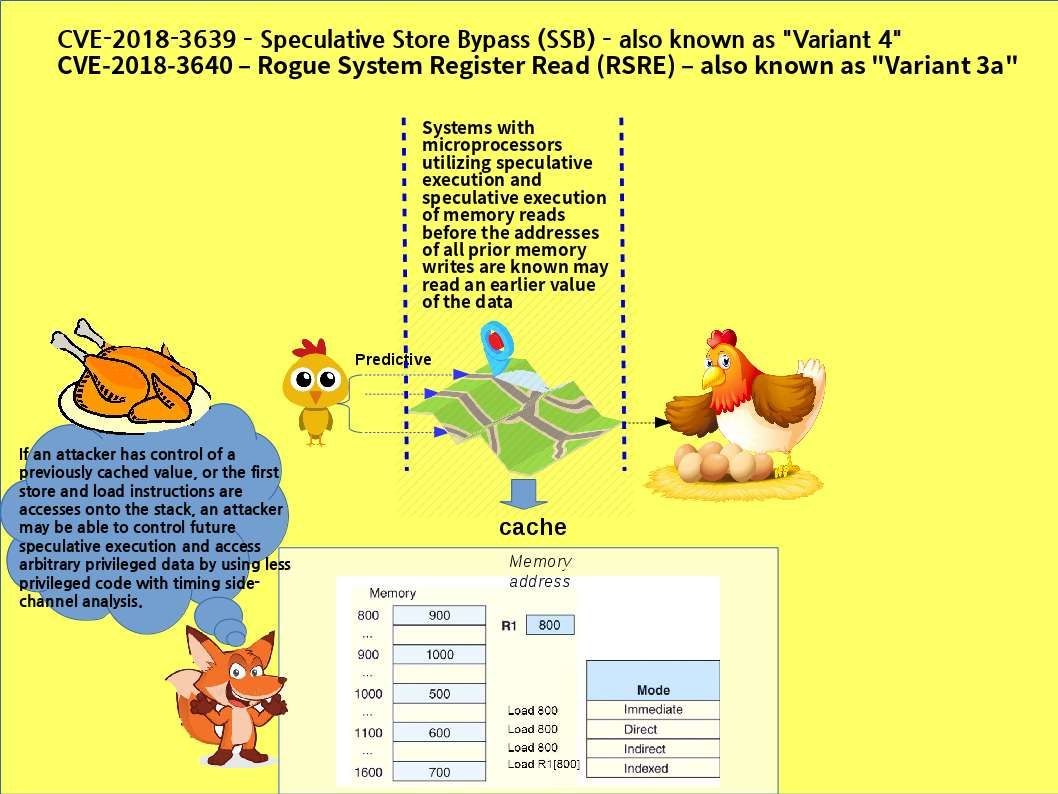
21 May 2018 – CPU hardware utilizing speculative execution may be vulnerable to cache side-channel attacks

Regarding to the subject matter, please refer to below url for reference.

Q2 2018 Speculative Execution Side Channel Update

https://www.intel.com/content/www/us/en/security-center/advisory/intel-sa-00115.html

Vulnerability of Speculative Processors to Cache Timing Side-Channel Mechanism

https://developer.arm.com/support/arm-security-updates/speculative-processor-vulnerability

Quick look in virtual machine Zone (CVE-2018-8897) – 05/18/2018

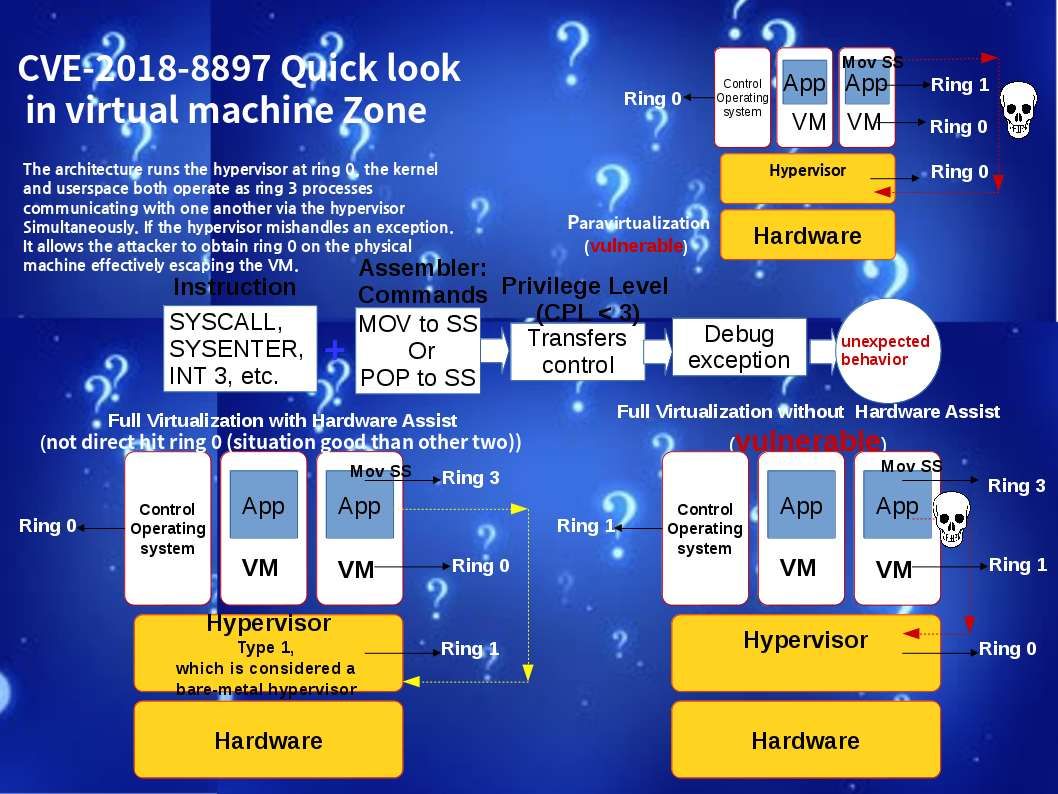
Technology world is a challengeing zone. The key word “rest” looks do not apply to system developer, application programmer and IT expert! I re-call the vulnerability (CVE-2018-8897) to review. It ennounced by security experts for week ago. Perhaps you have full understanding. However no harm in my view point to do the review since it is important. I have time to drill down the detail and visualize my standpoint. This CVE subject mainly focus mishandling of assembler command syntax by system developer since they overlook some advice by CPU vendor. In short the issue is that if the instruction following the MOV to SS or POP to SS instruction is an instruction like SYSCALL, SYSENTER, INT 3, etc. that transfers control to the operating system at CPL < 3, the debug exception is delivered after the transfer to CPL < 3 is complete. OS kernels may not expect this order of events and may therefore experience unexpected behavior when it occurs. So the focus will be go to virtual machine world. Yes, we are a cloud computing world in the moment. For more details, please refer below url for reference.

https://nvd.nist.gov/vuln/detail/CVE-2018-8897

Software design limitation causes hardware Involved software Attacks – Shanghai 2345 Network

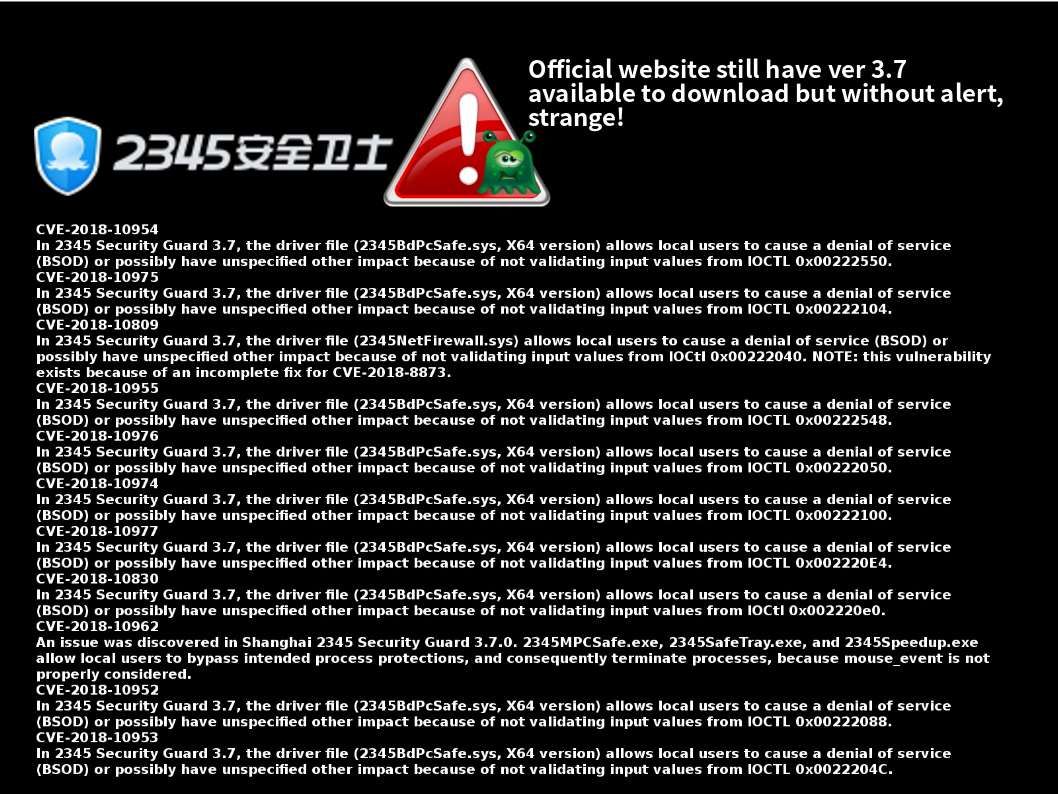
Shanghai 2345 Network major business focusing Mainland China. This companyprovides Internet access platforms. It provides 2345 Website navigation that facilitates users to find their own needs of the site entrance, as well as provides weather forecasts, practical inquiries, commonly used software download, e-mail login, search engine portal, online collection, and other Internet common service; 2345 Accelerated browser, a computer software; mobile applications; and 2345 Loan King, an Internet credit platform.However there are vulnerabilties found on their Security Guard 3.7 software. Regarding to the vulnerabilities, it is better to uninstall this software. It looks strange that the official website still have ver 3.7 software available to download. Besides, it without any security alert to customer. If you visit the official website today, the latest software update issued on 20th April 2018. Nothing to do or remediation. Strange!

Official web site shown as below:

http://safe.2345.cc/log.htm

Remark: Due to market demand and general ease of access, the efforts have been primarily focused around client software, effectively limiting kernel code coverage to a few generic syscall and IOCTL fuzzers.

May 18, 2018 – ISC Releases Security Advisories for BIND

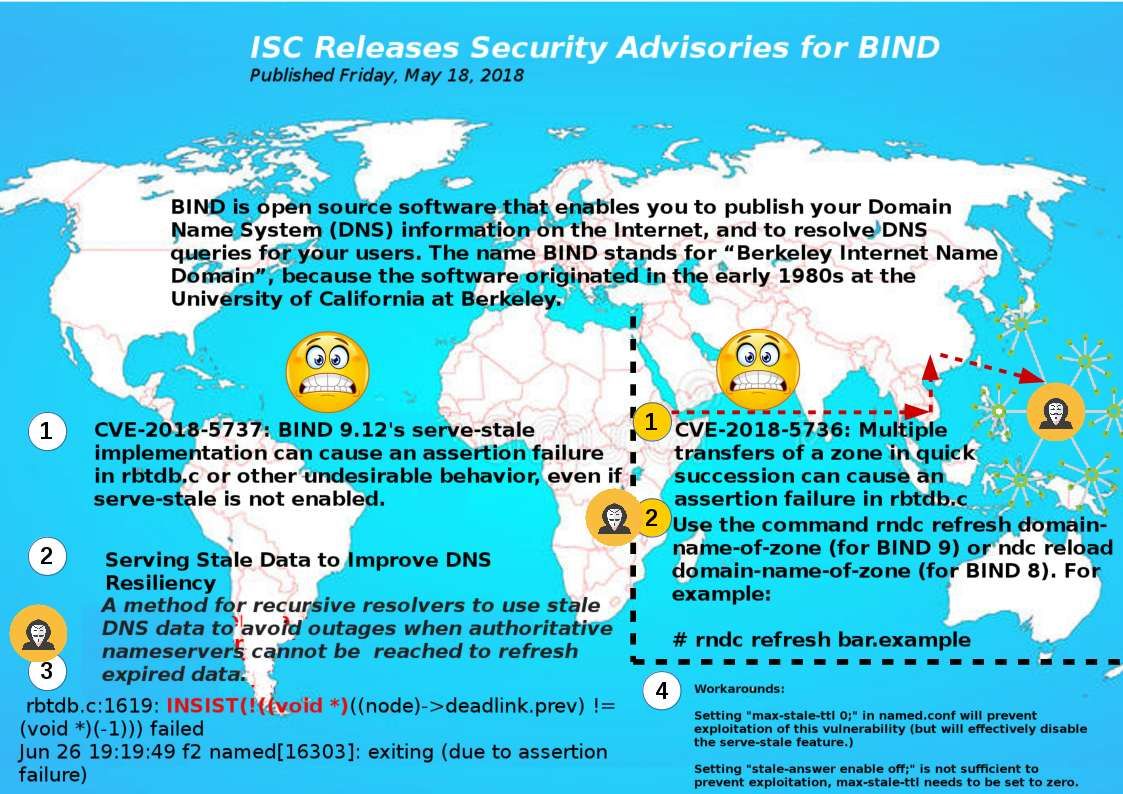
ISC Releases Security Advisories for BIND on May 18, 2018. This alert awaken my defense thinking. I was written few articles about the electronic war and the cyber arsenal. But forgot to contains a scenario which annoucned by ISC today (Security Advisories for BIND). Regarding to to the subject (ISC Releases Security Advisories for BIND) indeed described a hacking scenario who focus to doing bad things to the world (distrubuted deniel of services to worldwide DNS services). It is not difficult to understand the way. The method is CVE-2018-5737 + CVE-2018-5736.

Such cyber attack on phase 1 is one to many distribution (Initiating a Zone Transfer), then execute vulnerability (CVE-2018-5737) . As a result the smartphone, server and workstation all can’t work because no DNS service will be available! You can find hints in attached diagram. For more details about the vulnerabilities, please refer below url for references.

CVE-2018-5737: BIND 9.12’s serve-stale implementation can cause an assertion failure in rbtdb.c or other undesirable behavior, even if serve-stale is not enabled.

https://kb.isc.org/article/AA-01606/0

CVE-2018-5736: Multiple transfers of a zone in quick succession can cause an assertion failure in rbtdb.c

https://kb.isc.org/article/AA-01602/0

16th May 2018 – Cisco security update awaken SDLC (software development life cycle) process.

The vulnerabilities occurred so far, it awaken the SDLC (software development life cycle) process. The design bug common appear in development cycle. The bug checker may record in details and put in the report let the decision maker know the actual statis. Project management office member better to use your knowledge learned during PMP or Prince 2 lesson. Don’t let your certificate become a paper!

Default user username cannot be changed looks not strange to IT guy!

Release 1.1.0 – The default username is maglev and cannot be changed.

Release 1.0 – The default username is grapevine and cannot be changed.

Cisco Digital Network Architecture Center Static Credentials Vulnerability

https://tools.cisco.com/security/center/content/CiscoSecurityAdvisory/cisco-sa-20180516-dnac