All posts by admin

CVE-2021-28706 About Xen memory management design weaknesses (24-11-2021)

Preface: Who uses Xen? Amazon Web Services alone runs ½ million virtualized Xen Project instances according to a recent study and other cloud providers such as Rackspace and hosting companies use the hypervisor at extremely large scale. Xen is a type-1 bare-metal hypervisor.

Background: A Xen host will run a number of virtual machines, VMs, or domains (the terms are synonymous on Xen). One of these is in charge of running the rest of the system, and is known as “domain 0”, or “dom0”.
Any other VM is unprivileged, and are known as a “domU” or “guest”.

A hypercall is based on the same concept as a system call. System calls are used by an application to request services from the OS and provide the interface between the application or process and the OS. Hypercalls work the same way, except the hypervisor is used.

Vulnerability details: (Official description) – When a guest is permitted to have close to 16TiB of memory, it may be able to issue hypercalls to increase its memory allocation beyond the administrator established limit. This is a result of a calculation done with 32-bit precision, which may overflow. It would then only be the overflowed (and hence small) number which gets compared against the established upper bound.

Impact: A guest may be able too allocate unbounded amounts of memory to itself. This may result in a Denial of Service (DoS) affecting the entire host.

Workaround: Setting the maximum amount of memory a guest may allocate to strictly less than 1023 GiB will avoid the vulnerability.
 Example: This should work within the DomU:

echo $((4096*1024*1024)) >/proc/xen/balloon

Should resize the memory to 4 GB.

Official article: Please refer to the link – https://xenbits.xenproject.org/xsa/advisory-385.txt

About NVIDIA GPU vulnerabilities -22nd Nov 2021

Preface: NVIDIA, the inventor of the Graphics Processing Unit (GPU) brings visual computing excellence to the embedded world. High performance meets low power with the NVIDIA Tegra processor – get ready for HD video, crisp graphics and unprecedented 3D capabilities, all in one power efficient package.

Background: GPUDirect Storage kernel driver nvidia-fs.ko is a kernel module to orchestrate IO directly from DMA/RDMA capable storage to user allocated GPU memory on NVIDIA Graphics cards. NVIDIA GPU using DMAdirect. There are DMA engines in GPUs and storage-related devices like NVMe drivers and storage controllers but generally not in CPUs. Because of this external extended resources allocation implemented in Nvidia GPU design. So when you open the resource files package (gds-nvidia-fs). You will find two types of RDMA files. The nvfs-rdma[.]c files are source files which will be compiled. The nvfs-rdma[.]h files are used to expose the API of a program to either other part of
that program or other program is you are creating a library.

Remark: Usually, GPUDirect kernel module is set to load by default by the system startup service. If it is not loaded, GPUDirect RDMA would not work, which would result in a very high latency for message communications.

The high-risk scoring items caught my attention (see below):

CVE‑2021‑23201 – NVIDIA GPU and Tegra hardware contain a vulnerability in an internal microcontroller which may allow a user with elevated privileges to generate valid microcode. This could lead to information disclosure, data corruption, or denial of service of the device.

CVE‑2021‑23217 – NVIDIA GPU and Tegra hardware contain a vulnerability in the internal microcontroller which may allow a user with
elevated privileges to instantiate a specifically timed DMA write to corrupt code execution, which may impact confidentiality, integrity,
or availability.

As usual, vendor not convenient to elaborate the vulnerabilities reason in details. However if you are interested of this design weakness.
You can find the hints to narrow down the item then do a summary. Even if it may not be accurate. But there is no harm in doing this research.

Be my guest. Refer to diagram, the well known vulnerabilities is given by dirver (nvlddmkm[.]sys). Nvlddmkm[.]sys error is a well-known error. However I believe the vulnerability occurred this time may extend the impact to other edge. For example CPU (please refer to step 5,6 &7 display on attached diagram).

Official details and remedy: Please refer to the link – https://nvidia.custhelp.com/app/answers/detail/a_id/5263

Vulnerabilities discovered so far in GCC c++filt v2.26.Is it all solved now? (18-11-2021)

Preface: Not limited to traditional Linux, Apple also has cplus-dem[.]c open source.

Background:

What is GCC used for? GCC stands for GNU Compiler Collections which is used to compile mainly C and C++ language. It can also be used to compile Objective C and Objective C++.

File (cplus-dem.c) lives in both GCC and libiberty. Cplus-dem[.]cis part of the libiberty library.Libiberty is free software. This file imports xmalloc and xrealloc, which are like malloc and realloc except that they generate a fatal error if there is no available memory.

In C, the malloc() function will allocate memory on the heap and return a pointer to the address of the allocated memory. Whenever malloc() is used, you will most likely hear of the free() function being used, which as the name indicates will free or deallocate the address of the memory allocation presented by the pointer returned from malloc().

How the computer tracks these allocations and frees?
Computer through a dynamic data structure known as a “linked list” (lists in which each block includes a pointers to the next block on the list).
The linked list keeps track of the free blocks of memory within the system.

Vulnerability details: GCC c++filt v2.26 was discovered to contain a use-after-free vulnerability via the component cplus-dem.c.

Official details: https://gcc.gnu.org/bugzilla/show_bug.cgi?id=99188

Remediation: It has not been announced yet.

CVE-2021-43997 – Amazon FreeRTOS encounter vulnerability (18th Nov, 2021)

Preface: Amazon now “owns” FreeRTOS, in the sense that the company will provide all support going forward. FreeRTOS includes a kernel and a growing set of software libraries suitable for use across industry sectors and applications. To support a growing number of use cases, AWS provides software libraries that offer enhanced functionality including connectivity, security, and over-the-air updates.

Background: FreeRTOS is customised using a configuration file called FreeRTOSConfig.h. Every FreeRTOS application must have a FreeRTOSConfig.h header file in its pre-processor include path. FreeRTOSConfig.h tailors the RTOS kernel to the application being built. It is therefore specific to the application, not the RTOS, and should be located in an application directory, not in one of the RTOS kernel source code directories.

Reference:

Functions implemented in “application_defined_privileged_functions.h” must save and restore the processor’s privilege state using the prvRaisePrivilege() function and portRESET_PRIVILEGE() macro respectively. For example, if a library provided print function accesses RAM that is outside of the control of the application writer, and therefore cannot be allocated to a memory protected user mode task, then the print function can be encapsulated in a privileged function.

Official reminder: Above technique should only be use during development, and not deployment, as it circumvents the memory protection.

Vulnerability details: Amazon FreeRTOS 10.2.0 through 10.4.5 on the ARMv7-M and ARMv8-M MPU platforms does not prevent non-kernel code from calling the xPortRaisePrivilege and vPortResetPrivilege internal functions.

Remedy: This is fixed in 10.4.6 and in 10.4.3-LTS Patch 2.

Official announcement: https://github.com/FreeRTOS/FreeRTOS-Kernel/releases/tag/V10.4.6

Security Focus on SMU Mailbox (CVE-2021-26331) -16th Nov 2021

Preface: Quick way to understand difference in between Ryzen and EPYC (see below):

About Ryzen: Some said, Ryzen CPUs are best suited for gaming PCs.
However, AMD has announced its newest range of mobile chips,
the Ryzen 5000 mobile series, which it claims will be used in 1500 devices during 2021.

About EPYC: AMD and Google Cloud have announced the beta availability of Confidential Virtual Machines (VMs) for Google Compute Engine powered by 2nd Gen AMD EPYC processors, taking advantage of the processors’ advanced security features.

Background: The system management unit (SMU) is a sub-component of the northbridge that is responsible for a variety of system and power management tasks during boot and runtime. The SMU contains a micro-controller to assist. The micro controller can be interrupted to cause it to perform several initialization and runtime tasks. BIOS and ACPI methods can interrupt the SMU to request a specific action.

Ref: It is worth mentioning that AMD’s SMU mechanism. SMU is the system management unit. When silent, the power consumption of Ryzen is controlled by SMU. The management functions of SMU include power consumption, current, temperature limiter, voltage controller and power consumption. Threshold etc. The voltage we see in the overclocking software is the upper limit voltage of the processor considered by SMU.
For example, the 1.35V voltage we see in the overclocking software is actually equivalent to a voltage of about 1.2V.

Vulnerability details: CVE-2021-26331 – Certain versions of 1st Gen AMD EPYC from AMD contain the following vulnerability:

AMD System Management Unit (SMU) contains a potential issue where a malicious user may be able to manipulate mailbox entries leading to arbitrary code execution.

Speculation: Each CPU class has completely different function/command IDs for the SMU. The standard mechanism will do a search. A design weakness occurs becuase the input validation feature do not contain on source file (smu[.]c). Therefore, it provides a possibilities to a malicious user send a command. As a result, to manipulate mailbox entries leading to arbitrary code execution.

Headline news – AMD reveals an Epyc 50 flaws – 23 of them rated high severity , said theregister[.]com. Official details please refer to the link – https://web.archive.org/web/20211112012410/https://www.amd.com/en/corporate/product-security/bulletin/amd-sb-1021

Review of major events (from windows 7 to AMD display driver design weakness) 15th Nov, 2021

Preface: Long time ago, digital world try to avoid malware infection. Malware has few different types. Memory-resident malware, also known as fileless malware, is a type of malicious software that writes itself directly onto a computer’s system memory. This behavior leaves very few signs of infection, making it difficult for traditional tools and non-experts to identify. Therefore software engineer invented ASLR to fight against them. Apart from that the public announcement said, 64 bit software OS contained anti-malware function. So people are imagine that our digital is secure forever.

Situation in the past ten years: The NTQuerySystemInformation function is implemented on NTDLL. And as a kernel API, it is always updated in the Windows version without any notice. The software developers revealed the reality afterwards. KASLR can be trivially bypassed by an exploit executed at medium-integrity through the use of the well-known EnumDeviceDrivers and NtQuerySystemInformation APIs. As such, NtQuerySystemInformation may be altered or unavailable in future versions of Windows. Perhaps it should use the other functions for replacement. But how about the EnumDeviceDrivers ?

Remark (1): EnumDeviceDrivers – Retrieves the load address for each device driver in the system. i.e. It enums already loaded device drivers.

A story can tell: In Windows 10 Redstone 2 (2017), the UserHandleTable containing the kernel-mode address of all objects allocated on the Desktop heap was removed, however the Desktop heap itself was still mapped in user-mode, allowing us to search through it and locate a specific object. Attacker can creating a window through the CreateWindowEx API, grabbing the address of the user-mode mapped Desktop heap from offset in the TEB, and performing a brute-force search for the Window handle on the user-mode mapped Desktop heap to obtain the offset. It sound likes bypass Kernel ASLR.

Remark (2): Every desktop object requires memory to store UI objects, such as windows and menus. This memory is called desktop heap.
When applications require a UI object, functions within user32. dll are called, and desktop heap memory is allocated.

Remark (3): Remark: TEB(winternl.h) – Win32 apps – The Threat Environment Block (TEB structure) describes the state of a thread.

Summary: In analysis of the AMD Escape calls, a potential set of weaknesses in several APIs was discovered, which could result in escalation of privilege, denial of service, information disclosure, KASLR bypass, or arbitrary write to kernel memory. Please refer to the link – https://web.archive.org/web/20211113054717/https://www.amd.com/en/corporate/product-security/bulletin/amd-sb-1000

CVE-2021-22101 – If someone can run out of resources, this is similar to a denial of service technique! (11-11-2021)

Preface: Who cares about spending all your money, maybe just yourself! Who cares about running out of your system resources, perhaps it is the system owner.

Background: VMware Tanzu Application Service is a modern application platform for enterprises that want to continuously deliver and run microservices across clouds. Release new features and updates to production daily. across clouds. Apply security patches and platform updates with near zero downtime.

A REST call requires the creation of a resource handler.
The resource handler represents the entry point for resource requests and is annotated with the @Path, context, and other information that is required to handle a request. Handlers are responsible for coordinating the client request. Handlers intercept calls, run required actions, and convert responses to a form consumable by the client by using standard
HTTP protocol elements.

Vulnerability Details: A denial-of-service vulnerability was found in one of the components of VMware (Tanzu Application Service for VM). Cloud Controller versions prior to 1.118.0 are vulnerable to unauthenticated denial of Service(DoS) vulnerability. The remote attacker can leverage this vulnerability to cause denial of service by using REST HTTP requests and generating an enormous SQL query leading to database (ccdb) unavailability.

Note: The design weakness notified by the supplier on manual before CVE record happens: (max_labels_per_resource) – Maximum number of labels allowed on any single resource. Too many labels may degrade performance of label selectors.
Default : 50

Remediation: upgrade to 2.12.1 (Release Date: 10/20/2021)
[Security Fix] CAPI – Cap label selectors at 50 in queries and improve label selector performance to mitigate DOS vulnerability (CVE-2021-22101) – https://www.vmware.com/security/advisories/VMSA-2021-0026.html

VMware – Security advisory to address a privilege escalation vulnerability in vCenter Server and Cloud Foundation – 10th Nov, 2021

Preface: Every Windows system is vulnerable to a particular NTLM relay attack that could allow attackers to escalate privileges from User to Domain Admin.

Background: If your administration portal is a web application which protected by IWA (Integrated Windows Authentication). When client send a request to web server doing handshaking, the web server will be rejected the request and sends a response saying the user needs to be authenticated using NTLM. NTLM relaying is a well known technique that has long been abused by attackers.
Normally, NTLM relays need user intervention, so you have to trick the victim to authenticate to a resource under your control.

Vulnerability details: When using Integrated Windows Authentication (IWA), there are many possibilities for attacks. Perhaps the privilege escalation vulnerability in the Windows RPC protocol may be different from traditional methods. May be not the specify attack method of such vulnerability. But it will enrich your seen.

VMware vCenter Server IWA privilege escalation vulnerability (CVE-2021-22048): The vCenter Server contains a privilege escalation vulnerability in the IWA (Integrated Windows Authentication) authentication mechanism. The attacker with non-administrative access to vCenter Server may exploit this issue to elevate privileges to a higher privileged group. US Homeland secuirty (CISA) encourages users and administrators to review VMware Security Advisory – https://www.vmware.com/security/advisories/VMSA-2021-0025.html

Workaround Instructions for CVE-2021-22048https://kb.vmware.com/s/article/86292

Are you struggling with weaknesses in the SAP design – CVE-2021-40501? 9th Nov, 2021

Preface: In the digital world, it always has unexpected problems.

Background: SAP kernel is the core component of any SAP system. It includes executable files on the SAP server, which are used to connect to the system and execute SAP programs. In the SAP system environment, remote function call (RFC) is one of the main communication protocols used.
Remark: Remote Function Call (RFC) is the standard SAP interface for communication between SAP systems. RFC calls a function to be executed in a remote system.

Vulnerability details (official): CVE-2021-40501 – Missing Authorization check in ABAP Platform Kernel
(Product – SAP ABAP Platform Kernel, Versions – 7.77, 7.81, 7.85, 7.86)

My observation: The server-side implementation of the proprietary RFC protocol. Remote attackers capable of crafting special requests may exploit this vulnerability to claim a given identity that causes an authentication bypass in the SAP kernel. Similar vulnerability not the 1st time discovered.

Reminder: Due to the criticality and the impact on systems beyond the vulnerable system, we strongly recommend applying the corresponding kernel patch.

Official announcement – https://wiki.scn.sap.com/wiki/pages/viewpage.action?pageId=589496864

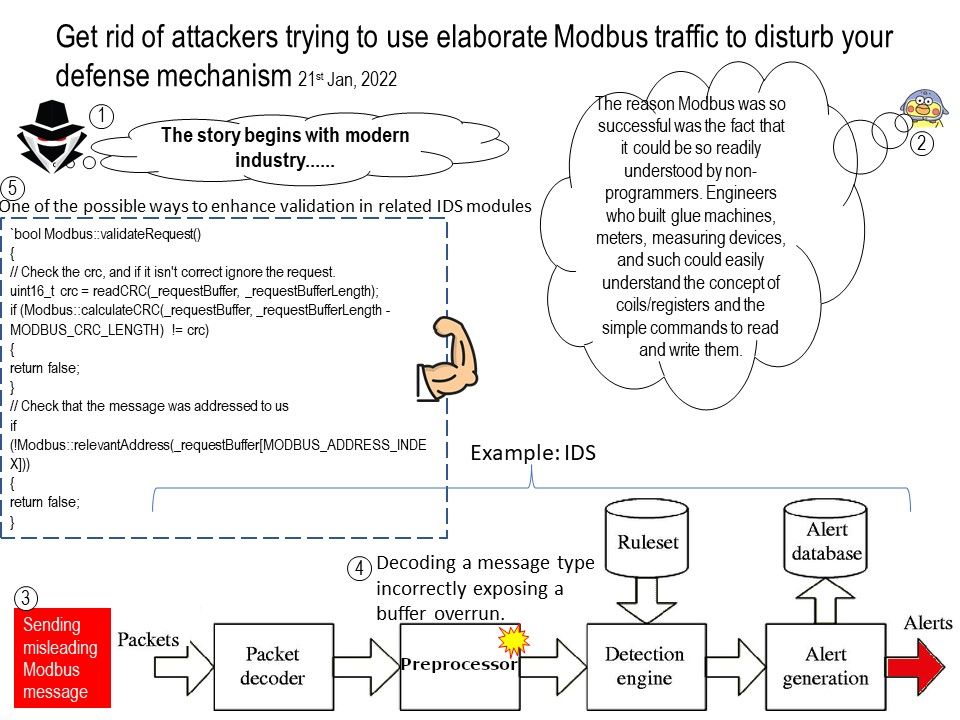
“excessive resource usage” in jsonrpc whether Citrix announcement (CTX 330728 ) security focus? (9th Nov 2021)

Preface: The Citrix ADC NITRO protocol allows you to configure and monitor the Citrix ADC appliance programmatically by using
Representational State Transfer (REST) interfaces. Therefore, NITRO applications can be developed in any programming language.
Additionally, for applications that must be developed in Java or .NET or Python, NITRO APIs are exposed through relevant libraries
that are packaged as separate Software Development Kits (SDKs).

Background: When it comes to network services, you can use remote procedure calls (RPC) and representational state transfer (REST) to create APIs for network communication. As with any programming problem, understanding the advantages of each method will help you choose the best solution to reduce technically unforeseen problems. Are you experienced “excessive resource usage” in jsonrpc technical matter? For more information on this matter, please refer to the attached picture. In addition, do you think the security focus of the Citrix announcement (CTX 330728) is on similar topics?

Vulnerability details:

CVE-2021-22955 – Unauthenticated denial of service
Affected Products – Citrix ADC, Citrix Gateway (Appliance must be configured as a VPN (Gateway) or AAA virtual server)
Possible cause: Uncontrolled Resource Consumption
Criticality – Critical

CVE-2021-22956 – Temporary disruption of the Management GUI, Nitro API and RPC communication
Affected Products: Citrix ADC, Citrix Gateway, Citrix SD-WAN WANOP Edition (Access to NSIP or SNIP with management interface access)
Possible cause: Uncontrolled Resource Consumption
Criticality – Critical

Official announcement – https://support.citrix.com/article/CTX330728