All posts by admin

Security Alert ! Trap of wannacry – status update on 29th May 2017

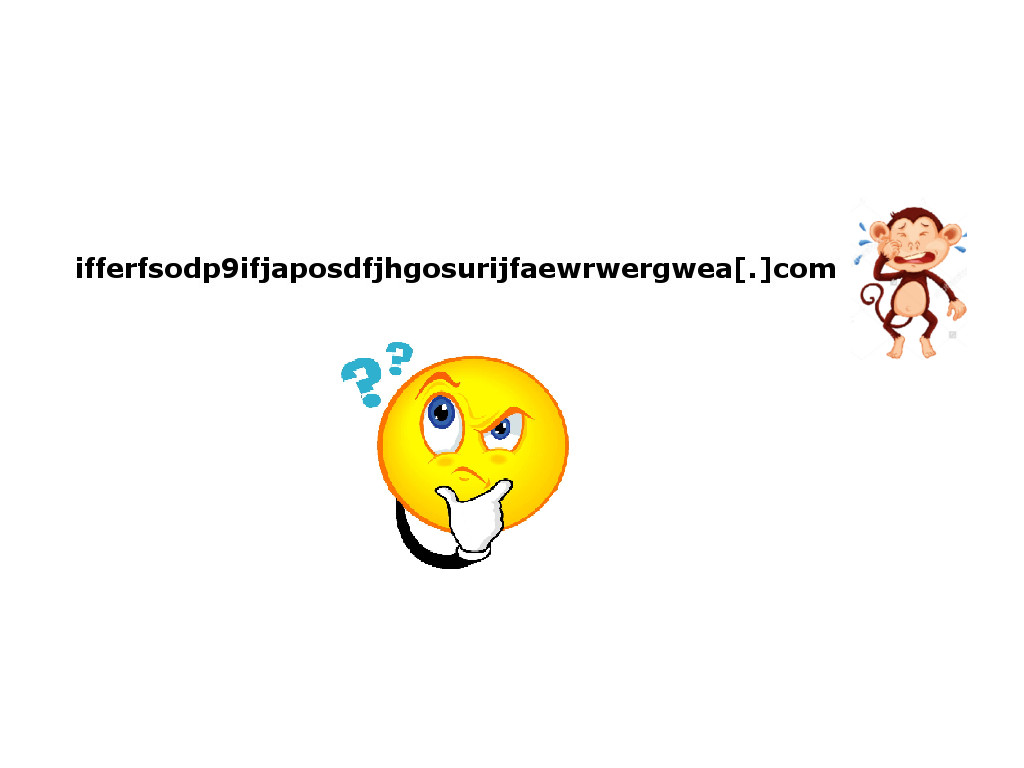
Is it anti-tradition? IT folks, do you white list ifferfsodp9ifjaposdfjhgosurijfaewrwergwea[.]com. Expert was told, the strange design of Wannacry will stop spread the ransomware to known subnet once he can get in touch with his C&C server. But do you think this is a trap? I speculated that ramsomware intend to create this trap fool the guy who think this is a solution and then can easy go to their internal network in 2nd phase. So the better idea is that do not input this domain into your whitelist. Cheers!

Information update on 18th May 2017

Recently Wana Decrypt0r 2.0 C&C server:

  • 57g7spgrzlojinas.onion
  • xxlvbrloxvriy2c5.onion
  • 76jdd2ir2embyv47.onion
  • cwwnhwhlz52maqm7.onion

Wana Decrypt0r 2.0 modify the Windows Registry Editor and target the following sub-keys:

HKCU\Software\Microsoft\Windows\CurrentVersion\Run\
HKCU\Software\WanaCrypt0r\
HKCU\Software\WanaCrypt0r\wd
HKCU\Control Panel\Desktop\Wallpaper

Encryption algorithms:

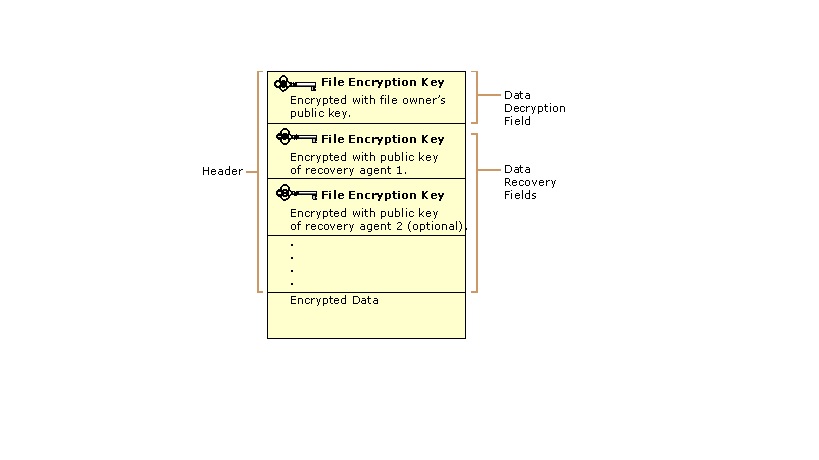
  • AES (Advanced Encryption Standard) 128 –  cannot be decrypted the file until you receive the FEK (File Encryption Key). This key may be the only method to decrypt the files .

Structure of an Encrypted File

Rivers-Shamir-Adleman or RSA – Wanncry design objective intent to generate unique public and private keys for each of the files. This makes the decryption of each file separate and very difficult and unique process.

Observation:

Attention: If no data backup on hand, it is hard to say pay the ransom is the solution. Since WanaCrypt0r .WNCRY contained extreme destroy concept and enforce to delete the shadow volume copies and eradicate all chances of reverting your files via backup on the infected computer (see below destroy scenario command syntax). The security concern is that it is hard to guarantee that it is virus free after hard disk encrypt on victim machine. As a matter of fact, WannCry via an Exploit kit, Dll file attack, malicious JavaScript or a drive-by download of the malware. No evident to proof that WannCrypt0r will remove his footprint after victim pay the ransom and therefore victim machine still vulnerable until execute a low level format of the hard disk and reinstall all the application. But it is hard to tell at this moment. Therefore it must be handle the data carefully after you pay the ransom.

The extreme destroy command syntax are shown as below:

  1. vssadmin delete shadows /all /quiet2.
  2. wmic shadowcopy delete

Remark: At user level below command can do in the following step: Go to Start Menu-All Programs-Accessories,then right-click Command Prompt and select Run As Administrator,because Administrative privileges are required to use BCDEdit to modify BCD

3. bcdedit /set boostatuspolicy ignoreallfailures
4. bcdedit /set {default} recoveryenabled no & wbadmin delete catalog -quiet

Hints and Resolution found on 19th May 2017

Hints that Windows 7, XP, Windows 2003 (x86 confirmed), Vista and 2008 and 2008 R2 instead of Windows 10 . The OS itself  keeps a copy of the two prime numbers that it provided to WannaCry in memory.  Those primes can be recovered. It is possible to relies on this feature to compute the encryption key and then used to decrypt all encrypted data. A tool make use of above criteria and might have way to decrypt your data. For more details, please refer to below url for reference.

https://github.com/aguinet/wannakey

If above hints can’t help and you would like to keep the encrypted data. You can do the following.

Backup all your files (00000000.eky and remaining files). May be in future, there is new resolution which provide the key decrypt your data.

Part 3 : Blockchain technology – Trend benefits finance and crime

Preface:

Take on public transportation today (11th May 2017), the headline news display on advertisement screen guide me start the discussion on block chain technology again.  It looks a realistic situation intend to boots up block chain technology growth. Let’s take a quick seen!

As of 6 February 2016, there are 15.2 million bitcoins circulation of a capped total of 21 million.

Bitcoins current status: As of today 11th May 2017
  • Total volume: 1800 Billion of dollars
  • 4 days exchange volume equal to 30 Billion of dollars

Block chain space Radical changes on 2017

In 2017 Microsoft announced their participation in the newly formed Enterprise Ethereum Alliance. Joining them are also companies such as Intel, J.P. Morgan, BNY Mellon, BP, ING, Thomson Reuters and blockchain startups. In general, my idea on key word “Ethereum” only focus on security incident. Sounds like that I am not suggest anyone to create Ethereum to let hackers get away your money.

Quote:  “In general, the Ethereum community is on board with the notion that we do not have to do things exactly the way that things are done in other crypto communities,”  -shortcut from Bloomberg Business week.

As a matter of fact, new technology has technical limitation not the 1st day we heard, but it has the mature model finally, right?  So I am not keen to my stubborn to say not suggest to use. Perhaps a positive discussion might provide more positive idea in this regard.

High Level understand of Ethereum

Ethereum is an open-source, public, blockchain-based distributed computing platform featuring smart contract (scripting) functionality.

Platform‎: ‎x86, ARM

Initial release‎: ‎30 July 2015

Written in‎: ‎C++‎, ‎Go‎, ‎Rust

Operating system‎: ‎Clients available for Linux, ‎Windows‎, ‎macOS‎, ‎POSIX‎, ‎Raspbian

Technical weakness on security viewpoint

Programming language: C++

Security problems with C and C++ programs is hard to avoid the following issue:

  • buffer overflow attack
  • Integer problems in C/C++
  • File I/O risks
  • Temporary files / a C++ TOCTOU vulnerability
  • Unicode bug‎

Programming language: Go

How are blockchain application developed by “GO”. What is “Go”? “Go” is a free and open source created at Google in 2007 by Robert Griesemer, Rob Pike, and Ken Thompson . Like other programming language, this programming language contain their design limitation. The vulnerability found this year was shown that the “Go” SSH library (x/crypto/ssh) by default does not verify host keys, facilitating man-in-the-middle attacks. Default behavior changed in commit e4e2799 to require explicitly registering a hostkey verification mechanism.

Programming language: Rust

Rust is a general purpose programming language sponsored by Mozilla Research. It is designed to be a “safe, concurrent, practical language”, supporting functional and imperative-procedural paradigms. Rust is syntactically similar to C++, but is designed for better memory safety while maintaining performance. Rust only panics from integer overflow when in debug mode. So it looks that this programming languages suitable for developers build block chain system application.

Remark: Developer Analyst firm Redmonk charted Rust’s move on the Github rankings from 46 to 18.

Modern cyber technology crisis

Ransomware attack is the 1st priority of concern:

Ransomware (Wannacry) attack hits 99 countries with UK hospitals among targets yesterday. As we know the specifics attack are leveraging a Windows exploit harvested from the NSA called EternalBlue ( –  the vulnerabilities could allow remote code execution if an attacker sends specially crafted messages to a Microsoft Server Message Block 1.0 (SMBv1) server). As a result it trigger the one to many attacks within the internal network.  Since it relies on SMB so it spread out in extremely fast way. We are not going to discuss this incident today.

The reflections of this incident let us know the design weakness can kill the system within 1 minutes and broadcast the attack to neighbor.  Be reminded that even though block chain or Ethereum technology network are built by group. It is a star topology network. A benefits for system and network resilience. However it increase the inherent risk.

Peer-to-peer communications between nodes running Ethereum clients run using the underlying ÐΞVp2p Wire Protocol. It is very secure. However if a trust client being compromised. From techincal point of view, hacker will more easy to infiltrate into it. Besides, the objective of ransomware  target  for ransom (money).  If the victim workstation (Ethereum client) or mobile phone (Ethereum client) was compromised by ransom (whole hard drive encrypted). A  high possibility to pay for the ransom otherwise he will lost more money.

Observation

As said, Ethereum deploy a high standard of secure protocol ( ÐΞVp2p Wire Protocol). However you can drill down in different area see whether can find out the design limitation.  For instance a well known vulnerability. A Java Debug Wire Protocol remote code execution. The problem was that JDWP ( Java Debug Wire Protocol) is one layer within the Java Platform Debugger Architecture (JPDA). JDWP does not use any authentication and could be abused by an attacker to execute arbitrary code on the affected server. Any impact here!

But my concern is on fast synchronization process. In the mean time I am still analysis what is the possibility to fool the remote peer on GetNodeData step. For more detail, please refer below specification.

Fast synchronization (PV63) specification:

GetNodeData [+0x0d, hash_0: B_32, hash_1: B_32, …] Require peer to return a NodeData message. Hint that useful values in it are those which correspond to given hashes.

NodeData [+0x0e, value_0: B, value_1: B, …] Provide a set of values which correspond to previously asked node data hashes from GetNodeData. Does not need to contain all; best effort is fine. If it contains none, then has no information for previous GetNodeData hashes.

GetReceipts [+0x0f, hash_0: B_32, hash_1: B_32, …] Require peer to return a Receipts message. Hint that useful values in it are those which correspond to blocks of the given hashes.

Receipts [+0x10, [receipt_0, receipt_1], …] Provide a set of receipts which correspond to previously asked in GetReceipts.

Summary:

Our discussion stop here today. I will provide more update in this regard. Thank you.

Reference:

Part 2:Blockchain technology situation – Malware join to bitcoin mining

Part 2:Blockchain technology situation – Malware join to bitcoin mining

Part 1:Blockchain technology situation – A Tales of Two Cities

http://www.antihackingonline.com/network-protocol-topology-standard/part-1blockchain-technology-situation-a-tales-of-two-cities/


Who spying on me? Da Vinci or Archimedes?

Preface:

Archimedes’ principle is a law of physics fundamental to fluid mechanics.

Leonardo Da vinci  is widely considered one of the most diversely talented individuals ever to have lived.

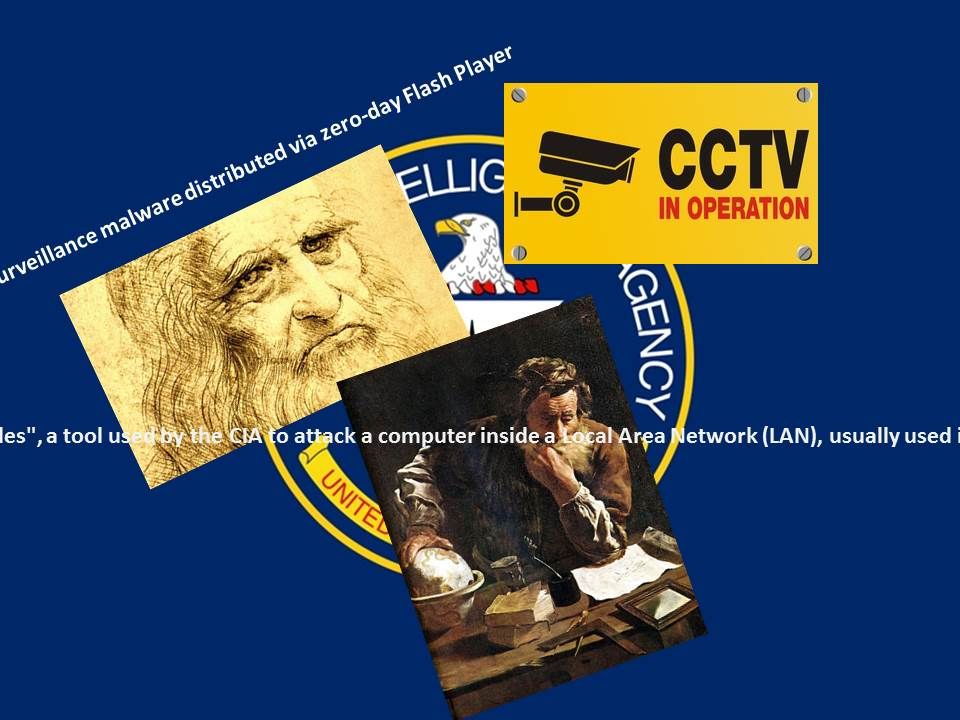
Since they are the famous scientists. They dedicate their inventions to the world. But we known the infamous tools in cyber world for the government surveillance program. The most famous eavesdropping feature type of malware. Those surveillance tools make use of similar naming convention. From general point of view, it looks that it is not respect of these two great scientists!

About  Da vinci  Spy tools

A powerful spy software developed by Italian hack team, the tool benefits to track a person’s calls and other communications in real-time.  This tools only sell to law enforcement or government agent. Italian Hacking Team was hacked by other hacker group on 2015. More than 400GB of data, including source code, internal documents and emails that could reveal the identity of customers display on embedded torrent file share link. A rumors were told that Italian hack team blamed their customer unethical collect their technology and hack them.

About Archimedes tool

We all known tool used by the CIA named “Archimedes”  open to the world through WikiLeaks on 5th May 2017. Archimedes developed by CIA engineering development Group. The project code so called UMBRAGE project.  It is a interested project code name. The definition of Umbrage means offense; annoyance; displeasure: to feel umbrage at a social snub; to give umbrage to someone; to take umbrage at someone’s rudeness.

Technology

 Da vinci  Spy tool

Da vinci spy tool relies on JAR (Java ARchive) , Microsoft Office and Adobe Flash Player design limitation as a infection media to fulfill their remote control system (RCS) criteria (see below). A more advance technique of tool easy to fool the cyber defense mechanism since this is a unknown attack (zero day) and therefore it will be more easily to spread out the spyware fulfill their objective.

1. Self-signed JAR
2. CVE-2012-4167: Integer overflow in Adobe Flash Player
3. CVE-2010-3333: Stack-based buffer overflow in Microsoft Office
4. CVE-2012-5054: Integer overflow in the copyRawDataTo method in the Matrix3D class in Adobe Flash Player
5. CVE-2012-1682: Unspecified vulnerability in the Java Runtime Environment (JRE)
6. CVE-2013-0633: Buffer overflow in Adobe Flash Player

Archimedes

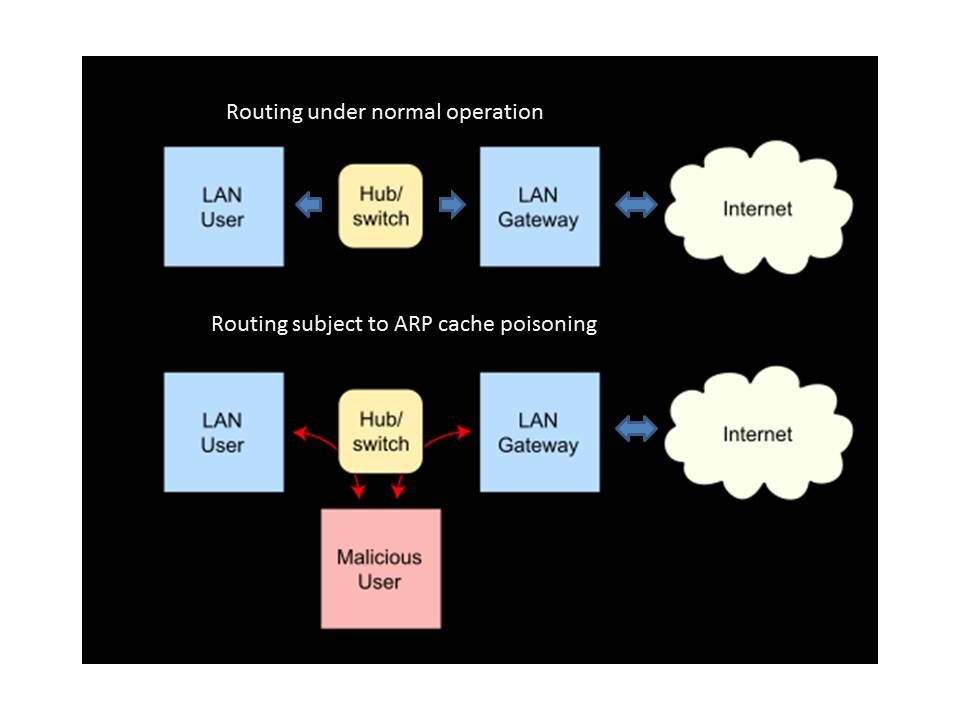
Archimedes is an update to Fulcrum 0.6.1. The design objective of Fulcrum. Fulcrum will direct a target machine’s HTTP client traffic to the URL of the attacker’s choice. The technique involves ARP Spoofing to Get In the Middle and HTTP Traffic Injection. The simple conceptual idea shown in below picture.

Archimedes (Fulcrum 0.6.2) focus windows OS with high flexibility. The attacker can execute Fulcrum as an EXE with Compiled Parameters. In order to avoid anti-virus program protection .The remote attacker can run as DLL with rundll32.exe with CommandLine Parameters. The tool itself is not sophisticated. Attacker can easy to get rid following files (f32.exe,f32.dll,fs32.exe,fs32.dll,f.cfg and f.log). The normal computer user do not know what is happen.

Capability and Flexibility

Da vinci  Spy tool:

Capability: small footprint,  unknown vulnerability (zero day)

Flexibility: Antivirus program not easy to detect until vulnerabilities found by vendor

Archimedes :

Capability: small footprint,  similar normal application program service daemon

Flexibility: Antivirus program not easy to detect until vulnerabilities found by vendor

Similarity

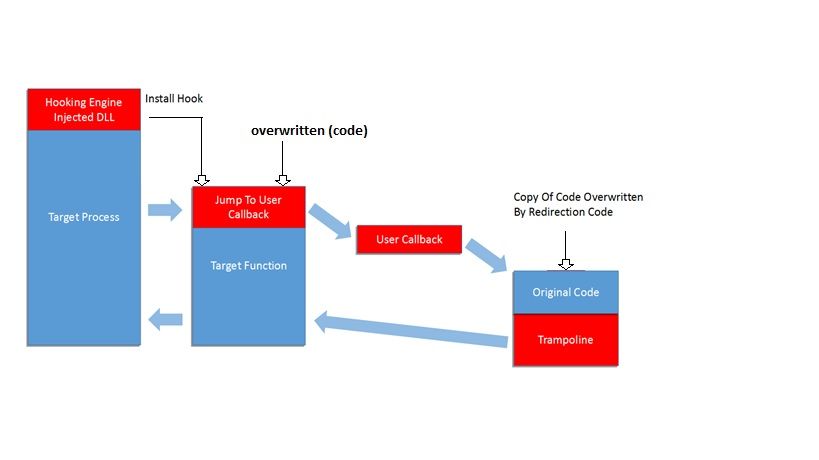
Both spy tools (Da vinci  &  Archimedes (Fulcrum 0.6.2))are using inline hooking technique (see below).

However Archimedes (Fulcrum 0.6.2) looks develop infiltration technique from layer 2. For instance ARP cache poisoning.  Both spy tools entry point (infiltration) looks have differences! Da vinci more focus on layer 7 (application) and Archimedes run on layer 2. Seems it is hard to proof the integrity of the rumors (Italian hack team blamed their customer unethical collect their technology and hack them). But it is not the absolute answer. Let’s keep our eye open on wiki-leaks to know more!


Reference:

https://wikileaks.org/vault7/#Archimedes


Proof of idea! Who bear unredressed injustice APT activities in 2013.

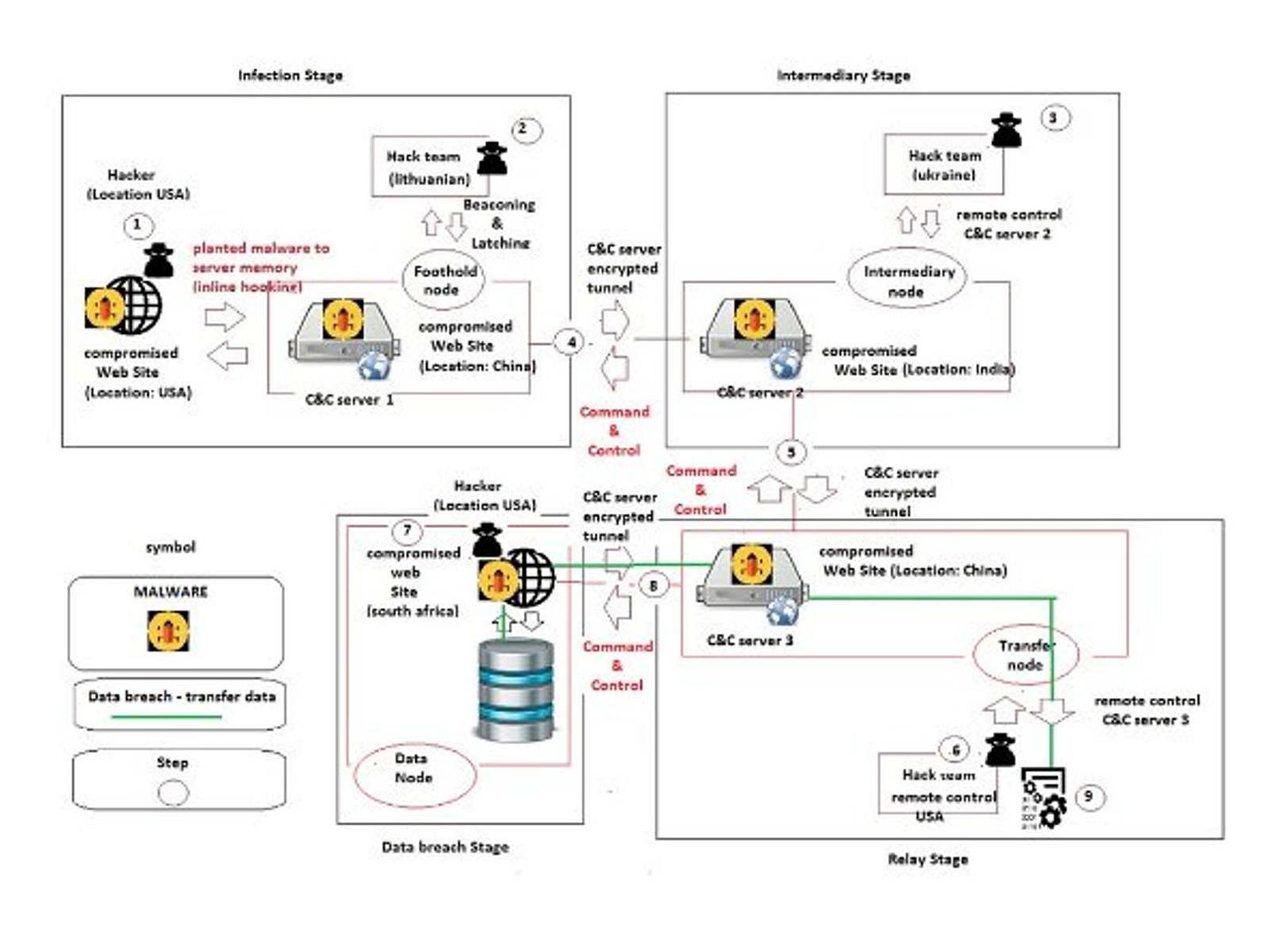
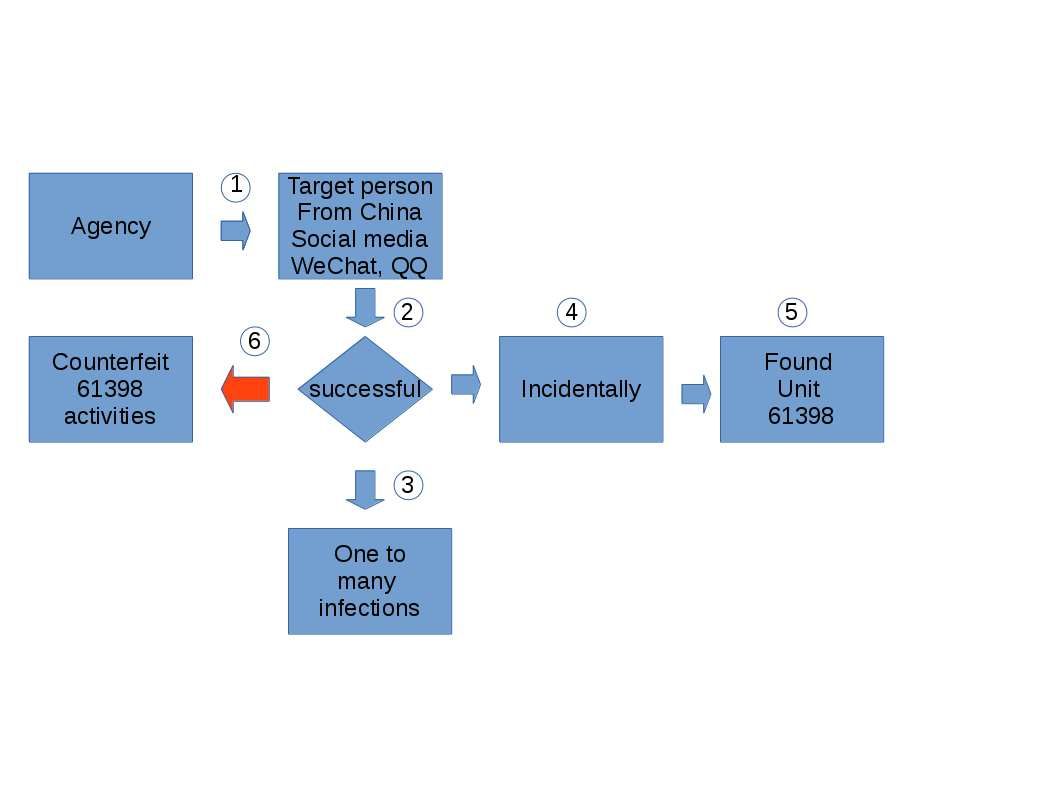
Wiki released confidential document on 28th April, 2017, the details is exposed how government enforcement agency (CIA) counterfeit Russian and Chinese cyber activities. We receive the basic understanding of the Scribbles . To be honest, it is common that when government agency take the criminal action. However of this confidential information exposed. My reflections drive me to review my former written articles on other discussion forum during 16th April 2016. I was question that engage the investigation on Advanced Persistence threat (APT) might mislead the direction of the result. Their mechanism contains many shadow nodes. The shadow nodes located in different areas and countries. It can take this advantage and convert as political tool. The overall idea to me on this issue, I can do a scenario replay to assembly the story. Since this is only my speculation and imagination. As a matter of fact, it looks with high possibility. If you are interest, please go ahead to read more.

The story given out from my memories, it is talking about 4 years ago. The senior person (owner) of a consulting company email account was hacked. The security guru found that there is a Advanced Persistence threat (APT) activities given by China. A rumours were told that the people who found this so called Advanced Persistence threat (APT) is the anonymous group. This powerful under ground group found out this incident and intend to provides hints and finger print let the security consultant found out the truth. My personal opinion is that such incident might contained some shadow node. Also it is easy to counterfeit the attack. Today it looks that the secret information exposed by Wiki leak provides more possible factors. At the same time it make people queries the result in 2013. At least I am the one who question this result. Below is my speculation how CIA counterfeit the cyber activities let the APAC countries especially China bare unredressed injustice causes.

Latest WikiLeaks release shows how the CIA uses computer code to hide the origins of its hacking attacks and ‘disguise them as Russian or Chinese activity’

https://wikileaks.org/vault7/?marble#Marble

Recap my discussion details on 16th April 2016

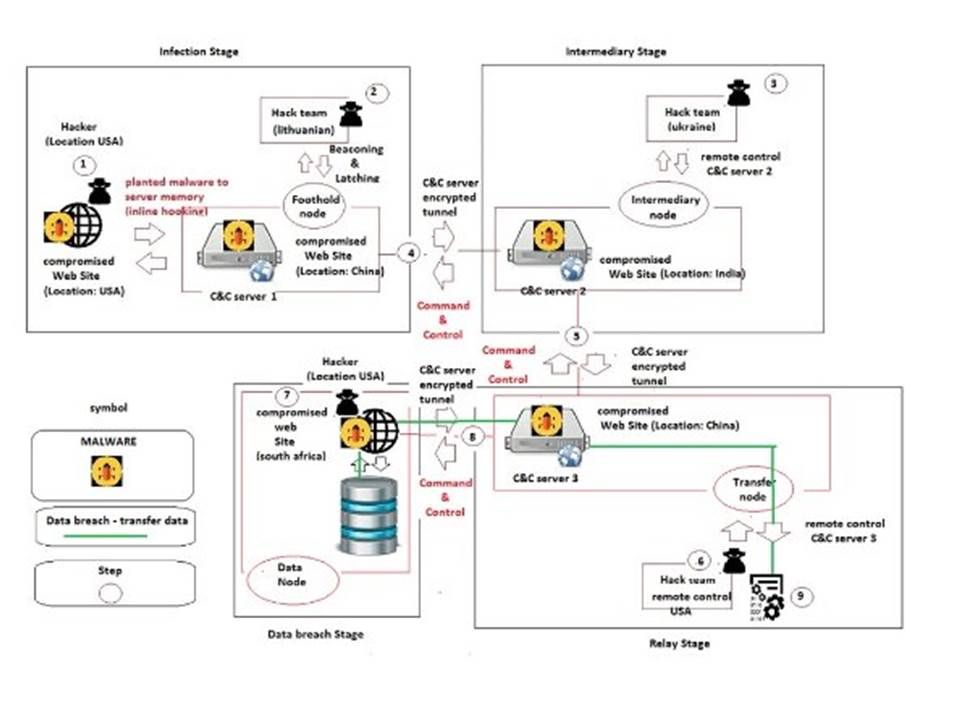
An unauthorized person gains access to a network and stays there undetected for a long period of time. Cyber security terminology so called APT attack. APT style attack confused security experts. Their mechanism contains many shadow nodes. The shadow nodes located in different areas and countries. It can take this advantage and convert as political tool. It is a sword. Careerist can blame another country that they are dishonest using internet. Who’s cast a unrighted wrong, believed that attached diagram can provide an idea to you in this regard.


Are 64-bit OS malware proof?


Preface:

As we known, computer process direct work with Kernel (Ring 0) is quite dangerous. More realistic to say is that Real mode, also called real address mode, is an operating mode of all x86-compatible CPUs. Real mode provides no support for memory protection, multitasking, or code privilege levels. Windows 95 executes drivers and process switching in ring 0, while applications, including API DLL such as kernel32.dll and krnl386.exe are executed in ring 3.

We found trick on Windows 10. For instance,  you are allow to run 16 bit application on 32 bit (Window 10) operating system. But not allow to run 16 bit application on 64 bit (Windows 10) OS.

Why? A processor limitation of 64 bit OS to execute (non-protected mode) 16-bit code. The 64-bit versions of Windows include 32-bit protected mode runtime libraries, but do not include any 16-bit protected mode runtime libraries. But how’s the mystery allow execute a Dos command prompt on 64-bit (Windows 10)OS? The Dos emulator make the magic.

The kernel of windows 10 is located at top of memory. The 64 bit OS of memory support 3.5GB RAM above, hacker have difficulties to find out the kernel process finger print in memory. Apart from that, the 64 bit operating system Kernel executable not direct reachable! Since it can’t communicate with kernel directly. Therefore a common criteria consensus 64 bits OS is malware proof.

Have you heard the weakness of superman? Kryptonite are able to reduce his power?

The origin story of Superman relates that he was born on the planet Krypton. Kryptonite is a radioactive mineral from Krypton. It was produced during explosion of Krypton. Kryptonite are able to reduce superman power. A similar scenario of 64 bit OS system. Since Kernel executable not reachable. However PAGE TABLE is loaded below 4GB. So it is possible to do the follow concept to unlock windows 10.

Viewing and Editing Registers in WinDbg

Solution: Self-ref entry technique

Reference: In 32 bits, this entry is usually located in the PAGE DIRECTORY, even with PAE enabled.
In 64 bits, this entry is located in the PML4

  • CPU CR3 register point to physical address (PA) of PML4
  • PML4(entry) point to PA of PDPT
  • PDPT(entry) point to PA of PD
  • PD(entry) point to PA of PT
  • PT contains Page Table Entries

As a result a re-used entry in the four paging levels, which means that this is used by the CPU as PML4 entry, PDPT entry, Page Directory entry and Page Table entry at the same time.

Busy this week, allow for me to complete the remaining part next week, Sorry!

IT cup noodles – fast step detect IoT devices on your network

Preface:

The world has been changed. Modern people all unforgotable a key word on mouth. What’s is this? The word efficiency. No matter you wait for dinner, buy lunch, queue in cinema buy the ticket.  We all looking for the final expectation is quick! Right?  Since our standard life without computation is hard to survival. How about cyber security. The headlines news alerts you daily of cyber incidents. Whereby manufacturer and business man satisfy your  expectation. For the food, we have ready to eat noodle. But how about the cyber security solution. Any Quick and done solution available in the market?  Yes, it is available. Regarding to the subject matter, below solution is the quick and dirty solution to figure out the IoT devices inside your network! Sounds like a Japan food product (Cup Noodle). Be my guest. Enjoy!

Requirement:

As of today, firm install the SIEM product is the major component to compliance standard. No matter PCI, SOX & ISO 27001 compliance standard they are all require a central log management system. The technical term so all SIEM (Security information and event management). The SIEM system carry a major powerful feature so call correlation rule.  The scenario is that SIEM system will identify and filter the specifics log event of the device on custom setup. Then provide a status update (send the notification email) alert on duty IT staff what is the current situation.

Since the function is ready. We can g to next step.

What is the theory?

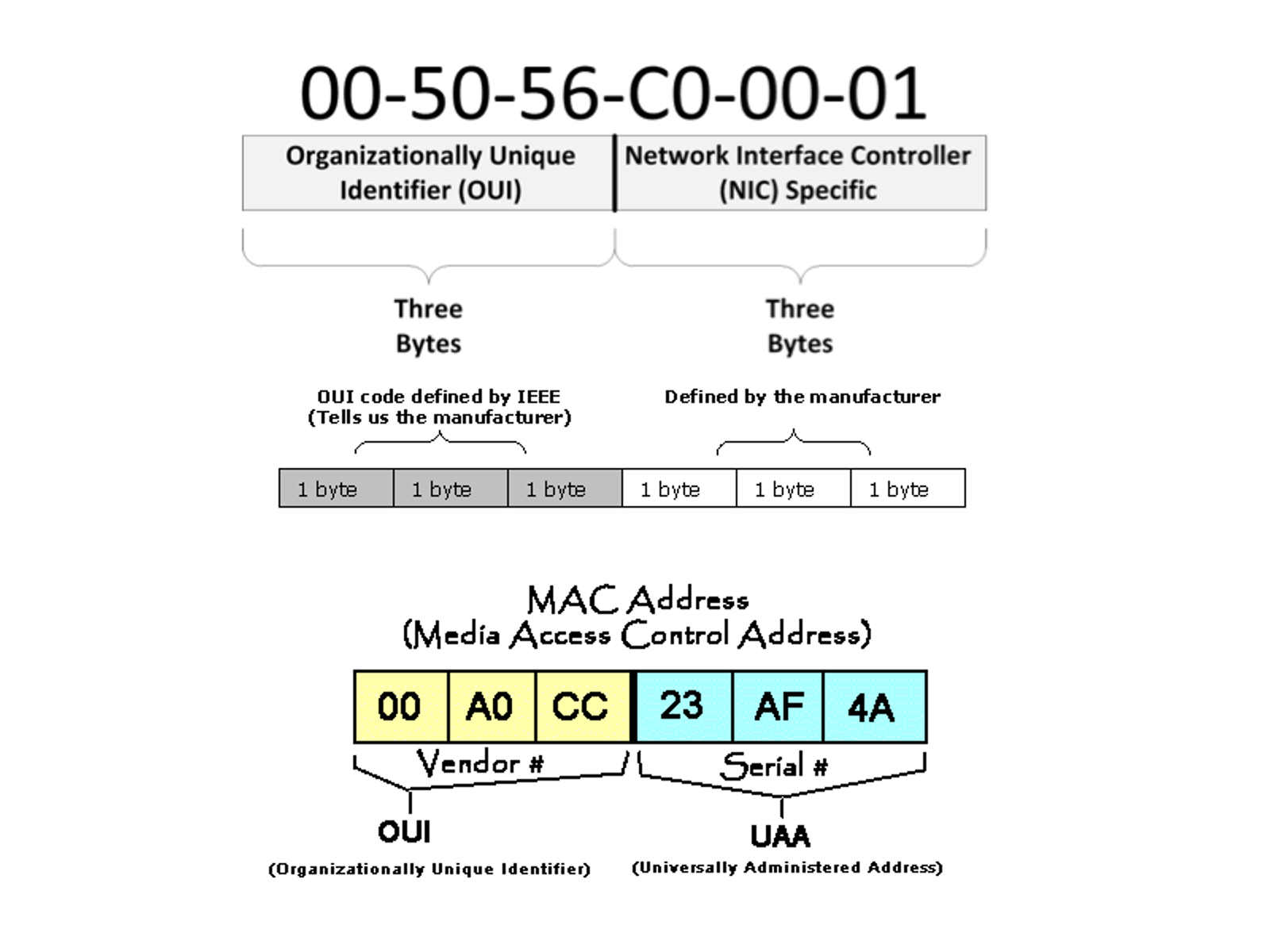
As we know, the ethernet mac address contains vendor ID name field (see below diagram for reference) to determine the corresponding vendor. Since this vendor ID is unique and therefore we can make use of this vendor ID to figure out the target.

Criteria (specifications):

The SIEM system default function come with parser function to identify the MAC address of each device. Since most of the log event format are compliance to common standard. The most popular one of the standardization is the common event format (CEF).
The format called Common Event Format (CEF) can be readily adopted by vendors of both security and non-security devices. This format contains the most relevant event information, making it easy for event consumers to parse and use them.


Procedure:

Define rogue device detection on SIEM system.  SIEM system is able to use the first few octets of a mac address to identify a rogue device. If so, then you could then use the vendor part of mac address to enforce your company IT policy. Avoid the IoT devices hide inside your network and reduce the insider threat. Below breakdown list is the vendor MAC address for your reference. Since my vendor ID on hand more than 100 pages and therefore not going to post here.

F8A45F	Xiaomi Communications Co Ltd
8CBEBE	Xiaomi Communications Co Ltd
640980	Xiaomi Communications Co Ltd
98FAE3	Xiaomi Communications Co Ltd
185936	Xiaomi Communications Co Ltd
9C99A0	Xiaomi Communications Co Ltd
84742A	zte corporation
BC3AEA	GUANGDONG OPPO MOBILE TELECOMMUNICATIONS CORP.,LTD
E8BBA8	GUANGDONG OPPO MOBILE TELECOMMUNICATIONS CORP.,LTD
8C0EE3	GUANGDONG OPPO MOBILE TELECOMMUNICATIONS CORP.,LTD
006B8E	Shanghai Feixun Communication Co.,Ltd.
C81479	Samsung Electronics Co.,Ltd
54FB58	WISEWARE, Lda
A42940	Shenzhen YOUHUA Technology Co., Ltd
B00594	Liteon Technology Corporation
C0A0BB	D-Link International
28A1EB	ETEK TECHNOLOGY (SHENZHEN) CO.,LTD
4CCBF5	zte corporation
F0F5AE	Adaptrum Inc.
F42896	SPECTO PAINEIS ELETRONICOS LTDA
5C36B8	TCL King Electrical Appliances (Huizhou) Ltd.
90F3B7	Kirisun Communications Co., Ltd.
DCAD9E	GreenPriz
B4827B	AKG Acoustics GmbH
3C18A0	Luxshare Precision Industry Co.,Ltd.
186472	Aruba Networks
4CB81C	SAM Electronics GmbH
2C3731	ShenZhen Yifang Digital Technology Co.,LTD
041A04	WaveIP
94E98C	Alcatel-Lucent
50206B	Emerson Climate Technologies Transportation Solutions
C8EE75	Pishion International Co. Ltd
CC3429	TP-LINK TECHNOLOGIES CO.,LTD.
1C7B21	Sony Mobile Communications AB
BC9680	Shenzhen Gongjin Electronics Co.,Ltd
9C2840	Discovery Technology,LTD..
F89FB8	YAZAKI Energy System Corporation
709E29	Sony Computer Entertainment Inc.
E0B2F1	FN-LINK TECHNOLOGY LIMITED
F037A1	Huike Electronics (SHENZHEN) CO., LTD.

Conclusion:

As said, this is a fast food solution. If the above solution not suitable to your shop. The better idea is that invite your SIEM vendor to develop the appropriate solution fit for your requirement. It is now reach my lunch hour. Ok, we are stop the discussion here.

Cup Noodle please!

Conduct self assessment enhance your cyber security setup

Preface:

Although your in house IT setup has SIEM, IDS, IPS, ..etc. But you may have questions? What is the defense criteria. Yes, we fully understand that install full scope of defense mechanism might mitigate the risk, right? Implement the IT strategic outsourcing.  Enforce the follow the Sun policy. Deploy the management security service.  But think it over, those defense mechanisms are involve human operation.  Perhaps the SLA agreement of your services provider promises 99.99 % response time. But cyber security incident handling method far away with normal IT operation framework. For instance, engage the forensic investigation sometimes consume time to isolate the problem. As a matter of fact, SLA looks like a value. The quicker you receive email reply or return phone call did not imply it boots up the value of cyber incident management.

Objective:

Now we look back the cyber incident history. The security experts and security analysis Guru are summarized the key factors of the weakness of IT infrastructure today. No matter how was the size of your firm. Below key elements can guide you to the appropriate approach.

Weaknesses of IT domain – Key elements

  1. Unauthenticated protocols
  2. Outdated hardware
  3. Weak user authentication
  4. Weak file integrity checks
  5. Vulnerable Windows operating systems
  6. Undocumented third-party relationships

If your firm is able to compliance above 6 items of key elements. I was say congratulation to you. But for the realistic point of view, I believed that it is not easy to archive. For instance, you application development team is going to enhance the application. However the application integrate with a legacy product. Furthermore the legacy product is retired of their product life cycle. You know what is the weakness and the vulnerabilities. As a matter of fact, it is not possible to inform your management team suspend the project process since this is a business objective. Similar fashion of  scenario you might encountered or familiar.  Any idea or resolution to resolve such business habit forming manner. Since all the final decision will be decide by CSO, CIO or coporate management team. But at least following hints can give more space to you for thinking of this subject matter.

Definition:

Use a security controls matrix to justify controls and identify the weakness of the specifics area. The design goal is that take the benefit of matrix table for simplification terms. Thus provide a straight forward path which can apply to the key objective area. Since we all tech guy and no need to mention in depth. For more details, please see below:

Base on the 6 key elements of weakness in overall IT Infrastructure. Below assessment tool can provides an overall idea to you which area of weakness encountered in your shop.


authenticated protocols Availability SSL or VPN (Ipsec) Change control policy
Router (GUI access) Yes(1)/No(0) Yes(1)/No(0)
Switch (GUI access) Yes(1)/No(0) Yes(1)/No(0)
Firewall (GUI access) Yes(1)/No(0) Yes(1)/No(0)
Managed security service (GUI access) Yes(1)/No(0) Yes(1)/No(0)
Cloud Farm (GUI access) Yes(1)/No(0) Yes(1)/No(0)
Total score Full score (5) Full score (5)
Outdated Hardware Still operate In-House hardware lifecycle policy
Router (OS obsoleted) Yes(0)/No(1) Yes(1)/No(0)
Switch (OS obsoleted) Yes(0)/No(1) Yes(1)/No(0)
Firewall (OS obsoleted) Yes(0)/No(1) Yes(1)/No(0)
Sever (Vendor support – End of Life) Yes(0)/No(1) Yes(1)/No(0)
PABX (CTI server) Yes(0)/No(1) Yes(1)/No(0)
Total score Full score (5) Full score (5)
user authentication ID asset management Single sign-on feature
Router Logon access Yes(1)/No(0) Yes(0)/No(1)
Switch Logon access Yes(1)/No(0) Yes(0)/No(1)
Firewall Logon access Yes(1)/No(0) Yes(0)/No(1)
Privileges ID Yes(1)/No(0) Yes(0)/No(1)
Application program service ID Yes(1)/No(0) Yes(0)/No(1)
Total score Full score (5) Full Score (5)
File integrity check Top Secret / Confidential Data Data classification Policy
Server Yes(1)/No(0) Yes(1)/No(0)
Web Application (External) Yes(1)/No(0) Yes(1)/No(0)
Web Application (Internal) Yes(1)/No(0) Yes(1)/No(0)
Database (DB) Yes(1)/No(0) Yes(1)/No(0)
Cloud farm Yes(1)/No(0) Yes(1)/No(0)
Total score Full score (5) Full score (5)
Vulnerability management Zero day & critical patch Incident management procedure
Router Yes(1)/No(0) Yes(1)/No(0)
Switch Yes(1)/No(0) Yes(1)/No(0)
Firewall Yes(1)/No(0) Yes(1)/No(0)
Server Yes(1)/No(0) Yes(1)/No(0)
Application Yes(1)/No(0) Yes(1)/No(0)
Total score Full score (5) Full score (5)
3rd Party relationship Responsibilities (scope of works and support level of cyber security incident) Dedicated subject matter expert implement in this role
Management security services Yes(1)/No(0) Yes(1)/No(0)
Web Hosting Yes(1)/No(0) Yes(1)/No(0)
Application (Vendor service support token) Yes(1)/No(0) Yes(1)/No(0)
Hardware maintenance (services provider) Yes(1)/No(0) Yes(1)/No(0)
Network (MPLS, Frame-link, Internet line, Boardband..etc) Yes(1)/No(0) Yes(1)/No(0)
Total score Full score (5) Full score (5)

Achievement:

What is your over performance score on above matrix table?  If it is not suitable to your environment. No problem, please go ahead to modify the criteria and try to fit to your project scope. Even though external auditor engage the risk assessment they are using the same idea.  Good luck to all of you!


The silent of the Flash, Be aware of RTMFP protocol! He can exacerbate network attacks.


Flash Player has a wide user base, and is a common format for games, animations, and graphical user interfaces (GUIs) embedded in web pages. However the trend of HTML 5  is going to replace his duty on market. Google stop running Flash display advertisement on Jan 2017.  The e-newspaper (Digital journal) foreseen that the Adobe’s Flash expected to be dead and gone by 2018. However, the software vendor Adobe release Flash Player 25 on Mar 2017. Before the discussion starts, ,  lets go through the current market status of Flash player.  Below picture show the current market position of Flash. It looks that a significant drop of the market share today.

Market position 2017

A question you may ask? If the market share of the product dropped, it is not necessary to discuss a low popularity product.  But my concerns on Adobe Flash application still valid. The fact is that even though you are not going to use. However Flash Player installed on your machine have inherent risk.  Ok, make it simple. Let jump to our main topic now. It is the real-time media flow protocol from Adobe.

What is the Real-Time Media Flow Protocol (RTMFP)?

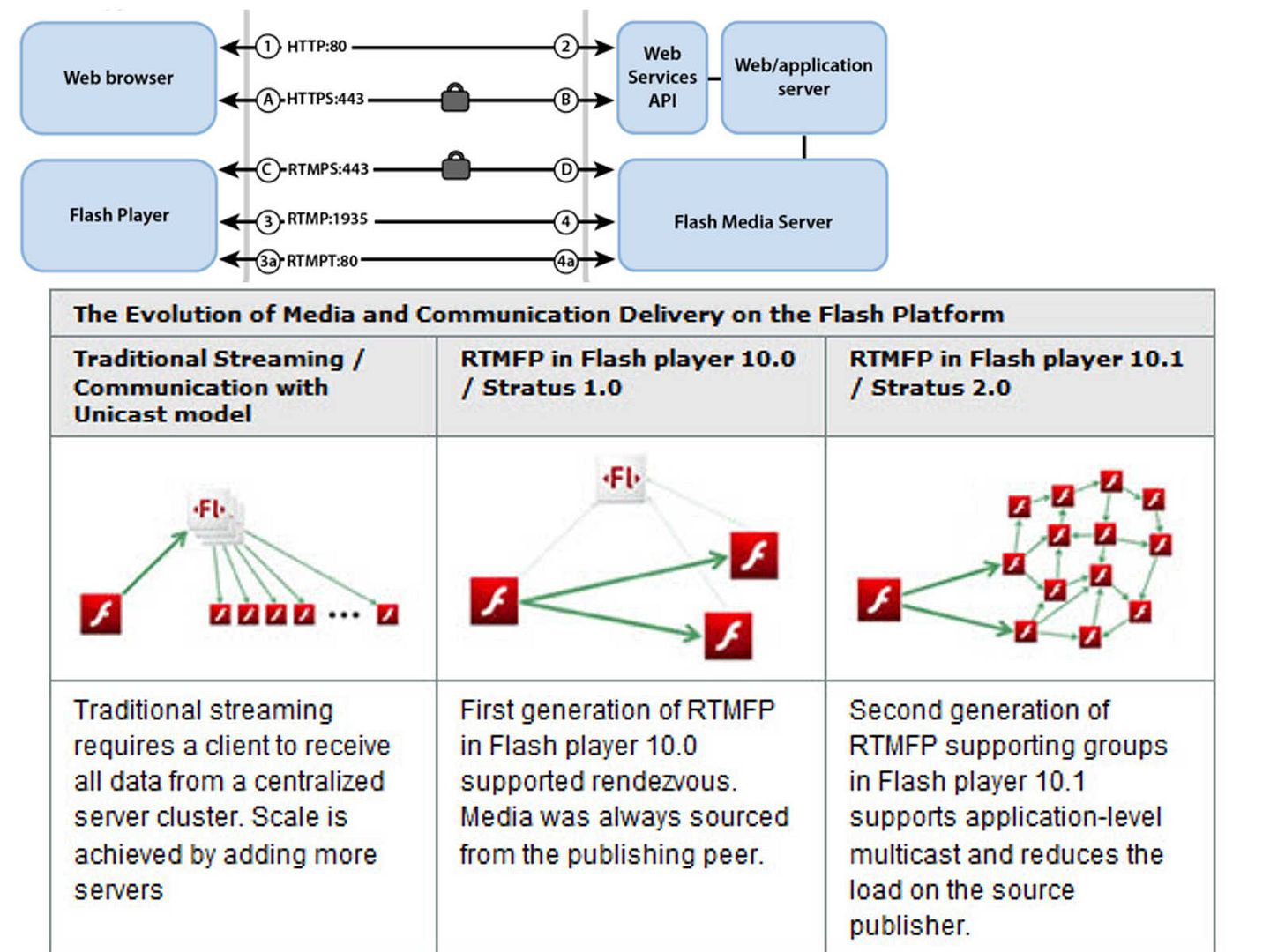
The Real-Time Media Flow Protocol (RTMFP) is a communication protocol from Adobe that enables direct end user to end user peering communication between multiple instances of the Adobe® Flash® Player client and applications built using the Adobe AIR® framework for the delivery of rich, live, real-time communication.

The evolution of Adobe system design

The IETF technical articles issued on Dec 2014 has following security consideration.

Cryptographic aspects of RTMFP architecture:
RTMFP architecture does not define or use a Public Key Infrastructure (PKI). Clients should use static Diffie-Hellman keys in their certificates. Clients MUST create a new certificate with a distinct fingerprint for each new NetConnection. These constraints make client identities ephemeral but unable to be forged. A man-in-the-middle cannot successfully interpose itself in a connection to a target client addressed by its fingerprint/peer ID if the target client uses a static Diffie-Hellman public key.

Servers can have long-lived RTMFP instances, so they SHOULD use
ephemeral Diffie-Hellman public keys for forward secrecy. This
allows server peer IDs to be forged; however, clients do not connect
to servers by peer ID, so this is irrelevant.

For more details on above matter, please visit IETF techincal articles https://tools.ietf.org/html/rfc7425#page-46

Our observation today

  1. Since RTMFP is based on UDP. UDP (User Datagram Protocol) connectionless state which decreased latency and overhead, and greater tolerance for dropped or missing packets. RTMFP supporting groups in Flash player support multicast feature. If hacker counterfeit a malicious swf format file and deploy with spear phishing hacking technique. Since it is a multicast structure and therefore it is hard to located the original source file.

2. CVE-2017-2997 exploits vulnerability in the Primetime TVSDK that supports customizing ad information. Successful exploitation could lead to arbitrary code execution. However a design weakness looks appear on TVSDK , an out-of-bound read vulnerability found by FireEye on May 2016.

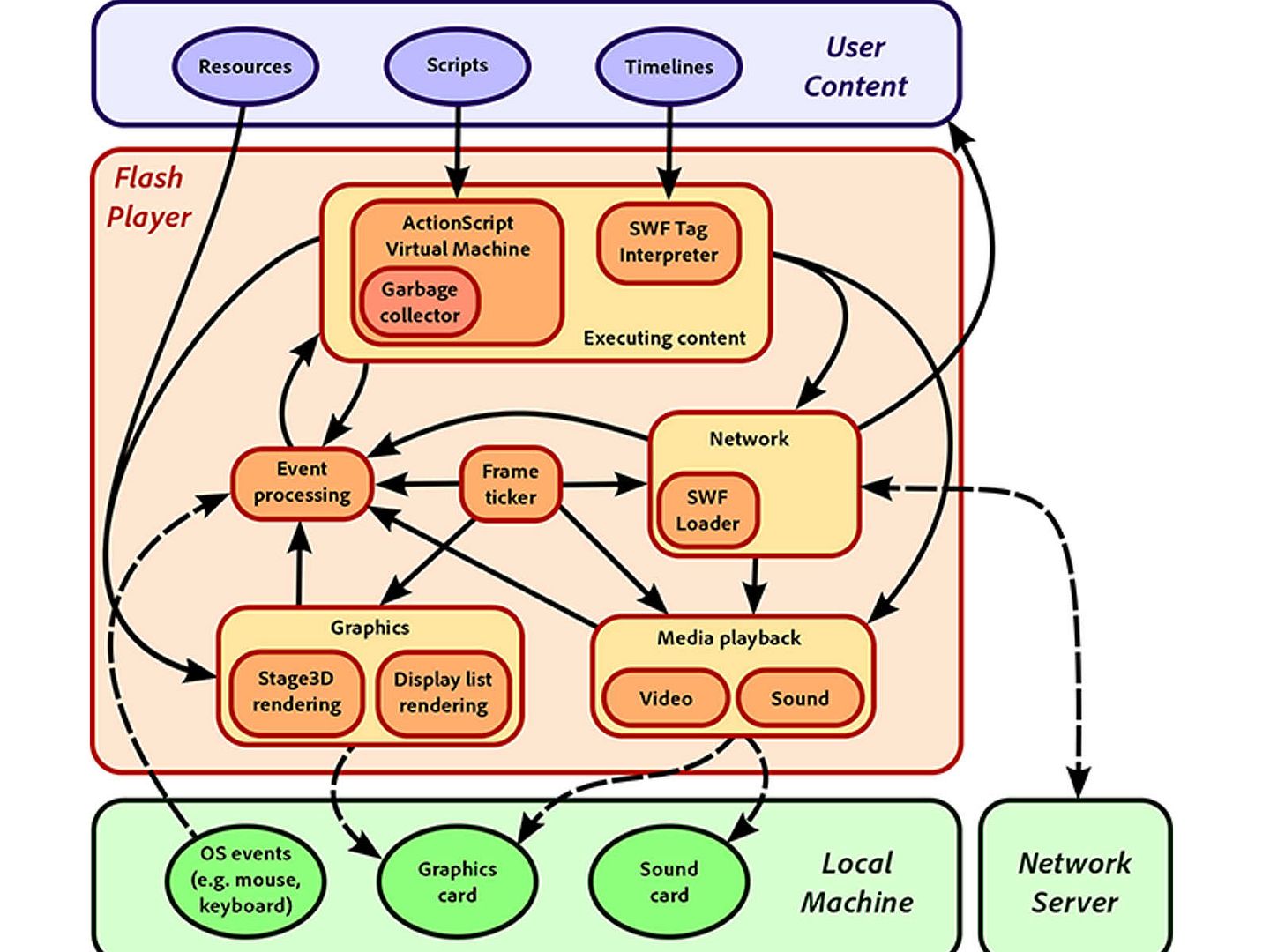
3. Besides, The AVM (Action script virtual machine) implements certain core features of ActionScript, including garbage collection and exceptions, and also acts as a bridge between your code and Flash Player. The use-after-free memory feature in AVM is protect by  OS system. Even though implement Address space layout randomization (ASLR)  and Data Execution Prevention (DEP) but still have way by-pass by attacker. Windows 8.1 Update 3 Microsoft introduced a new exploit mitigation technology called Control Flow Guard (CFG). CFG injects a check before every indirect call in the code in order to verify if the destination address of that call is one of the locations identified as “safe” at compile time. However overwrite Guard CF Check Function Pointer with the address of a ret instruction will
let any address pass Guard CF Check Function, and thus bypass CFG.

Overall comments on above 3 items:

It looks that Flash contained fundamental design limitation, may be there are more hidden risks does not discover yet. As far as I know, law enforcement agency relies on Flash vulnerabilities to implement the surveillance program (Reference to vulnerability on 2012). My suggestion is that it is better uninstall the Flash on your web browser especially enterprise firm IT operation environment. Since Information security is a continuous program, so stay tuned,  update will be coming soon!

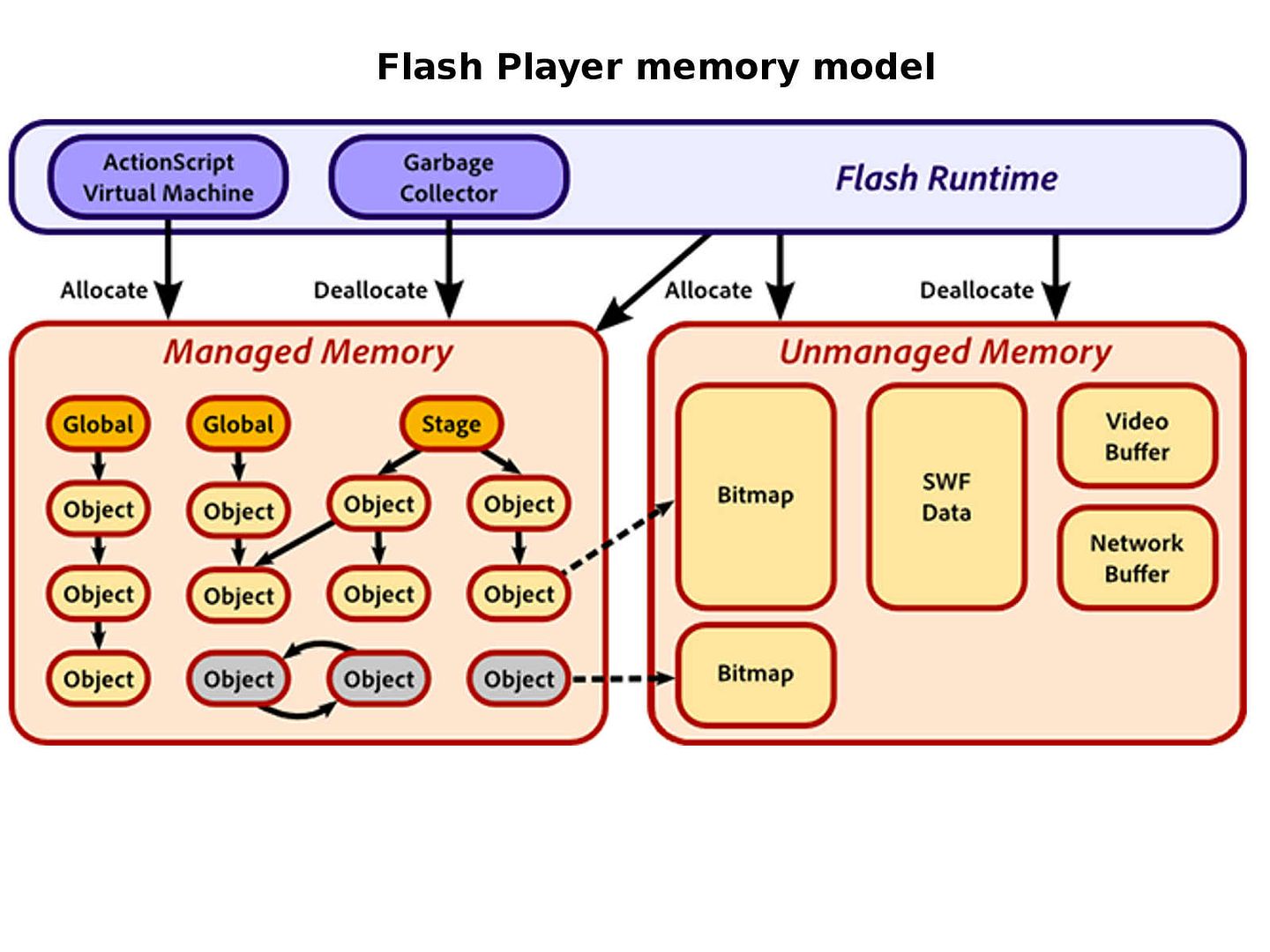
Flash Architecture

Remark: out-of-bounds definition – This typically occurs when the pointer or its index is incremented or decremented to a position beyond the bounds of the buffer or when pointer arithmetic results in a position outside of the valid memory location to name a few. This may result in corruption of sensitive information, a crash, or code execution among other things.

Application platform  – Language C and C++

The chronology of attack

2012: The malicious documents contain an embedded reference to a malicious Flash file hosted on a remote server. When the Flash file is acquired and opened, it sprays the heap with shellcode and triggers the CVE-2012-0779 exploit. Once the shellcode gains control, it looks for the payload in the original document, decrypts it, drops it to disk, and executes it. Symantec detects this payload as Trojan.Pasam. The malicious files we have observed so far are contacting servers hosted in China, Korea, and the United States to acquire the necessary data to complete the exploitation. This attack is targeting Adobe Flash Player on Internet Explorer for Windows only.

2015: SWF file is used to inject an invisible, malicious iFrame

2017: (CVE-2017-2997, CVE-2017-2998,CVE-2017-2999,CVE-2017-3000,CVE-2017-3001,CVE-2017-3002 & CVE-2017-3003)

A buffer overflow vulnerability that could lead to code execution (CVE-2017-2997).
Memory corruption vulnerabilities that could lead to code execution (CVE-2017-2998, CVE-2017-2999).
Random number generator vulnerability used for constant blinding that could lead to information disclosure (CVE-2017-3000).
unpatch vulnerabilities lead to code execution (CVE-2017-3001, CVE-2017-3002, CVE-2017-3003)


Part 2:Blockchain technology situation – Malware join to bitcoin mining

A moment of silence, prayer for the dead (Terrorist attack on the streets attack near U.K. Parliament 22nd Mar 2017)

A moment of silence, prayer for the dead 
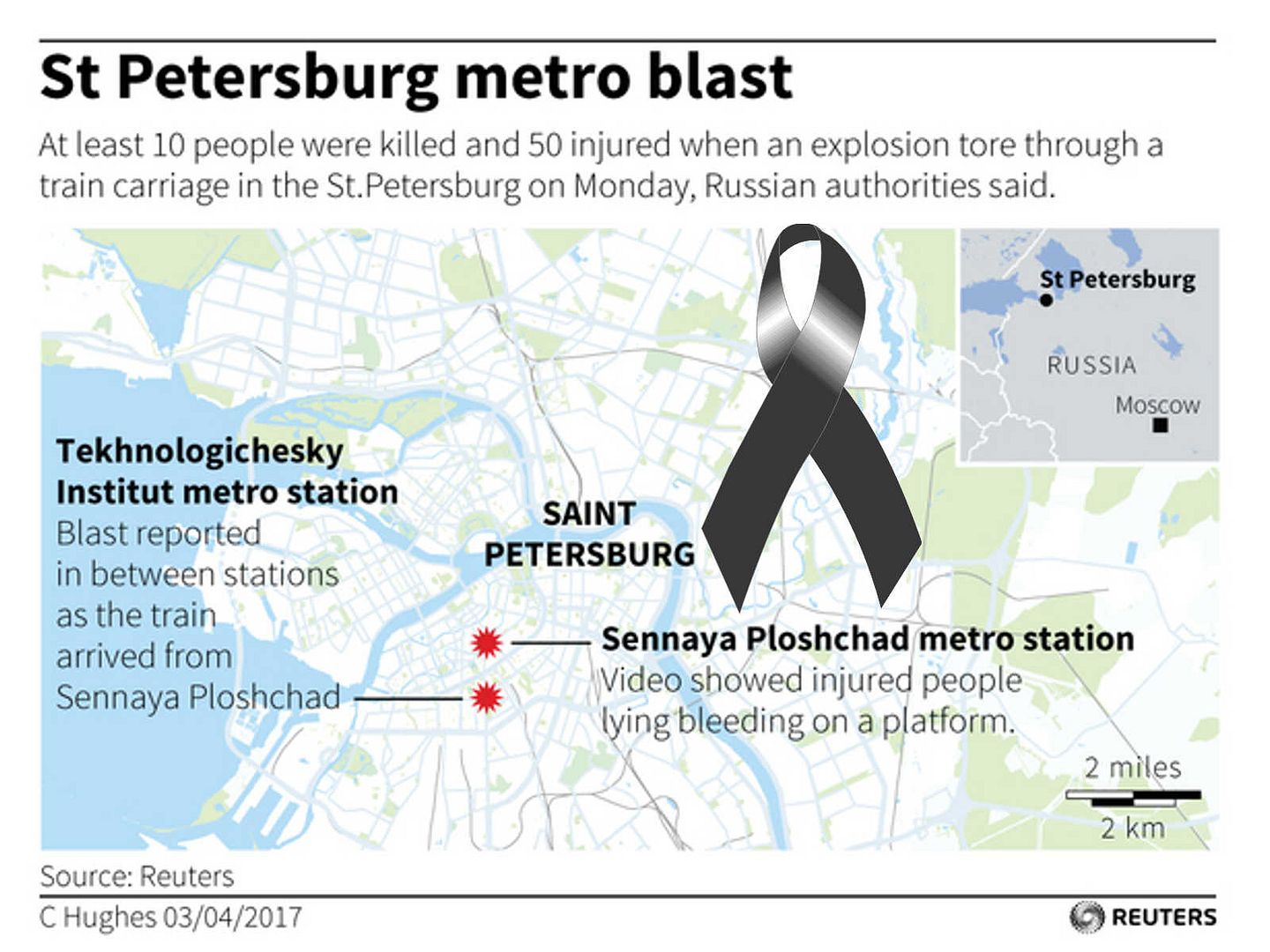
Tragedy in Russia - Explosion in the St. Petersburg metro 3rd Apr 2017

Part 2: Blockchain technology situation – Malware join to bitcoin mining

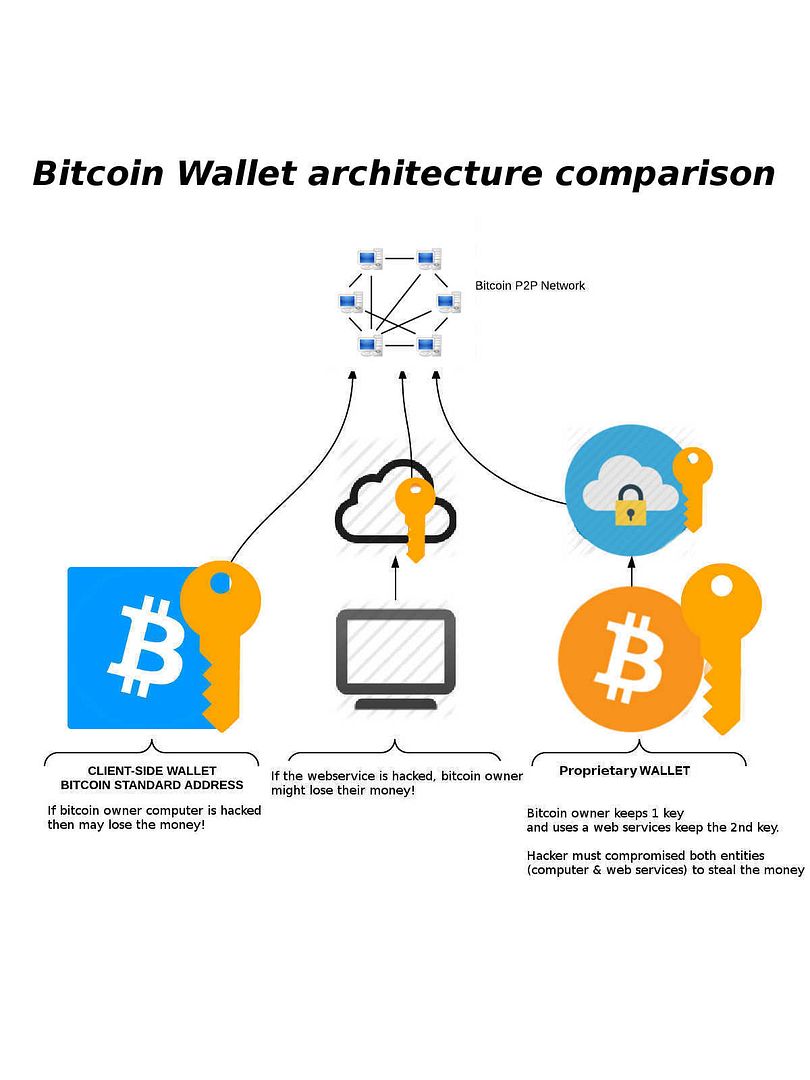
We continuous the discussion topic on blockchain technology situation.  Part 1:Blockchain technology situation – A Tales of Two Cities The discussion on part 2 mainly focus on malware threats to bitcoin industry.  We understand that Bitcoin was designed to be uncensorable digital cash that could operate outside the existing financial system. As mentioned last time, it looks that the blockchain technology contained weakness on end point device (bitcoin owner workstation or mobile phone). Even though you deploy a proprietary wallet, the overall setup will become weakness once malware compromise your end point device. Below picture diagram bring an idea to reader of bitcoin wallet architecture, see whether you have different idea in this regard?

Bitfinex incident wakes up concern on endpoint security

More than US$60m worth of bitcoin was stolen from one of the world’s largest digital currency exchanges (Bitfinex) on 2nd Aug 2017. Nearly 120,000 units of digital currency bitcoin worth about US$72 million was stolen from the exchange platform Bitfinex in Hong Kong, said Reuters Technology News. Director of Community & Product Development for Bitfinex stated that the bitcoin was stolen from users’ segregated wallets. The investigation has found no evidence of a breach to any BitGo servers, said the representative of BitGo.

Since no evidence proof that security breach happened in that place but what is the possible cause?

An announcement posted by official group (Bitfinex), the company informed that there are going to secure the environment and bring down the web site and the maintenance page will be left up. From technical point of view, if  API and signing keys reside on servers. Hacker might have access with legitemate credential once a bitcoin wallet user workstation compromised.As a matter of fact if the webservice is hacked, bitcoin owner will lost the money (see above bitcoin wallet architecture comparison diagram for reference).

Our Observation

The weakness of Node.J.S trading API Framework.

The java script contain security weakness. It benefits hacker to understand the operation path. For instance

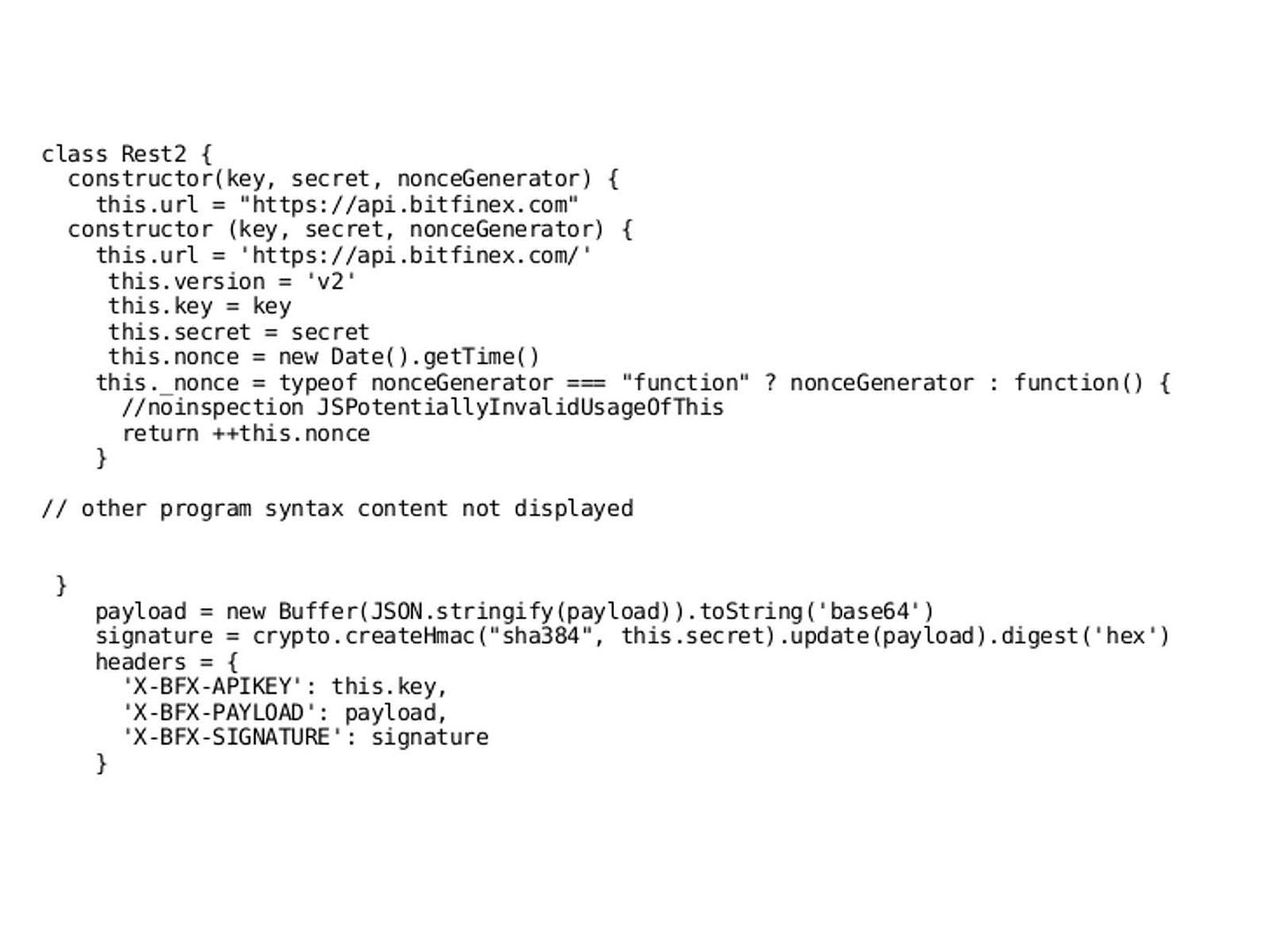
Client send his payload, his key, and the hmac of his payload with his secret key. Server retrieve user with his pk, recompute the hmac with the retrieved sk and then check if the computed hmac is equal to the retrieved hmac. (see below program syntax for reference).


From technical point of view, malware which contains steal private key or digital certificate function, they have capability transform to bitcoin malware. As usual, the infection technique relies on Spear phishing. The emails contained a malicious attachment with the file which contained a zero-day exploit. The exploit attacked multimedia software platform used for production of animations especially Adobe Flash to install a malware onto the victim’s computer.

Then malware obtained bitfinex private key and one of the following item.

i) bitgo’s private key

ii) bitfinex bitgo’s username and password and authy’s credentials (that allows the hacker to create new api access tokens and remove daily limits)

iii) bitfinex bitgo’s api access token

Or apply new keys gave to bitgo as new 2-3 internal bitfinex address. signed tx with bfx key, and “new key” that was just given. Meanwhile bypassing bitgo’s security checks.

Summary:

Above information detail is one of the example. It looks that quote a real incident can increase the visibility of the understanding.  Apart from that, discussion looks never ending. I believed that part 3 will be coming soon.


Advanced Persistent Threat (APT) miscellaneous outline

For the first time I heard the “Advanced Persistent Threat”, which, for me, was a hostile conspiracy between nations. Famous network events (see below) as proof of concept. What is the purpose of announcing the APT to the world?

2010 – The Stuxnet (ATP) is believed by many experts to be a jointly built American-Israeli cyber weapon,although no organization or state has officially admitted responsibility.

2011 – Defence contractor Lockheed Martin hit by advanced persistent threat to network (specifically related to RSA’s SecurID two-factor authentication products)

2011 – APT28 has used lures written in Georgian that are probably intended to target Georgian government agencies or citizens.

2013 – APT28 Targeting a Journalist Covering the Caucasus

2013 – Kimsuki malware (APT) targets critical infrastructures and Industrial control system (ICS) in South Korea

2013 – In February 2013, Mandiant uncovered Advanced Persistent Threat 1 (APT1).Alleged Chinese attacks using APT methodology between 2004 and 2013

*2014 – BlackEnergy APT group re engineer the black energy DDOS software. Deploy SCADA‐related plugins to the ICS and energy sectors around the world.

2015 – In August 2015 Cozy Bear was linked to a spear-phishing cyber-attack against the Pentagon email system causing the shut down of the entire Joint Staff unclassified email system and Internet access during the investigation. (Cozy Bear, classified as advanced persistent threat APT29)

2016 – Onion Dog, APT focused on the energy and transportation industries in Korean-language countries

APT (Advanced Persistent Threat) design definition

It is flexible and sustainable platform, demonstrating long-term use and versatility planning.

The common APT kill chain criteria (see below diagram for reference)
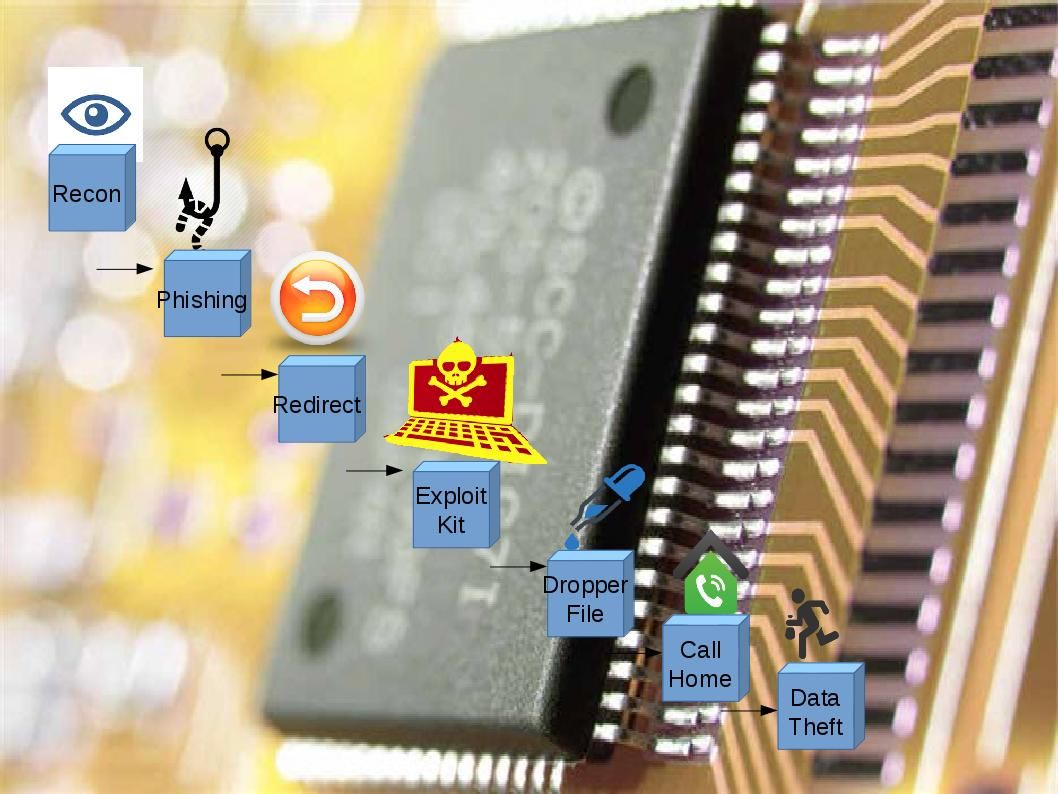
However, APT 28 runs differently. A complete attack scenario with APT28 has multiple malware stages, such as Sourface/Coreshell, Eviltoss, and Chopstick. APT28 malware could persuade a trusted user to open a malicious document that includes a Sourface downloader, which downloads the Chopstick second-stage malware. We believe that hacker use the spare phishing technique.

Terminology for reference:

CORESHELL:This downloader is the evolution of the previous downloader ofchoice from APT28 known as “SOURFACE” (or “Sofacy”). This downloader, once executed, create the conditions to download and execute a second-stage(usually Eviltoss) from a C2.
EVILTOSS: This backdoor is delivered through CORESHELL downloader to gain system access for reconnaissance, monitoring, credential theft,  and shellcode execution
CHOPSTICK: This is a modular implant compiled from a software framework that provides tailored functionality and flexibility. By far Chopstick is the most advanced tool used by APT 28.


MIMIKATZ: Everyone of us knows this tool. In this case, this has been of devastating effects to completely compromise AD Forest

Fileless APT malware

MM Core APT: MM core is a file-less trojan

Trojan.APT.BaneChant targeted Middle Eastern and Central Asian organizations. The trojan is file-less, downloading its malicious code to memory to prevent investigators from extracting the code from the device’s hard drive.

Primary objective for advanced persistent threat

There are 2 different of objectives for advanced persistent threat till today.

Objective 1: An advanced persistent threat (APT) is a network attack in which an unauthorized person gains access to a network and stays there undetected for a long period of time. The intention of an APT attack is to steal data rather than to cause damage to the network or organization.

Objective 2: An advanced persistent threat (APT) is a set of stealthy and continuous computer hacking processes which targeted the computer hardware of nuclear facilities. The obj of the attack is try to suspend the services or mess up the operation causes destruction.

Infiltration outline
A typical scenario shown as below:
1. Attackers rename the exploit (say Titanium.zip, which takes advantage of a ZIP parsing vulnerability of the antivirus) to Titanium.wmf
2. Hold a webpage which contains <iframe src = Titanium.wmf>
3. Convince victims to visit this webpage.
4. While victims are browsing webpages, iron.wmf would be downloaded onto the victims’ computers automatically, without any user interaction.
5. If the auto-protect of the antivirus is on, the antivirus engine would parse Titanium.wmf  automatically, and then possibly get compromised immediately.
Detect: To perform a number of checks for installed security products on the victim machine. Check entries within the HKLM\Software\ registry path
The antivirus product represented by a value that is binary which might hints malware which brand of anti-virus install in victim machine (see below example):

0x08000000 : Sophos
0x02000000 : INCAInternet
0x04000000 : DoctorWeb
0x00200000 : Baidu
0x00100000 : Comodo
0x00080000 : TrustPortAntivirus
0x00040000 : GData
0x00020000 : AVG
0x00010000 : BitDefender
0x00008000 : VirusChaser
0x00002000 : McAfee
0x00001000 : Panda
0x00000800 : Trend Micro
0x00000400 : Kingsoft
0x00000200 : Norton
0x00000100 : Micropoint
0x00000080 : Filseclab
0x00000040 : AhnLab
0x00000020 : JiangMin
0x00000010 : Tencent
0x00000004 : Avira
0x00000008 : Kaspersky
0x00000002 : Rising
0x00000001 : 360

FINGING VULNERABILITIES OF ANTIVIRUS
Basically there are four kinds of vulnerabilities seen in antivirus software:
Local Privilege Escalation
ActiveX-related
Engine-based
Management (Administrative) interface

KILL THE LOCAL ANTIVIRUS PROGRAM

For instance, A zip bomb, also known as a zip of death or decompression bomb, is a malicious archive file designed to crash or render useless the program or system reading it. It is often employed to disable antivirus software.

Find zero day vulnerability compromise on victim workstation

The implant successful rate all depends on the patch management status on the workstation.

APT Malware callback

In order to avoid malware analyzer (FireEye, RSA ECAT) detect the malware callback to external CnC server. APT malware will compromise the legitimate website and then redirects the communication to the CnC server. This method can prevent malware analyzer deny the traffic to external command and control (C&C) servers.

Data Theft

The malware collects data on a victim host, then exfiltrate the data off the network and under the full control of the hacker. Hacker will erase all evidence after job complete. Since the host is compromised and therefore he can return at any time to continue the data breach.

Observation on 2017 1st quarter

Regarding to the consolidation of APT incidents, analysis reports so far.  It looks that the most efficient way to avoid APT incident happen is install a malware analyzer (FireEye, RSA ECAT) in your IT network campus. As a matter of fact, APT technique is a  advance technology which develop by country or technology group and therefore the greater possibility can break through End point defense mechanism. For instance antivirals program. However my comment is that Kaspersky is a prefect antivirus and malware defense vendor. May be he is one of he exception. However client might concern the company background (A group of developer from Russia). As we know, home users not possible to install the malware analyser. As such, I would suggest end user consider their decision when they are going to purchase antivirus program. Below matrix table not precise but can provide an idea to you which component is a the bottle neck to against APT attack.

APT (advanced persistent threat) kill chain relationship matrix table

Phase Detect Deny Disrupt Degrade Deceive Destroy
Reconnaissance 1. Managed security services
2. IDS
3. SIEM
Firewall
Weaponization End point defense (antivirus) End point defense (antivirus) queuing and loading
Delivery SIEM Proxy Srv End point defense (antivirus)
Exploitation malware analyzer Vendor Patch End point device
Installation End point defense (antivirus) malware analyzer 1. End point device
2. Malware analyzer
C2 1. malware analyzer
2. SIEM
malware analyzer malware analyzer DNS redirect
Actions 1. malware analyzer
2. SIEM
malware analyzer