Preface: IPython offers an enhanced read-eval-print loop (REPL) environment particularly well adapted to scientific computing. In other words, IPython is a powerful interface to the Python language.
Background: IPython provides a rich toolkit to help you make the most out of using Python, with:
Powerful Python shells (terminal and Qt-based).
A web-based notebook with the same core features but support for code, text, mathematical expressions, inline plots and other rich media.
Support for interactive data visualization and use of GUI toolkits.
Flexible, embeddable interpreters to load into your own projects.
Easy to use, high performance tools for parallel computing.
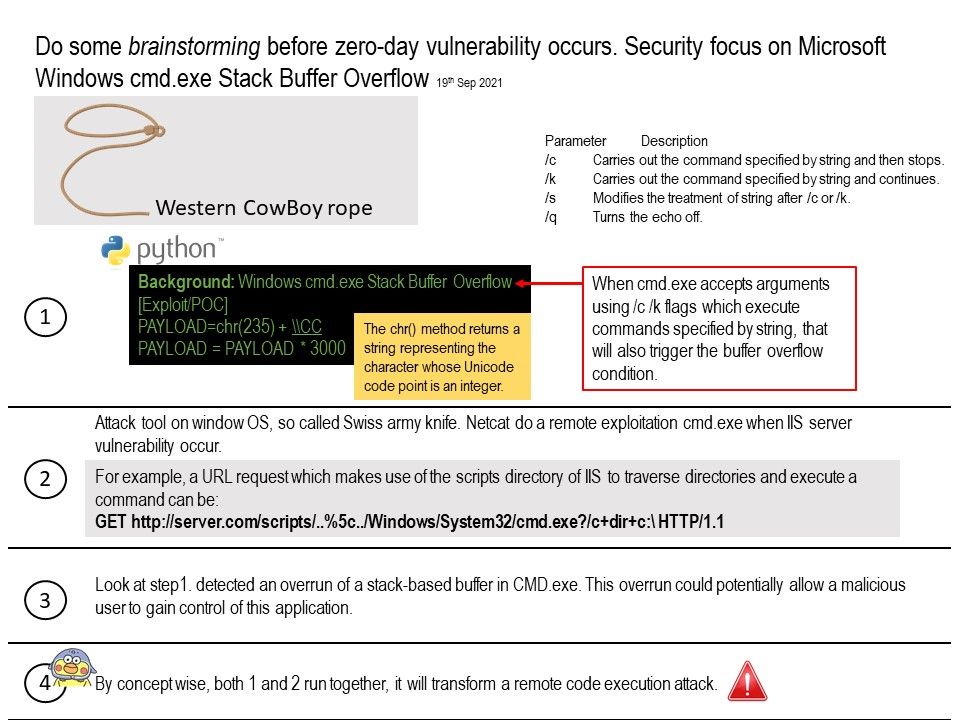
Vulnerability details: IPython could allow a remote attacker to execute arbitrary code on the system, caused by improper permission assignment. By sending a specially-crafted request, an attacker could exploit this vulnerability to execute arbitrary code from the current working directory.
Preface: Because humans have destroyed the environment. Therefore, natural disasters resemble God’s punishment. In the digital world, the situation is the same. The reason for the penalty is the design weakness of the software.
Background: Perhaps the younger generation has not experienced “Y2K” technical problems because they are still children. The millennium bug is about 22 years until today. I think many people have forgotten. The digital world disaster is similar to the Old Testament description of the earth flood, and God instructed to build an ark to save the species.
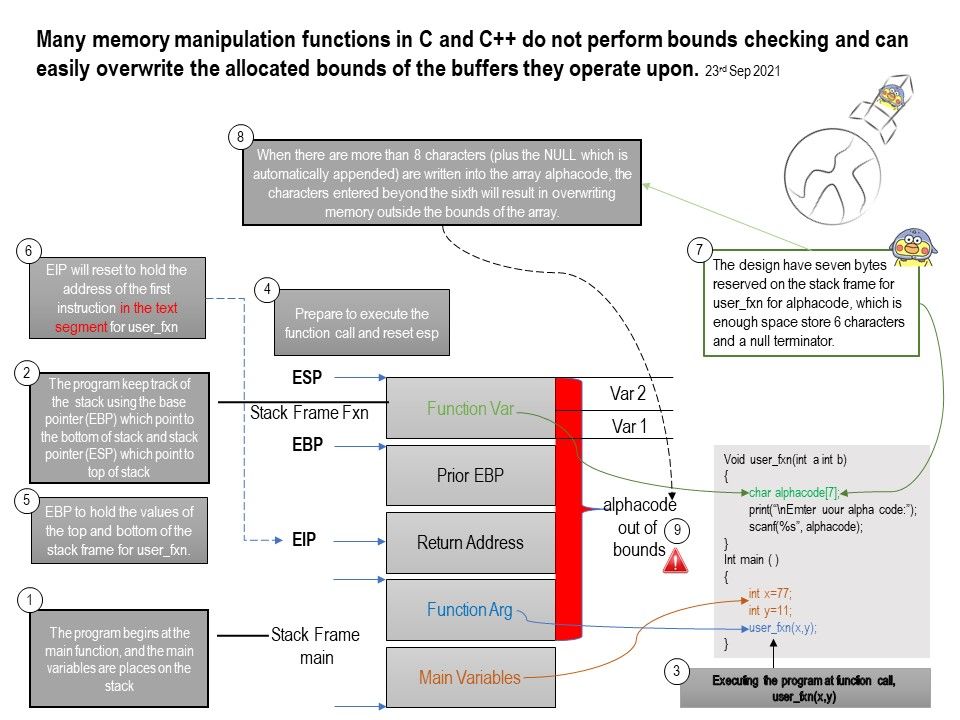
Fundamental design weakness: On a 32-bit Linux system, the maximum value that time_t can represent is 0x7ffffffff. When time_t takes the maximum value, it means that the system time is 2038-01-19 03:14:07, but when the clock keep going, time_t will overflow and become A negative value. At this time, the system time will start over and the operating system and upper-layer software will run incorrectly.
IoT current status 2021: The trend by today – 8-bit and 16-bit MCUs had been the hardware of choice for IoT devices, but 32-bit MCUs are now becoming increasingly popular, leading to many manufacturers using two different powered processes in devices. Therefore, your RTOS should be scalable in order to manage any future MCU upgrades.
Reports indicate that there will be 35.82 billion IoT devices installed worldwide by 2021 and 75.44 billion by 2025.
Remedy: In order to remedy this technical limitation. Software developer require to use GNU C Library 2.32 and Musl libc 1.2 to build user space for 64-bit time_t. Musl, a C standard library, is mainly used on operating systems based on the Linux kernel. The target is embedded systems and mobile devices. It is released under the MIT license. The author is Rich Felker. The purpose of developing this library is to write a clean, efficient, and standard-compliant C standard library.
Expectation: We pass a new challenge token to the younger generation, because they have grown up now. It’s your turn.
Preface: A series of sequential read functions for seq operations are defined in fs/seq_file.c. These functions were first introduced in 2001, but have not been used much in the kernel before, and after the 2.6 kernel, many / The seq function is heavily used in proc’s read-only files.
Synopsis: Linux kernel 5.13 initially supports Apple’s M1 processor, supports the Landlock security module, is used to create a security sandbox to reduce the security impact of various flaws in user space applications, the ability to handle ASN.1 trusted keys, and preliminary support are applicable AMD Radeon “Aldebaran” GPU series.
Background: About There are numerous ways for a device driver (or other kernel component) to provide information to the user or system administrator. One useful technique is the creation of virtual files, in debugfs, /proc or elsewhere. Virtual files can provide human-readable output without any special utilities. The Linux kernel’s seq_file interface produces virtual files that contain sequences of records.
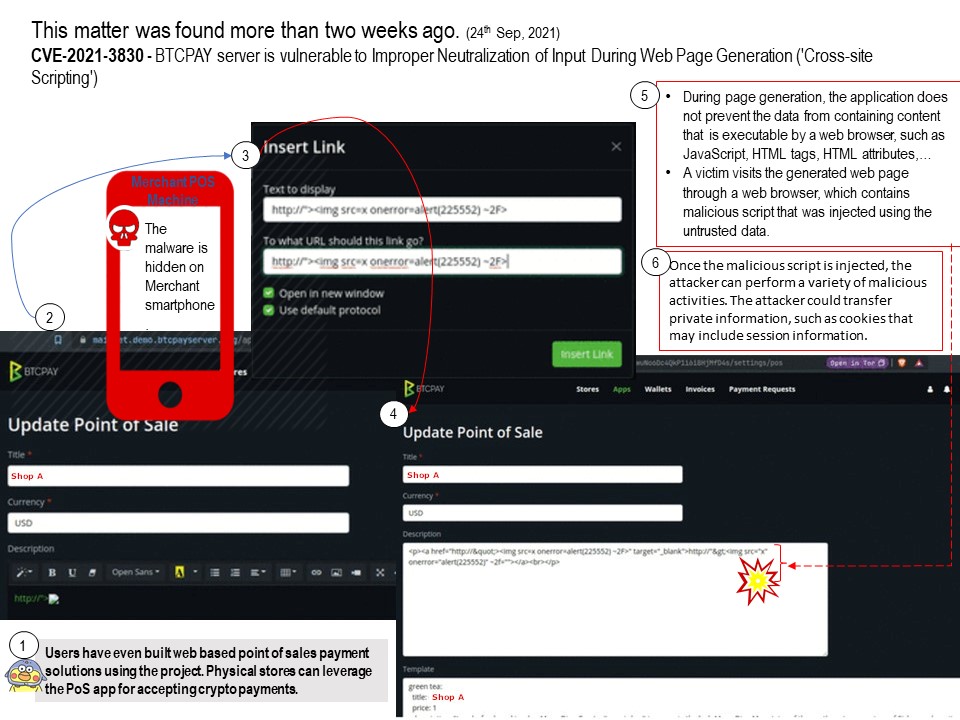
Vulnerability details: s/seq_file[.]c in the Linux kernel 3.16 through 5.13.x before 5.13.4 does not properly restrict seq buffer allocations, leading to an integer overflow, an Out-of-bounds Write, and escalation to root by an unprivileged user. For more information on this matter, please refer to the link – https://nvd.nist.gov/vuln/detail/CVE-2021-33909
Preface: If you have fgfmsd (TCP/541 / TCP/542) public-facing and have not upgraded to a fixed release, perhaps you should consider the workaround by vendor.
Background: The FGFM protocol runs over SSL (Secure Sockets Layer) using TCP port 541 under IPv4. Both FortiGate and FortiManager units have a ‘FGFM’ daemon running exclusively for FortiGate to FortiManager communication. The FortiManager unit listens on TCP port 541 for an incoming session request. The FortiGate unit establishes an SSL session with the FortiManager. Both units use TCP port 541 for sending and receiving messages.
You can add FortiAnalyzer devices to FortiManager and manage them. When you add a FortiAnalyzer device to FortiManager, FortiManager automatically enables FortiAnalyzer features. FortiAnalyzer and FortiManager must be running the same OS version, at least 5.6 or later.
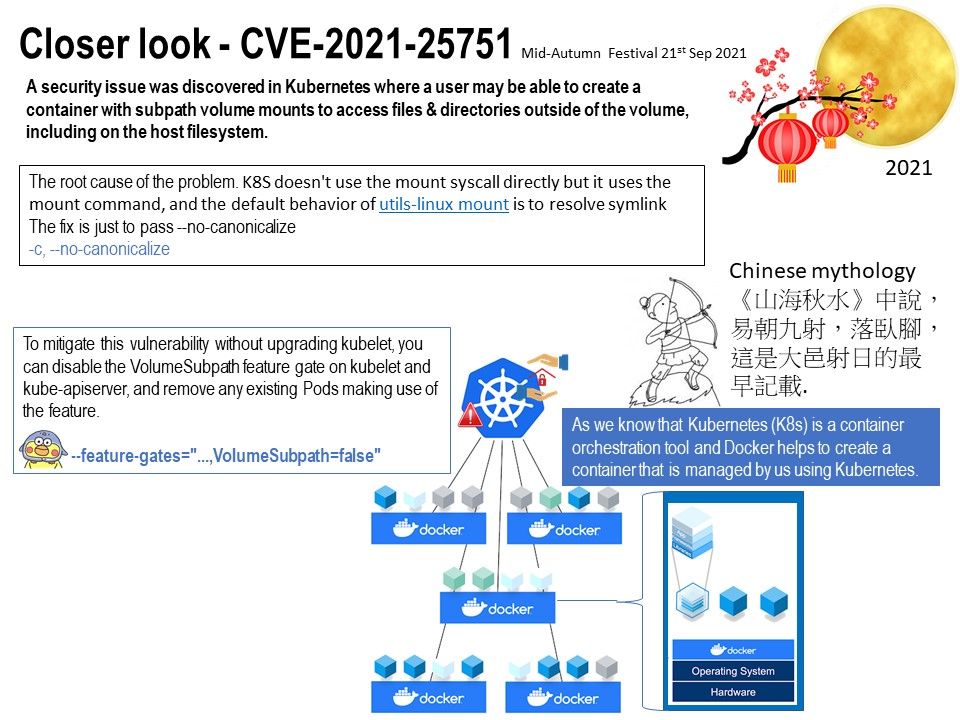
Vulnerability details: The vulnerability exists due to a use-after-free error within the fgfmsd daemon. A remote non-authenticated attacker can send a specially crafted request to port 541/tcp (IPv4) or 542/tcp (IPv6), trigger a use-after-free error and execute arbitrary code on the system with root privileges.
Workaround: Disable FortiManager features on the FortiAnalyzer unit using the command below: – config system global – set fmg-status disable <— Disabled by default. – end
Preface: Secure loading of libraries to prevent DLL preloading attacks, said Microsoft.
Background: When an application dynamically loads a dynamic link library (DLL) without specifying a fully qualified path, Windows tries to locate the DLL by searching a well-defined set of directories. If an attacker gains control of one of the directories, they can force the application to load a malicious copy of the DLL instead of the DLL that it was expecting. These attacks are known as “DLL preloading attacks” and are common to all operating systems that support dynamically loading shared DLL libraries. Even experts discovered that malware exploit similar method to inject code into system process.
Closer look of the POC details:
Design weakness in VMware-ThinApp-Enterprise-5.2.9-17340778[.]exe. The method is that this vulnerability allows non-privileged users to create directories (C[:]\DummyTLS), copy a malicious dll file and rename it to dummyTLS[.]dll in the same place.It will trigger the specify vulnerability.
The steps are as follows:
Run “C[:]\Program Files (x86)\VMware\VMware ThinApp\Setup Capture[.]exe”. Then C[:]\DummyTLS\dummy TLS.dll will be loaded simultaneously.
Code injection completed.
In additional, other exe files like log_monitor[.]exe and snapshot[.]exe had similar vulnerability occur.
Preface: Generally, when it comes to interconnection in the SAP system environment, remote function call (RFC) is one of the main communication protocols used.
Observation: About CVE-2021-27610 – SAP resolved the design weakness of the server-side RFC protocol in July 2021. According to the official announcement, a remote attacker can make a special request through a given user identity, which can exploit this vulnerability, leading to the bypass of authentication in the SAP kernel. In the worst case, this can lead to highly privileged system access and ultimately allow the attack The person has full control of the target application server.
According to the official announcement, Security Note 3007182 covers almost all the correction instructions for maintaining the kernel version, and many network security experts speculate that the vulnerability has been hidden for many years. For my observations and tips, I wrote down the details in the attached drawings. If you are interested, please read the details.
Vulnerability details: An improper authentication vulnerability exists in SAP NetWeaver Application Server ABAP. ABAP Server and ABAP Platform do not create information about internal and external RFC user in distinguished and consistent format, which may be exploited by malicious users to obtain illegitimate access to the system.
Preface: (DLL) side-loading is an increasingly popular cyber attack method that takes advantage of how Microsoft Windows applications handle DLL files.
Background:
Where is the Citrix VDA? By default, the supportability MSI is installed in C:\Program Files (x86)\Citrix\Supportability Tools\ . You can change this location on the Components page of the VDA installer’s graphical interface, or with the /installdir command-line option.
Vulnerability Details: A vulnerability has been identified in Citrix Virtual Apps and Desktops that could, if exploited, allow a user of a Windows VDA that has either Citrix Profile Management or Citrix Profile Management WMI Plugin installed to escalate their privilege level on that Windows VDA to SYSTEM.
One of the possibilities: What if the C:\Program File\Citrix\ICA Client directory is configured with incorrect permissions and allows any user add file? A malicious version of the DLL file could be planted in this directory, allowing a local attacker to execute arbitrary code in the context of any other user who would run this application. Although that’s DLL searh order hijacking, the first variant is also sometimes rightly or wrongly called DLL Sideloading. It is mostly used by malwares but it cab also be used for privileges escalation.
Preface: As a digital identity decision maker in your organization, you already know that in today’s new reality are the cyber security challenges. Centrally manage access permissions to meet best practices in identity management.
Product Background: ForgeRock Access Manager/OpenAM supports a wide range of authentication modules (see diagram) that can be configured together using authentication chains, and authentication nodes that can be configured together using authentication trees. After you configure AM authentication, users can authenticate to AM using a browser or a REST API.
Vulnerability details: A pre-auth remote code execution (RCE) vulnerability in ForgeRock Access Manager identity and access management software. Exploit a single GET/POST request can execute a code execution. The design weakness cause by unsafe Java object deserialization. The proof-of-concept tool can generating payloads that exploit unsafe Java object deserialization to shown the design weakness of ForgeRock Access Manager product. This vulnerability was patched in ForgeRock AM version 7.0 by entirely removing the “/ccvesion” endpoint, along with other legacy endpoints that use Jato. Furthermore Jato framework has not been updated for many years, so all other products that rely on it may still be affected. ForgeRock have provided a workaround for people still running 6.X.
Preface: When smartphones and Google Maps were born. The GIS function determines these two functions in a silent manner.
Background: Geographic Information System (GIS) plays a key role in military operations. The military uses GIS in various applications, including cartography, intelligence, battlefield management, terrain analysis, remote sensing, etc.
– Use of geospatial intelligence:The role of machine learning and GEOINT in disaster response – Open geospatial data platform and food shortage – Interoperability of GEOINT applications and military data – The role of data management in crisis mapping
Vulnerability details: There are vulnerabilities announcement of GIS server on 11th Jul, 2021. Whereby those vulnerability has been addressed by ESRI on May, 2021. Seems the details of two announcement are similar and believed that both are describe the same matters. In fact, designated vulnerabilities are common vulnerabilities in OWASP Top 10. However, the applicability of GIS is becoming more and more important for human life and daily use. So we should seriously consider it.
Preface: IDC report predicted that By 2024, 60% of industrial organizations will integrate data from edge OT systems with cloud-based reporting and analytics, moving from single-asset views to sitewide operational awareness.
Background: PowerShell provides an adversary with a convenient interface for enumerating and manipulating a host system after the adversary has gained initial code execution.
Security Focus: According to the observation of the security company. You can use PowerShell to execute various Base64 encoding commands. The trend of operation technology will be programmed and developed on powershell. Cybercriminals responsible for ransomware activities often try to delete them so that their victims cannot restore file access by restoring to shadow copies. The method is to use this (Invoke-ReflectivePEInjection to directly inject DLL into PowerShell). Meanwhile, they require system administrator privileges, so they rely on zero-day and unpatched victim workstations for privilege escalation.
Remark: What’s more telling is the inclusion of function names that correspond with a PowerShell payload called “Invoke-ReflectivePEInjection”, which lets an attacker inject a dynamic link library (DLL) directly into PowerShell.
Should you have interested of above details. CISA Publishes Malware Analysis Report and Updates Alert on DarkSide Ransomware. For more details, please refer to link – https://us-cert.cisa.gov/ncas/alerts/aa21-131a