22nd Jan 2019 – Apple security updates

Preface: Every computer has a finite amount of memory so OS might actually need to use more than is physically available on your system. As a result, it is hard to avoid sharing resources feature.

Our security focus:
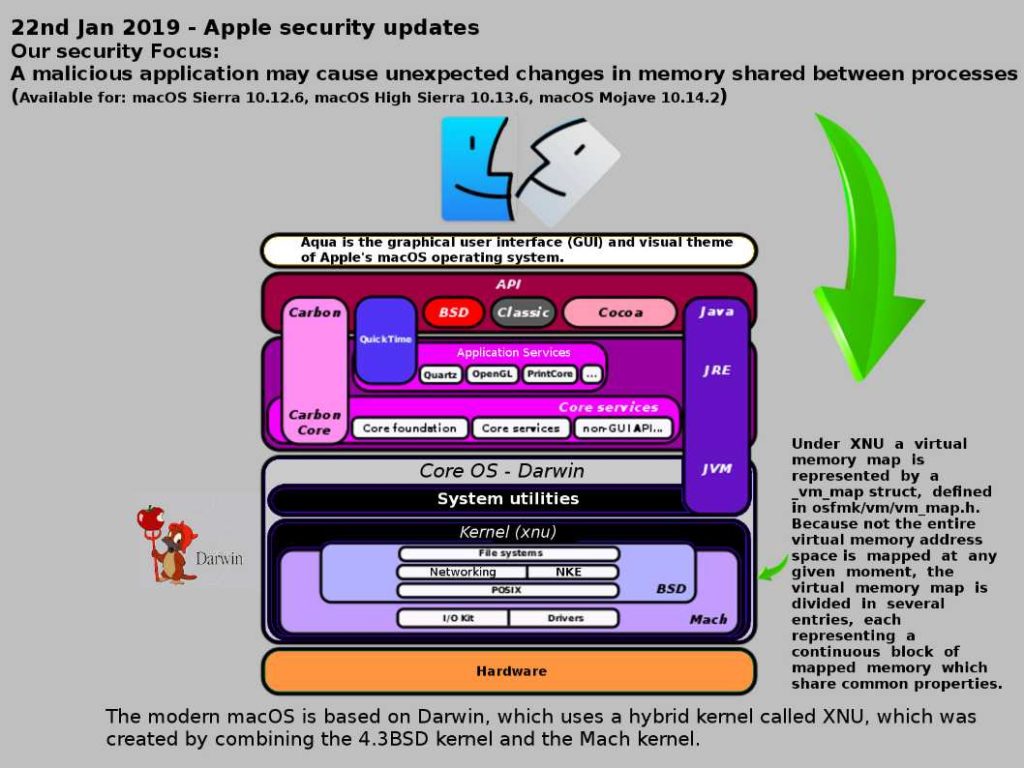
In regard to security update announced by Apple. Our security focus of this topic will be follow closely of malicious application may cause unexpected changes in memory shared between processes.

Under XNU a virtual memory map is represented by a
_vm_map struct, defined in osfmk/vm/vm_map.h. Because not the entire virtual memory address space is mapped at any given moment, the virtual memory map is divided in several entries, each representing a continuous block of mapped memory which share common properties.

Design limitation:
CVE-2019-6205 and CVE-2019-6208: A malicious application may cause unexpected changes in memory shared between processes.

Remedy:
The Apple Security Update covers all of its products. For more information, please see the following: https://support.apple.com/en-hk/HT209446
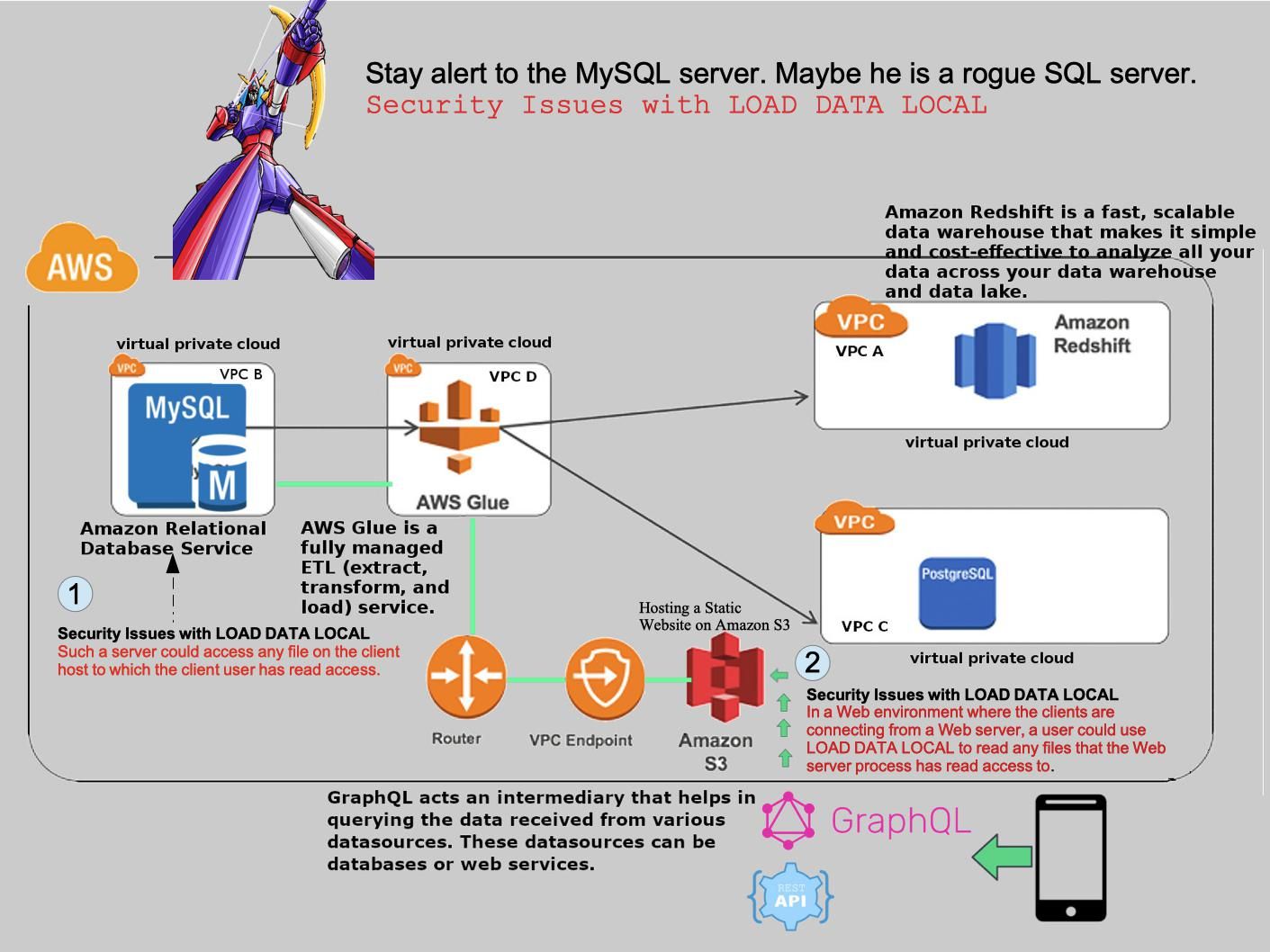
Who can you trust in the Internet world? Security Issues with LOAD DATA LOCAL in MySQL DB.

Preface: Some organizations that use MySQL include GitHub, US Navy, NASA, Tesla, Netflix, WeChat, Facebook, Zendesk, Twitter, Zappos, YouTube,…etc

Background: Technology writer Ionut Ilascu alert that there is command in MySQL server could be use for steal the personal and web server data without a high level evasion technique.

Technical overview:
Security Issues with LOAD DATA LOCAL on MySQL DB server side:
Such a server could access any file on the client host to which the client user has read access.

Security Issues with LOAD DATA LOCAL on web server side:
In a Web environment where the clients are connecting from a Web server, a user could use LOAD DATA LOCAL to read any files that the Web server process has read access to.

Sounds scary. Should you have interest of this topic, please refer below url: https://dev.mysql.com/doc/refman/8.0/en/load-data-local.html

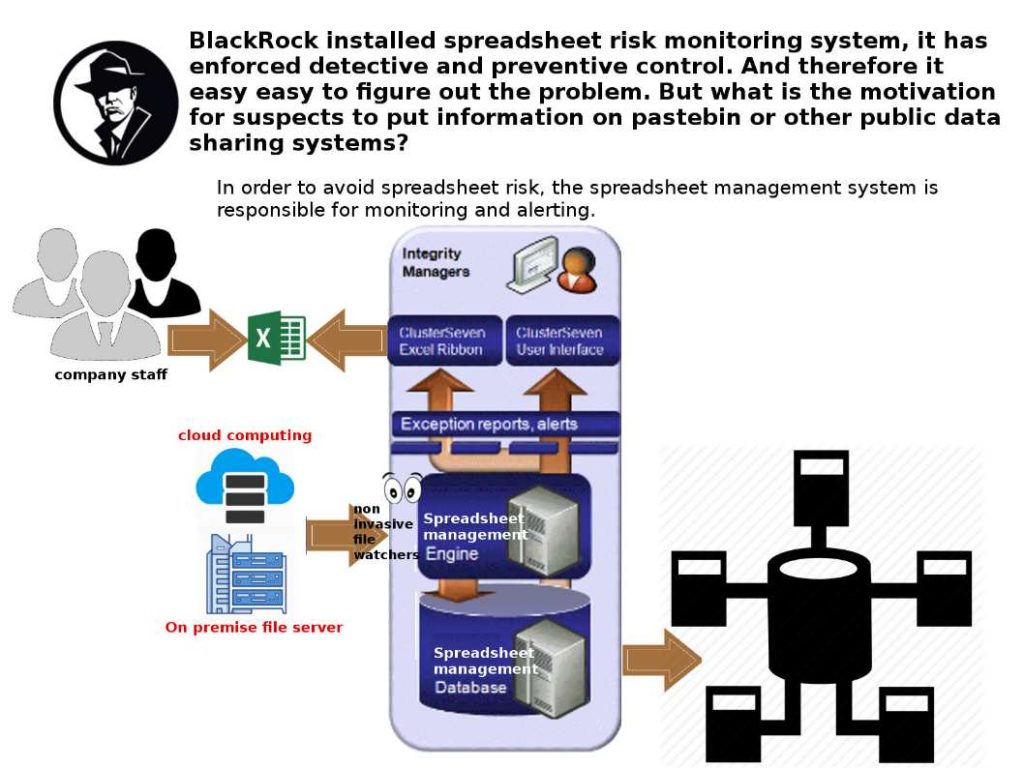
Is this a careless mistake? BlackRock Exposes Confidential Data on Thousands of Advisers on iShares Site!

Preface: Excel spreadsheets are used all the time in high-risk financial data analysis, and sometimes this is a silent way to dig out the data.

BlackRock data leakage synopsis:

Bloomberg found three spreadsheets contains BlackRock’s iShares ETF business confidential information included thousands of financial advisors were given ratings based on how much business they bring BlackRock. For more details, please refer below url:
https://www.bloomberg.com/news/articles/2019-01-19/blackrock-exposes-data-on-thousands-of-advisers-on-ishares-site

Is it a careless mistake?
It is hard to tell. From technical point of view, Blackrock is easy to figure out the problem though their spreadsheet management system.

Prediction:
If it didn’t find related suspicious activity in the spreadsheet management system and security incident event management? What is the next step? Do the dark web research may find out some hints. If the final confirmation is a user negligence. In a nutshell, user negligence shown the design weakness of awareness training program.

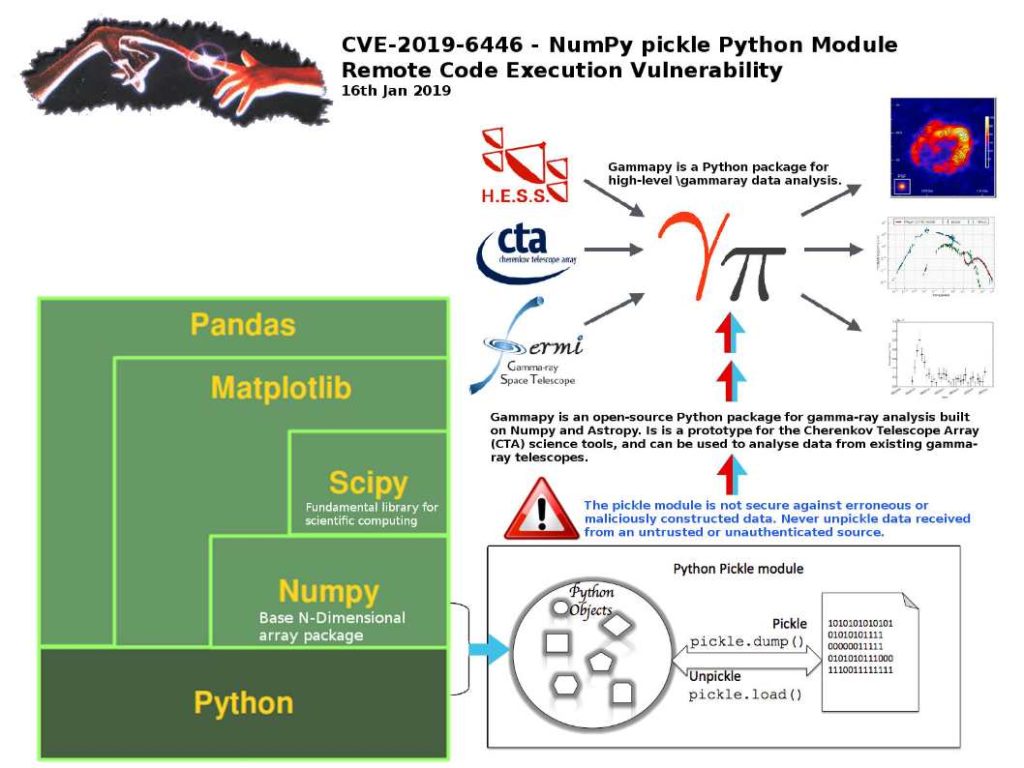
CVE-2019-6446 NumPy pickle Python Module Remote Code Execution Vulnerability – 16th Jan 2019

Preface: Gamma-Ray Observatory Satellite Mission for the study of cosmic gamma-ray sources in the keV to MeV energy range.

About Numpy and Gammapy:

NumPy is an open source Python package for scientific computing. NumPy supports large, multidimensional arrays and matrices. NumPy is written in Python and C. NumPy arrays are faster compared to Python lists.

Gammapy is an open-source Python package for gamma-ray analysis built on Numpy and Astropy. It is a prototype for the Cherenkov Telescope Array (CTA) science tools, and can be used to analyse data from existing gamma-ray telescopes.

Security Alert : NumPy pickle Python Module

NumPy could allow an unauthenticated, remote attacker to execute arbitrary code on a targeted system. The vulnerability is due to the unsafe use of the pickle Python module by the affected software.

Official Announcements: https://github.com/numpy/numpy/issues/12759

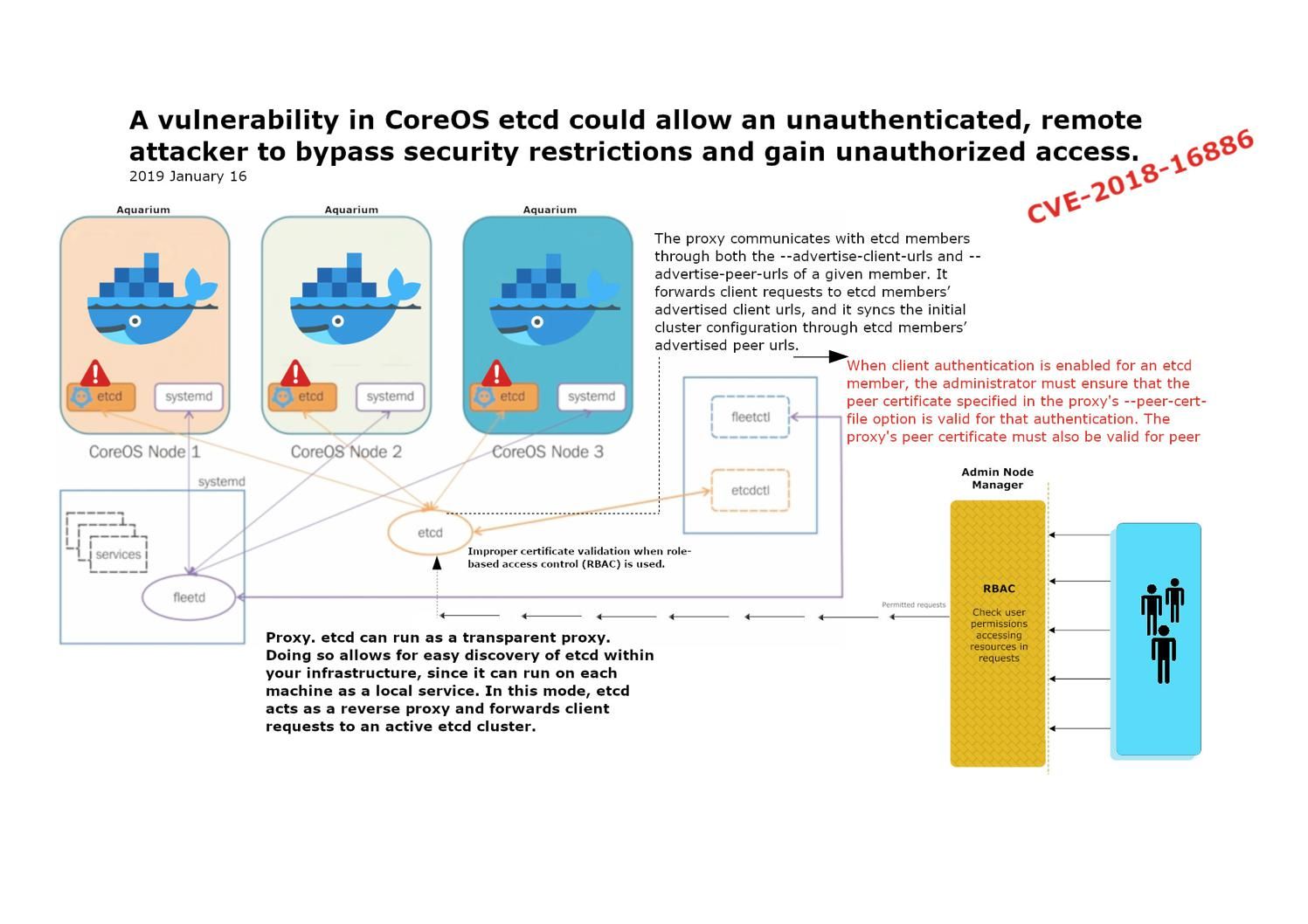
CoreOS etcd Role-Based Access Control Authentication Vulnerability – 16th Jan 2019

Preface: Container Linux by CoreOS is an open-source lightweight operating system based on the Linux kernel and designed for providing infrastructure to clustered deployments, while focusing on automation, ease of application deployment, security, reliability and scalability.

Found vulnerability:

A vulnerability in CoreOS etcd could allow an unauthenticated, remote attacker to bypass security restrictions and gain unauthorized access.

Impact:

An attacker could exploit this vulnerability by sending malicious requests to the affected application. A possible way let attacker evade security restrictions then gain unauthorized access to the targeted system.

Vendor Announcement:

CoreOS has released updated software at the following link: https://github.com/etcd-io/etcd/releases

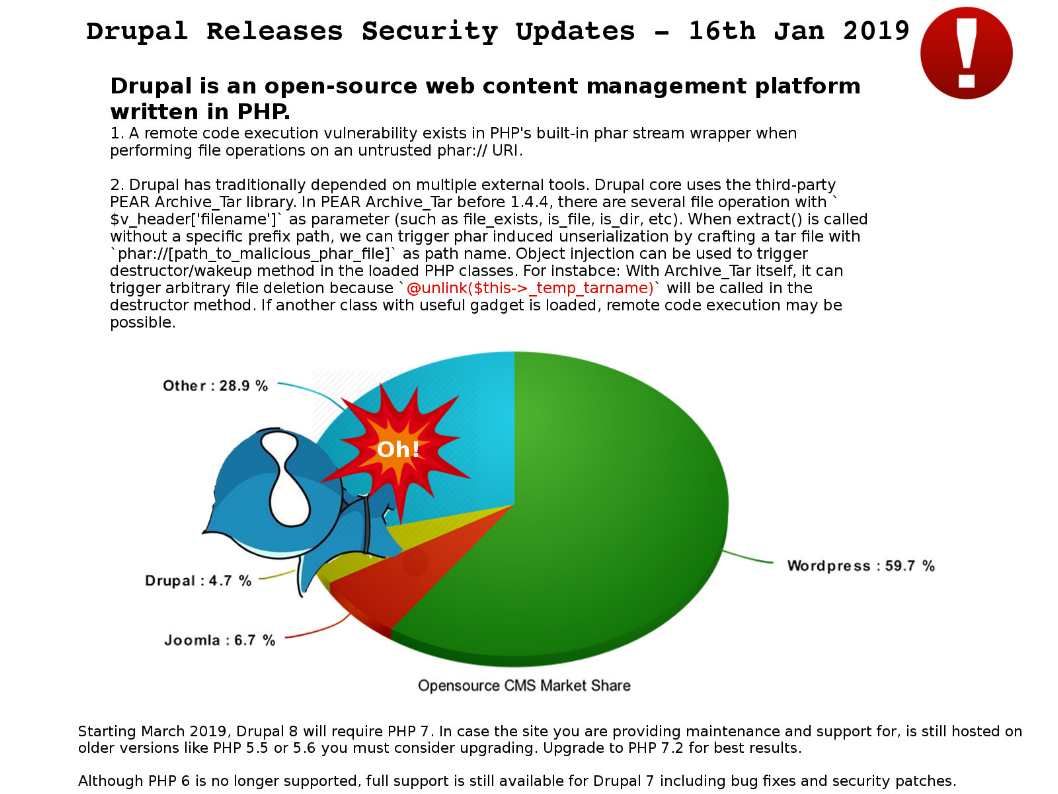
Drupal Releases Security Updates – 16th Jan 2019

Preface: Drupal is a free and open source content-management framework written in PHP and distributed under the GNU General Public License.

Security Focus:
Drupal has traditionally depended on multiple external tools. Drupal core uses the third-party PEAR Archive_Tar library. In PEAR Archive_Tar before 1.4.4, there are several file operation with $v_header['filename'] as parameter (such as file_exists, is_file, is_dir, etc). When extract() is called without a specific prefix path, we can trigger phar induced unserialization by crafting a tar file with phar://[path_to_malicious_phar_file] as path name. Object injection can be used to trigger destructor/wakeup method in the loaded PHP classes. For instabce: With Archive_Tar itself, it can trigger arbitrary file deletion because @unlink($this->_temp_tarname) will be called in the destructor method. If another class with useful gadget is loaded, remote code execution may be possible.

Official announcement:
Drupal core Arbitrary PHP code execution (Critical) – https://www.drupal.org/sa-core-2019-002

Drupal core Third Party Libraries vulnerability (Critical) – https://www.drupal.org/sa-core-2019-001

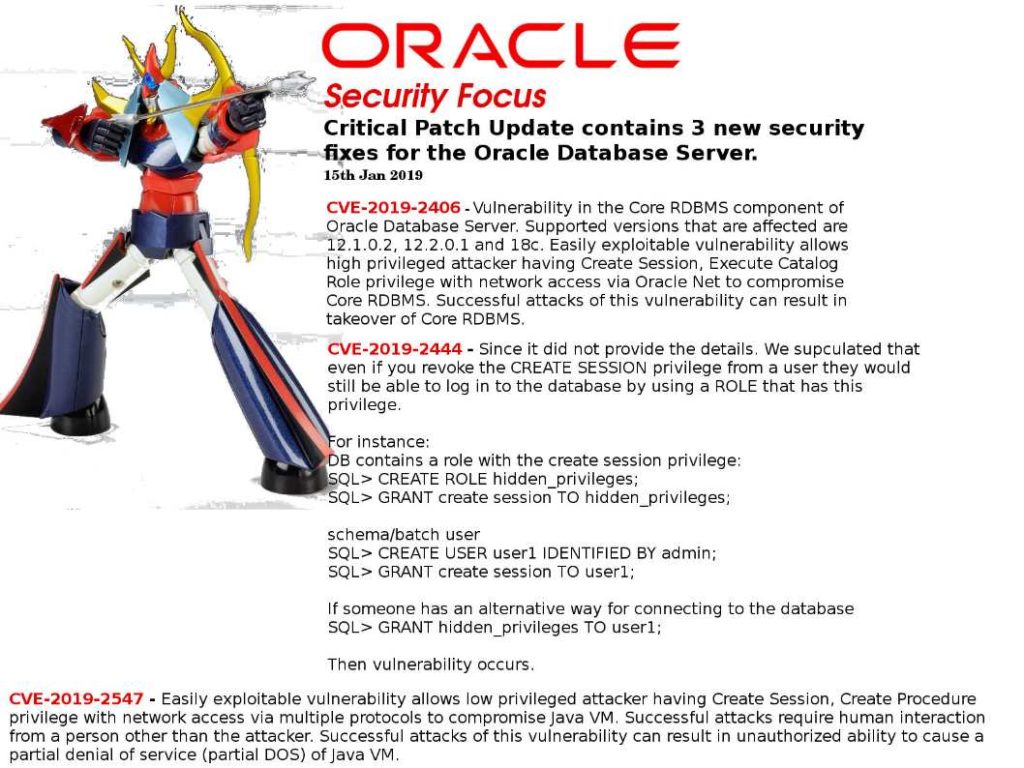
Security Focus – Critical Path Update contains 3 new security fixes for the Oracle Database Server – 15th Jan 2019

Preface: Computer system vulnerability wreak havoc, IT life not easy!

Background: Oracle’s revolutionary cloud database features autopilot, self-protection, and self-healing capabilities designed to eliminate error-prone manual data management. But the Core RDBMS vulnerability still exists!

Security focus – CVE-2019-2444:
Since it did not provide the details. We supculated that even if you revoke the CREATE SESSION privilege from a user they would still be able to log in to the database by using a ROLE that has this privilege.

For instance:
DB contains a role with the create session privilege:
SQL> CREATE ROLE hidden_privileges;
SQL> GRANT create session TO hidden_privileges;

schema/batch user
SQL> CREATE USER user1 IDENTIFIED BY admin;
SQL> GRANT create session TO user1;

If someone has an alternative way for connecting to the database
SQL> GRANT hidden_privileges TO user1;

Then vulnerability occurs.

For remaining vulnerabilities, please refer official announcement. https://www.oracle.com/technetwork/security-advisory/cpujan2019-5072801.html

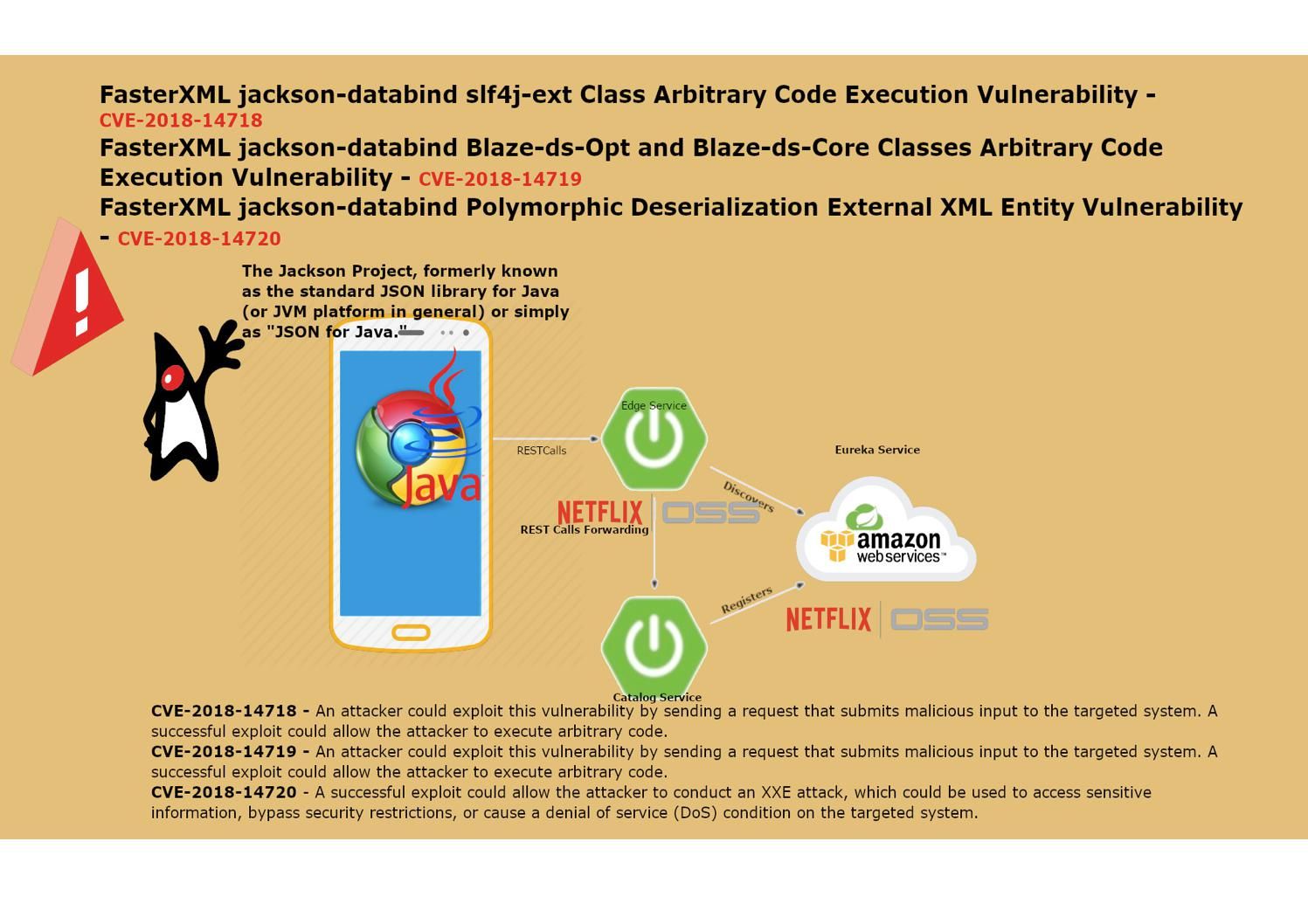
Jackson is very popular choice for processing JSON data in Java but has critical vulnerabilities occurred. Developer must staying alert(Jan 2019)

Preface: In Java development, software developers will often need to read in JSON data, or provide JSON data as an output. But Java JSON Processing API is not very user friendly and doesn’t provide features for automatic transformation from Json to Java object.

Jackson technical background: Jackson is a suite of data-processing tools for Java (and the JVM platform), including the flagship streaming JSON parser / generator library, matching data-binding library (POJOs to and from JSON) and additional data format modules to process data encoded in Avro, BSON, CBOR, CSV, Smile, (Java) Properties, Protobuf, XML or YAML.

Remark: com.fasterxml.jackson.databind.ObjectMapper is the most important class in Jackson API that provides readValue() and writeValue() methods to transform JSON to Java Object and Java Object to JSON.

Vulnerabilities found on FasterXML jackson-databind:

FasterXML jackson-databind slf4j-ext Class Arbitrary Code Execution Vulnerability – A successful exploit could allow the attacker to execute arbitrary code.

FasterXML jackson-databind Blaze-ds-Opt and Blaze-ds-Core Classes Arbitrary Code Execution Vulnerability – A successful exploit could allow the attacker to execute arbitrary code.

FasterXML jackson-databind Polymorphic Deserialization External XML Entity Vulnerability – A successful exploit could allow the attacker to conduct an XXE attack, which could be used to access sensitive information, bypass security restrictions, or cause a denial of service (DoS) condition on the targeted system.

Vendor Announcements:
https://github.com/FasterXML/jackson-databind/releases


Linux Kernel mincore() Implementation Information Disclosure Vulnerability – 12th Jan 2019

Preface: Hard drives are slower and they affect loading and saving (read and write) times only.

Technical overview:
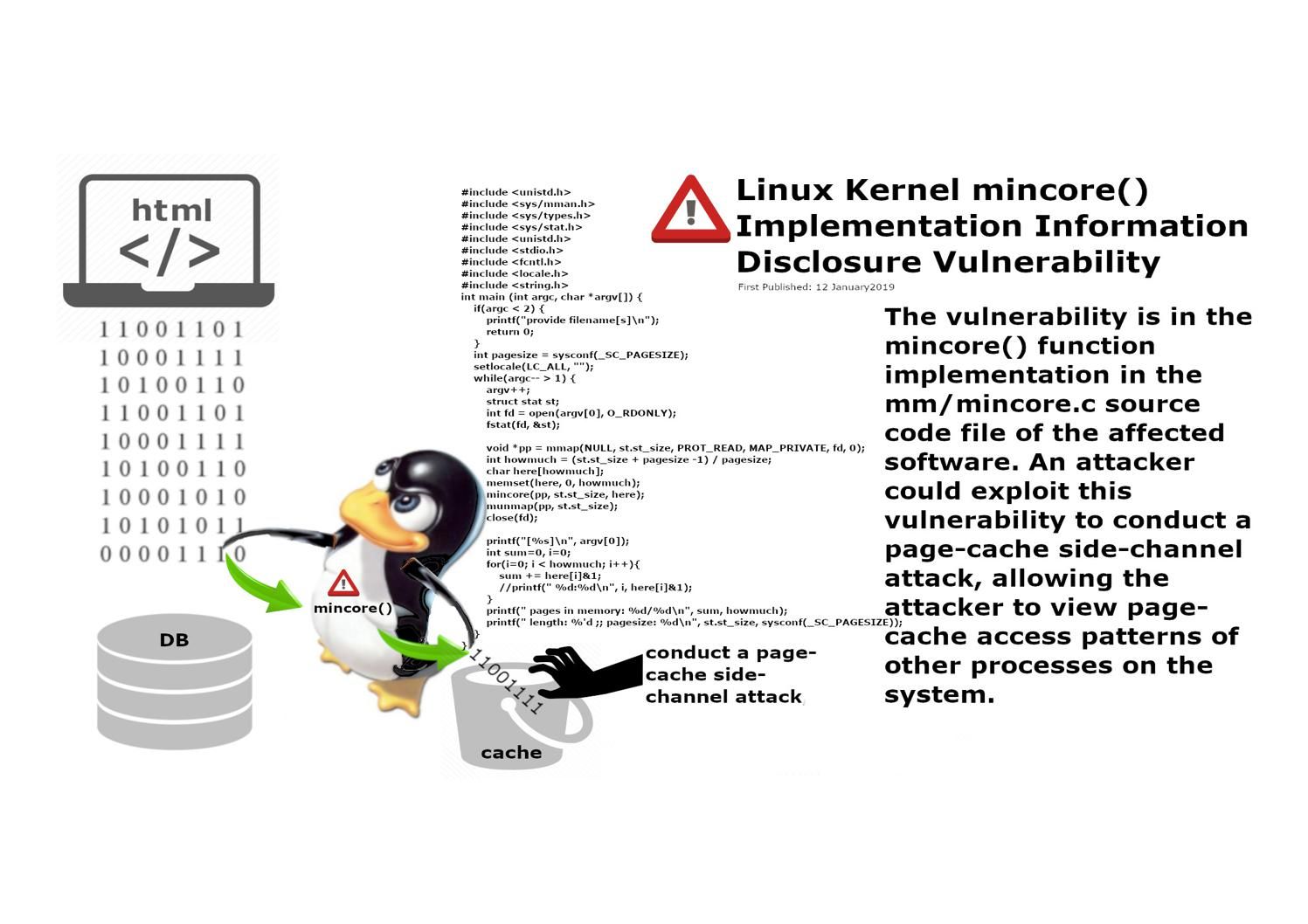
The mincore() function requests a vector describing which pages of a file are in core and can be read without disk access.

Vulnerability occurred:
A vulnerability in the mincore() function in the Linux Kernel could allow a local attacker to access sensitive information on a targeted system.

Design weakness:
The vulnerability occured in the mincore() function implementation in the mm/mincore.c source code file. The design weakness allow an attacker exploit this vulnerability to conduct a page-cache side-channel attack (allowing the attacker to view page-cache access patterns of other processes on the system).

Official announcement : https://git.kernel.org/pub/scm/linux/kernel/git/torvalds/linux.git/commit/?id=574823bfab82d9d8fa47f422778043fbb4b4f50e

CVE-2019-0246 Multiple Vulnerabilities in SAP Cloud Connector – January 2019

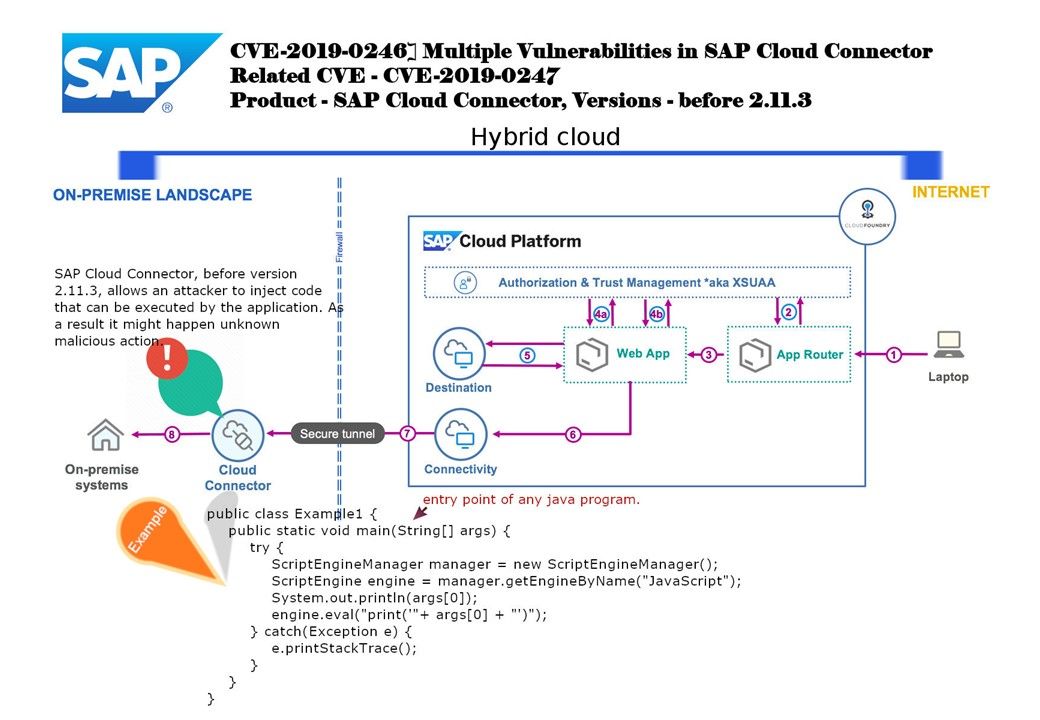
Preface: Using both private and public clouds in parallel allows company to pick and choose which data and services they want to keep in the private cloud for added security, and which in the public cloud. This is so called a hybrid cloud concept.

Vulnerability found on SAP cloud connector:
SAP Cloud Connector, before version 2.11.3, allows an attacker to inject code that can be executed by the application. As a result it might happen unknown malicious action.

Synopsis: Attacker will be exploit Java code through scripting API or dynamic JSP do the injection .

Official announcement shown as below:
SAP Security Patch Day – January 2019 – https://wiki.scn.sap.com/wiki/pages/viewpage.action?pageId=509151985

antihackingonline.com